

Blackground : murmures des mornes
2026年11月 更新
詳細
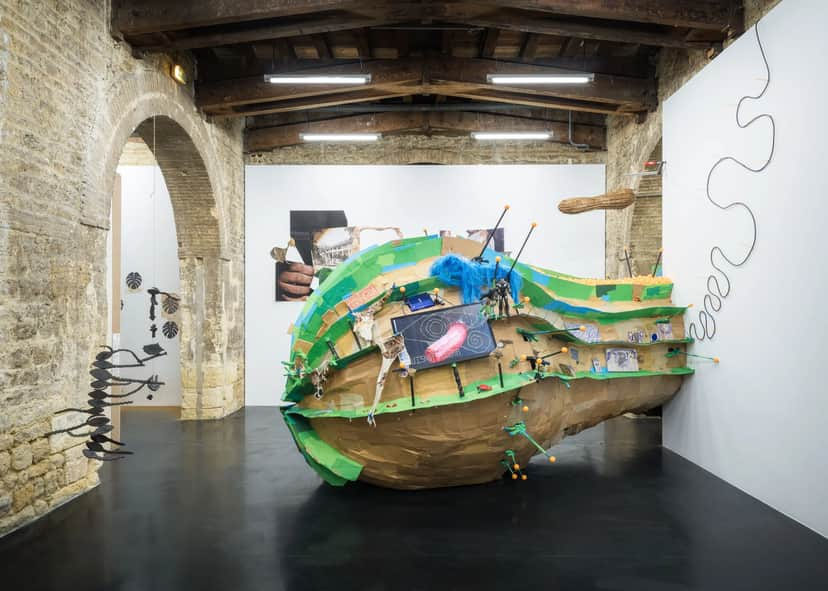
In recent years, a great number of movements, demands, crises and debates have appeared as signs that France's colonization, from the 16th century onward, of the territories now called "overseas" structures the contemporary period—this is referred to as the "colonial continuum." This also means that the slave system introduced from the 17th century onward in those same territories, coupled with the development of the so-called "slave trade," left deep wounds on the land, bodies and minds, beyond its official abolition in 1848. Blackground : murmures des mornes brings together nearly fifty artists working from the afterlives of colonial slavery1. The practices of the artists gathered in this exhibition seek to broaden the forms that memory can take, to bring to light and occupy the "gaps" in official history, and also to create from gestures and traces of resistance. They proceed from the postulate that the world in which we live cannot be understood without this blackground, a black backdrop that persists within the very heart of the history of domination. Their works lead us to listen to the songs, cries and whispers that come from the mornes, spaces of maroonage, refuge and community, while refusing the spectacle of violence. The project Blackground : murmures des mornes unfolds over several stages. First through a series of exhibitions at the Capc musée d'art contemporain de Bordeaux, at the Frac MÉCA, at the Bibliothèque Mériadeck and at the Musée d'Aquitaine. Within these institutions, each group exhibition responds to the particular context in which it is situated: the Capc addresses the question of the plantation and the monument from the standpoint of its location in a former colonial goods warehouse; at the FRAC Meca, it is the view over the Garonne that gives rise to a reflection on and through water; at the Bibliothèque Mériadeck, the writings of Maryse Condé, Angela Davis and Suzanne Roussi-Césaire form a core of reflection on language2; and finally, at the Musée d'Aquitaine, works infiltrate the permanent display to offer points of escape from official history.
Later in the year, at Zébra3 and then at the Archives de Bordeaux Métropole, the artist Simon Gabourg is invited to develop a two-part project rooted in a reflection on the history of rubber cultivation, between Guadeloupe, France and Vietnam. 1. Translation of the expression "afterlives of slavery" by the American scholar Saidiya Hartman. 2. This project is a revival and adaptation of Correspondances. Lire Angela Davis, Audre Lorde, Toni Morrison, which was held at the Crédac in Ivry-sur-Seine in 2024 and curated by Claire Le Restif and Elvan Zabunyan.
アクセス
出典: 元のページ · Licence Ouverte 2.0 · 翻訳または変更されたテキスト
