Museums & Heritage
Exhibition 'Aurèlia Muñoz. Textile as a pretext'
- When
- Tue 10 Nov 2026 – Mon 29 Mar 2027
- Where
- Disseny Hub Barcelona
- Price
- No price info
About
On the occasion of the Aurèlia Muñoz Year, the Disseny Hub Barcelona (DHub) presents an exhibition devoted to the artist's first textile works, one of the key figures for understanding the renewal of contemporary textile art in Catalonia and its international projection.
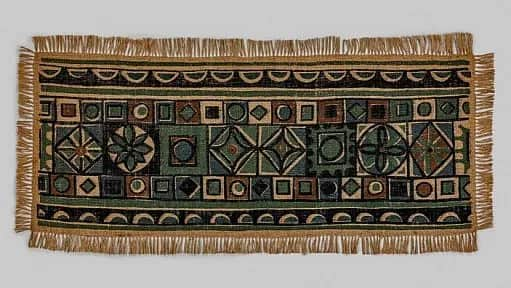
The exhibition brings together three pieces from the Museum's collection that offer an insight into an early and decisive stage in Muñoz's career: the tapestry La Barcelona gòtica, from 1961, made with printed burlap, and two table covers from 1962, designed by the artist and printed by José Duran on screen-printed jute burlap. These are works that reveal her early interest in the expressive qualities of materials, in textures, and in the plastic possibilities of textile work.
Trained at the Escola d'Arts Aplicades and the Escola Massana in Barcelona, Aurèlia Muñoz Ventura (Barcelona, 1926-2011) developed an artistic practice spanning more than five decades, in which she renewed ancestral techniques such as embroidery, knotting (or macramé), and papermaking, placing them in dialogue with the avant-gardes of her time. In 2026, the Generalitat de Catalunya dedicates a commemoration to her for the 100th anniversary of her birth, vindicating her pioneering and visionary role within contemporary art. These pieces from the 1960s make it possible to see the moment when Muñoz began to explore the symbolic and structural potential of burlap and other fibre-related materials. According to the Aurèlia Muñoz Year, around 1960 the artist began working with burlap, a decision that would act as a trigger for her research into contemporary textile art.
The exhibition is presented as a complement to the major exhibition Aurèlia Muñoz. Ens, which can be seen at MACBA on the same dates, and offers the public the opportunity to discover, from the DHub, some of the first gestures of a creator who turned textiles into a field of radical, poetic and profoundly contemporary experimentation.