

Day Trips from Lisbon: Sintra, Cascais and Setúbal
Lisbon guide · Last checked Nov 24, 2026
Each of these towns sits at the end of its own railway line out of Lisbon. Sintra's trains leave from Rossio, Cascais's from Cais do Sodré, and Setúbal's from Roma-Areeiro. Sintra is the trip for palaces, Cascais for the sea and a royal fortress, Setúbal for an early Manueline church, a working food market and the Arrábida coast. In summer, Sintra and Cascais, more exposed to the Atlantic, tend to be cooler than the city.
Getting to and around Sintra
CP's urban trains run to Sintra from Rossio, on a line that opened on 2 April 1887. They leave every 20 minutes and take 40 to 47 minutes; there are direct trains from Oriente as well. Leave it late and you may queue a long time at Rossio's ticket machines. CP has suspended its combined "Train & Bus" ticket for now, so do not plan around it.
Sintra sits in the hills of the Serra de Sintra, and the monuments are spread over them. Local buses and tuk-tuks run from the old centre up to the sites on the hilltops, and there are footpaths through the woods. Walking between monuments means steep, winding climbs that tire people out. On the narrow mountain roads, traffic and queues for the shuttles cause long delays, and in the busy season the local buses fill up fast.
Traffic rules change by season. In the summer of 2026 the Volta do Duche was closed to tourist coaches; just the 434 and 435 buses and Carris Metropolitana could drive through that stretch. Look up the current rules on cm-sintra.pt before you go.
Why Sintra is on UNESCO's list
UNESCO inscribed the Cultural Landscape of Sintra on its World Heritage List in 1995. Quinta da Regaleira describes the Sintra of the 19th century as one of the places where Romantic architecture in Europe first took root.
Pena and the Moorish Castle
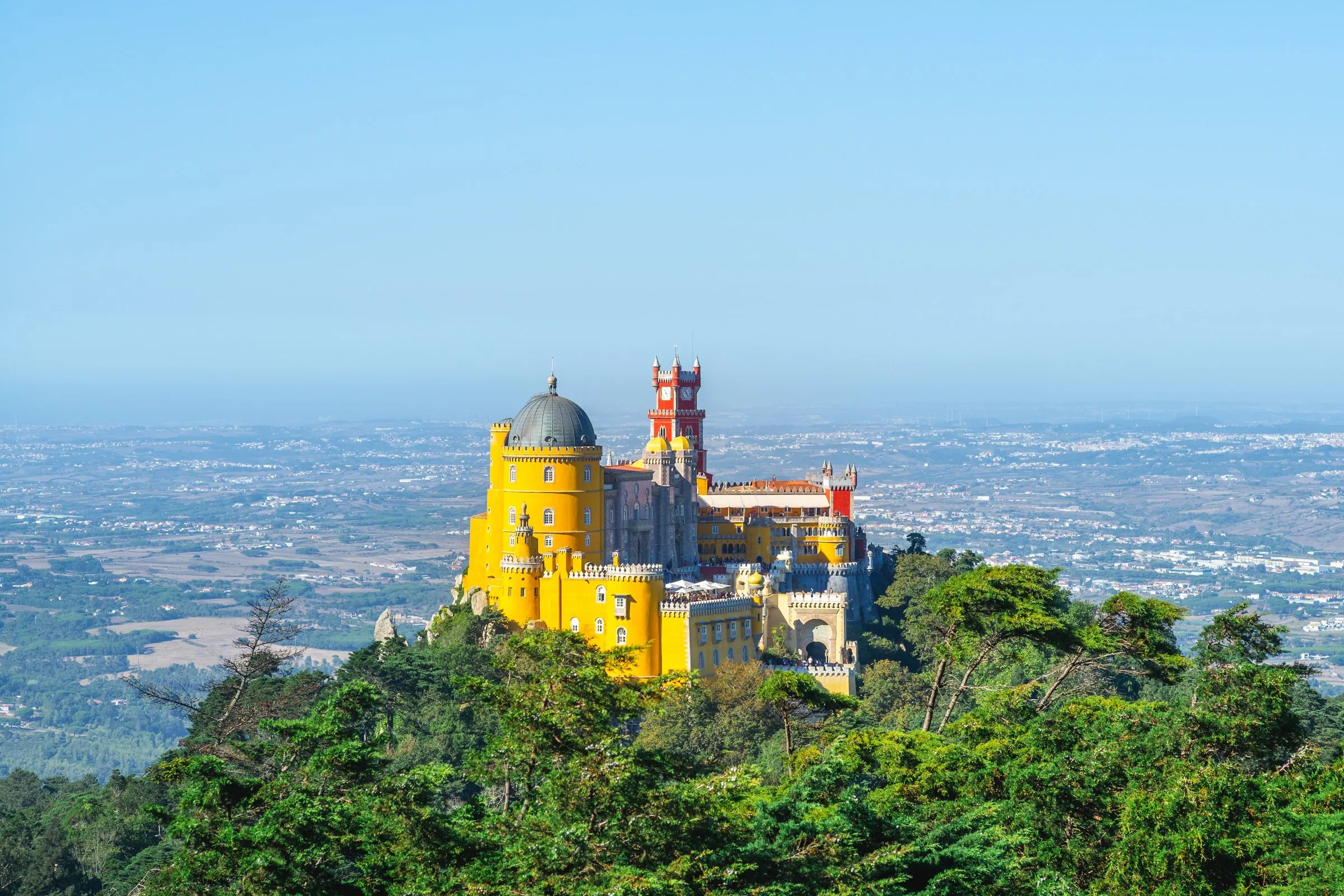
Parques de Sintra traces Pena back to a monastery, dedicated to Our Lady of Pena, that King Manuel I ordered in 1503. Religious orders were dissolved in 1834, and in 1838 the ruins and the land around them were bought by Ferdinand II, consort of Queen Maria II. He had the old monastery extended into a palace, with Baron Wilhelm Ludwig von Eschwege in charge of the work; Eschwege was a mineralogist and mining engineer, not an architect. According to the same source, Pena became a National Monument in 1910.
The Moorish Castle was founded under Islamic rule, and two rings of walls enclose it. Sintra stayed in Moorish hands until 1147, when Afonso Henriques took it after capturing Lisbon and Santarém. In 1154 the Templar Gualdim Pais was granted a charter for Sintra. Between its inner and outer walls stands a church, São Pedro de Canaferrim; look out for it. The castle was restored by Ferdinand II in the 19th century, and archaeologists have been digging there since 1976.
Ticket types change, so check parquesdesintra.pt before you go.
The National Palace and Quinta da Regaleira
The Palácio Nacional de Sintra stands in the old town centre. You will know it by the two big white cone-shaped chimneys over its kitchen, which date from the time of João I. Its story goes back further. Al-Bakrî, an Arab geographer of the 10th century, is the first to mention it, and the earliest record of a palace at Chão da Oliva is a document of 1281, under King Dinis. The Sala dos Brasões was Manuel I's addition, and the Hispano-Moorish tiles on the walls are from his reign.
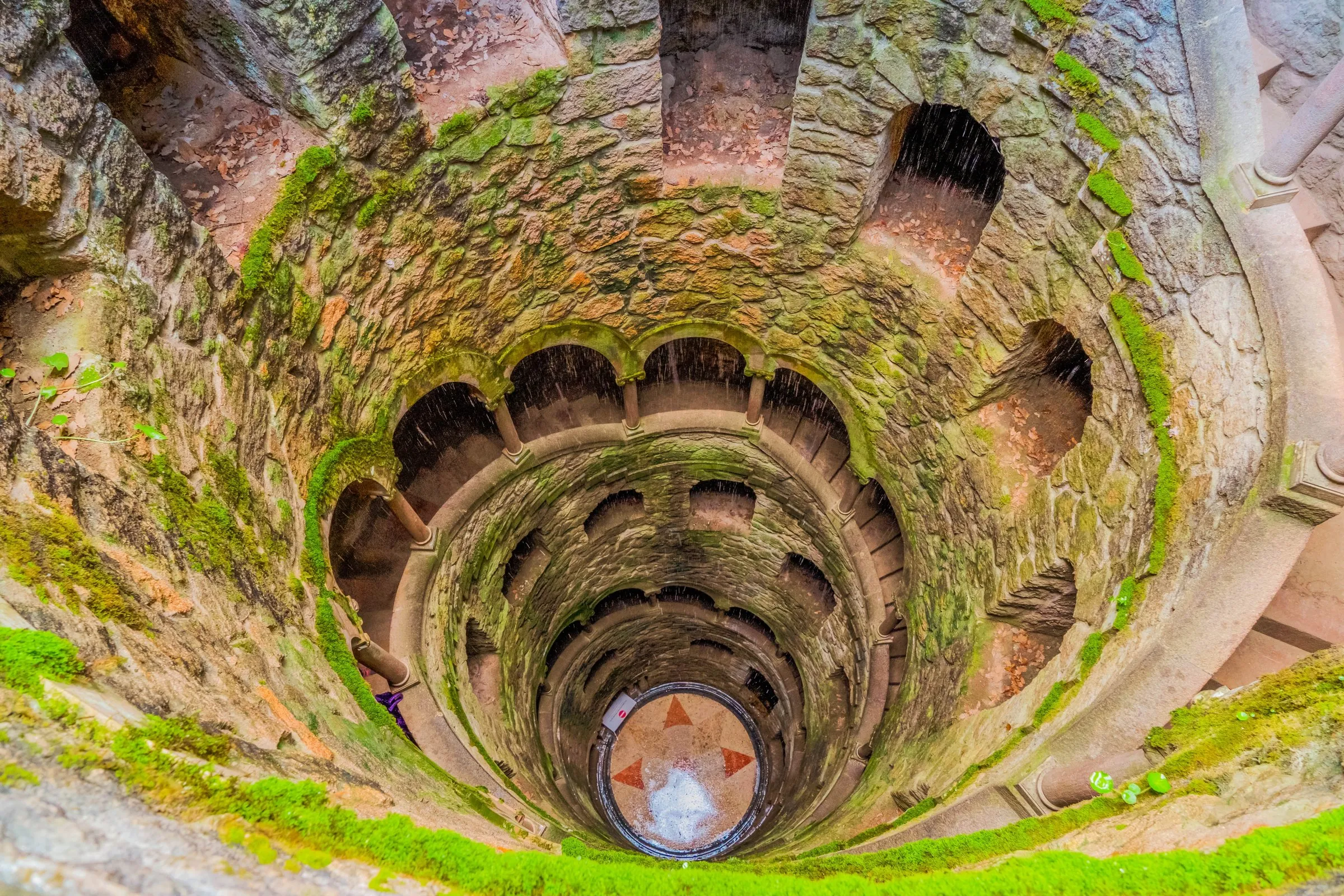
Quinta da Regaleira was built between 1898 and 1910 for António Augusto de Carvalho Monteiro (1848-1920), who worked on it with Luigi Manini (1848-1936), an Italian architect and stage designer. The estate calls its own style "eclectic-revivalist", a blend of Manueline, Renaissance, Medieval and Classical. Besides the Romantic palace there is a large garden full of symbols, tunnels and the initiation well, the Poço Iniciático. Visitors see only the palace's main floor, and the Aquarium stays shut.
Book ahead. Regaleira sells tickets only at regaleira.byblueticket.pt, each for a time slot, and you have an hour's grace after it. Hours: October to March, 10:00 to 18:30 with last entrance at 17:30; April to September, 09:00 to 19:30. Closed 1 January and 24, 25 and 31 December. You cannot park at the estate.
Cascais: getting there by train
CP's Cascais line starts at Cais do Sodré and calls at Santos, Alcântara-Mar, Belém, Algés, Oeiras, Carcavelos and Estoril. On CP's weekend timetable in force since 8 November 2026, a train leaves Cais do Sodré every 20 minutes during the day and reaches Cascais in 41 minutes. Check CP's timetable for the day you travel.
Engineering works have been under way on the Caxias-Cascais section since 6 April 2026. Buses replace trains only when the line is fully closed: on weekdays from 21:50, on Saturdays from 20:50, and on Sundays from 05:30 to 08:50 and again from 19:50. Daytime trains run as normal.
Cascais: the Citadel, Boca do Inferno and Paula Rego
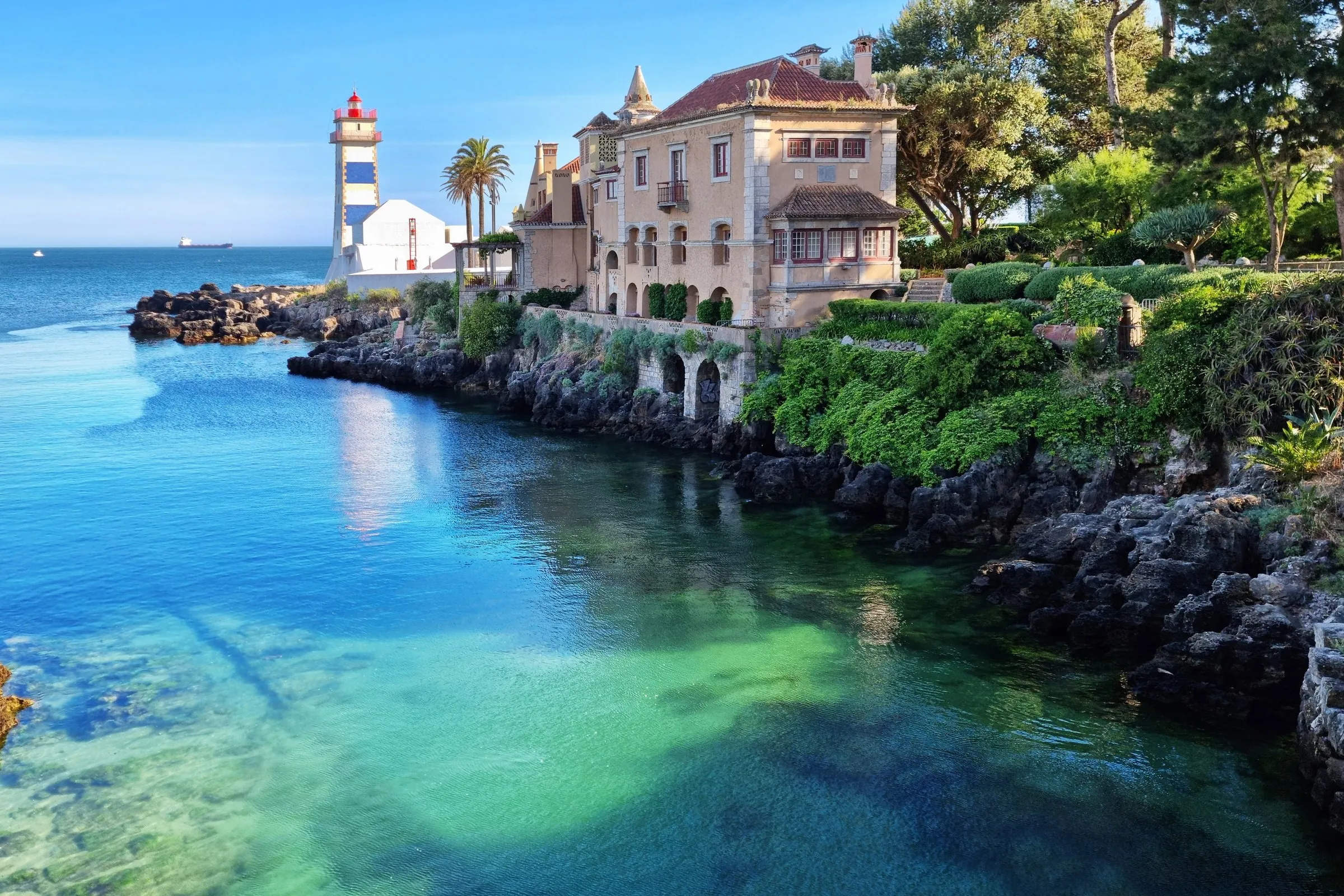
The town of Cascais's own culture pages describe the Cidadela de Cascais as built up in stages. In 1488 João II had a tower raised to defend the town. The fortress of Nossa Senhora da Luz followed before 1580, and after independence in 1640 João IV ordered the Citadel. From 1870 the royal family used it as a palace, and King Luís died there in 1889. Carlos opened Portugal's first marine biology laboratory inside it in 1896, and from 1928 to 1945 it was Óscar Carmona's official home. The same source says it opened to the public in 2014; it is now the president's official residence and also holds the Pousada de Cascais.
From the town centre a path follows the coast to Boca do Inferno ("Mouth of Hell"), a sea arch and chasm cut into limestone cliffs west of the Cascais marina. Visit Cascais describes waves that "crash through an open arch".
The Casa das Histórias Paula Rego, at Av. da República 300, is a museum by the architect Eduardo Souto de Moura, recognisable by its pyramid-shaped towers. Paula Rego, born in Lisbon on 26 January 1935, picked Cascais for it. Inside are about 750 m2 of galleries and a 200-seat auditorium, and the collection runs through her work of the 1950s to the 1990s.
Setúbal: the Convento de Jesus and the Livramento market
From Roma-Areeiro in Lisbon, Fertagus runs one line to Setúbal, crossing the Tagus on the 25 de Abril Bridge: about 54 km in 57 minutes, with 14 stations, among them Pragal, Pinhal Novo and Palmela. The Lisboa Card covers it, according to Visit Lisboa. Avoid Mondays: both the convent and the market are shut.
The Convento de Jesus was the project of Justa Rodrigues Pereira, who had been King Manuel's nanny. Between 1489 and 1490 she obtained licences from Pope Innocent VIII and King João II, and building for the Poor Clare nuns began in 1490. Its design is attributed to Diogo Boitaca, a name also linked to the Jerónimos in Lisbon. Manuel had the church roofed with a stone vault, and its three naves rest on twisted columns of Arrábida breccia. The building is one of the early Manueline ones.
Since 5 February 1961 the convent has housed the Museu de Setúbal. Hours at the time of writing, October to May: museum Tuesday to Saturday 10:00-18:00, Sunday 14:00-18:00; church Tuesday to Saturday 10:00-17:00, Sunday 14:00-17:00. Both also close on public holidays.
Go to the market in the morning. The Mercado do Livramento, on Avenida Luísa Todi, has fishmongers, butchers, fruit and vegetables, bread and pastry, cured meats and cheese, plus restaurants and bars. Large tiled panels decorate it. Municipal markets keep to 07:30-14:00. A municipal study from 2022 credits it with "145 years of activity".
Arrábida and the Sado dolphins
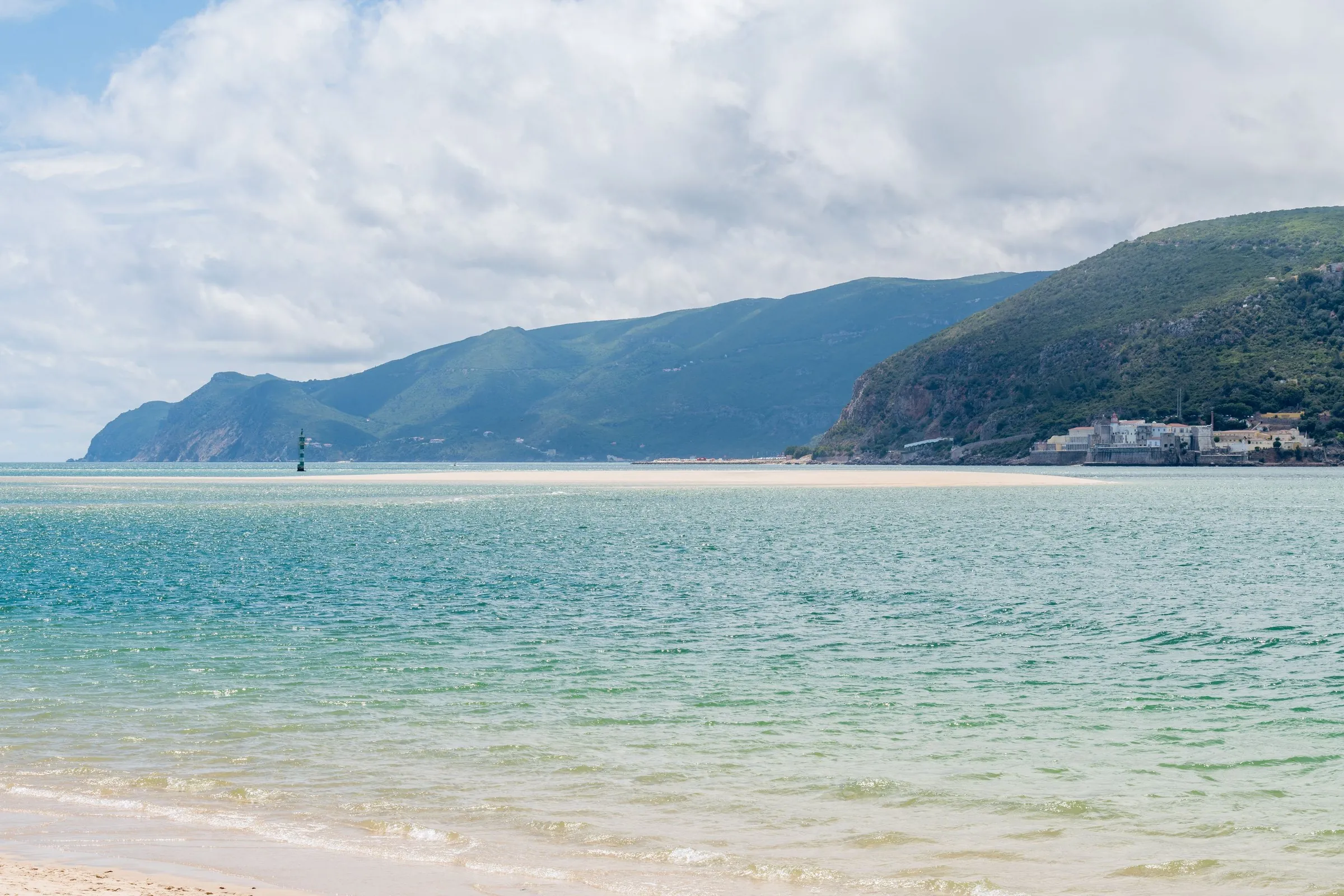
The Parque Natural da Arrábida, created in 1976, covers the mountainous coast between Setúbal and Sesimbra, where steep green slopes drop to coves. Portinho da Arrábida and Figueirinha are two of its beaches.
The Sado estuary, right beside Setúbal, has dolphins that live there all year. Observador reports a group of 25 bottlenose dolphins, Portugal's only resident population and one of just three known in Europe; a calf named Bravo was born in July 2025. Boat tours leave from Setúbal's harbour.
