

Lisbon and the Age of Discoveries: What Belém Remembers
Lisbon guide · Last checked Nov 24, 2026
Belém, on the north bank of the Tagus, is the district the explorers sailed from. Vasco da Gama left here for India in 1497, and in 1500 Pedro Álvares Cabral set out from the same shore on a voyage to India that reached Brazil on the way. Little of the voyages themselves survives. What you can visit was built on their profits or in their memory: the Jerónimos Monastery, the Torre de Belém on the river and the Padrão dos Descobrimentos, a 20th-century monument, with a naval museum in the monastery's west wing.
How the voyages began
Portugal's push overseas is older than da Gama: Ceuta fell to it on 21 August 1415. Around the middle of the 15th century a church went up at Belém on the orders of Prince Henry the Navigator; by the monastery's own account he ordered an older chapel enlarged in 1459, and it came to be called Saint Mary of Belém.
On the night of 7 to 8 July 1497, da Gama and his crew prayed at the Restelo Hermitage, a stone chapel in Belém, and then sailed with four ships. They rounded the Cape of Good Hope, reached Calicut on 20 May 1498, and da Gama was home in Lisbon in 1499. In the decades that followed Lisbon became Europe's hub for trade with Africa, India, the Far East and, in time, Brazil, and grew rich on spices, slaves, sugar and textiles.
Jerónimos Monastery
Manuel I, king from 1495 to 1521, chose in 1496 to found a house for the Order of St Jerome here. The foundation stone went down on 6 January 1501 or 1502; even the monastery's own history gives both years. A 5% levy on trade from Africa and the Orient, the Vintena da Pimenta or pepper tax, paid for it.
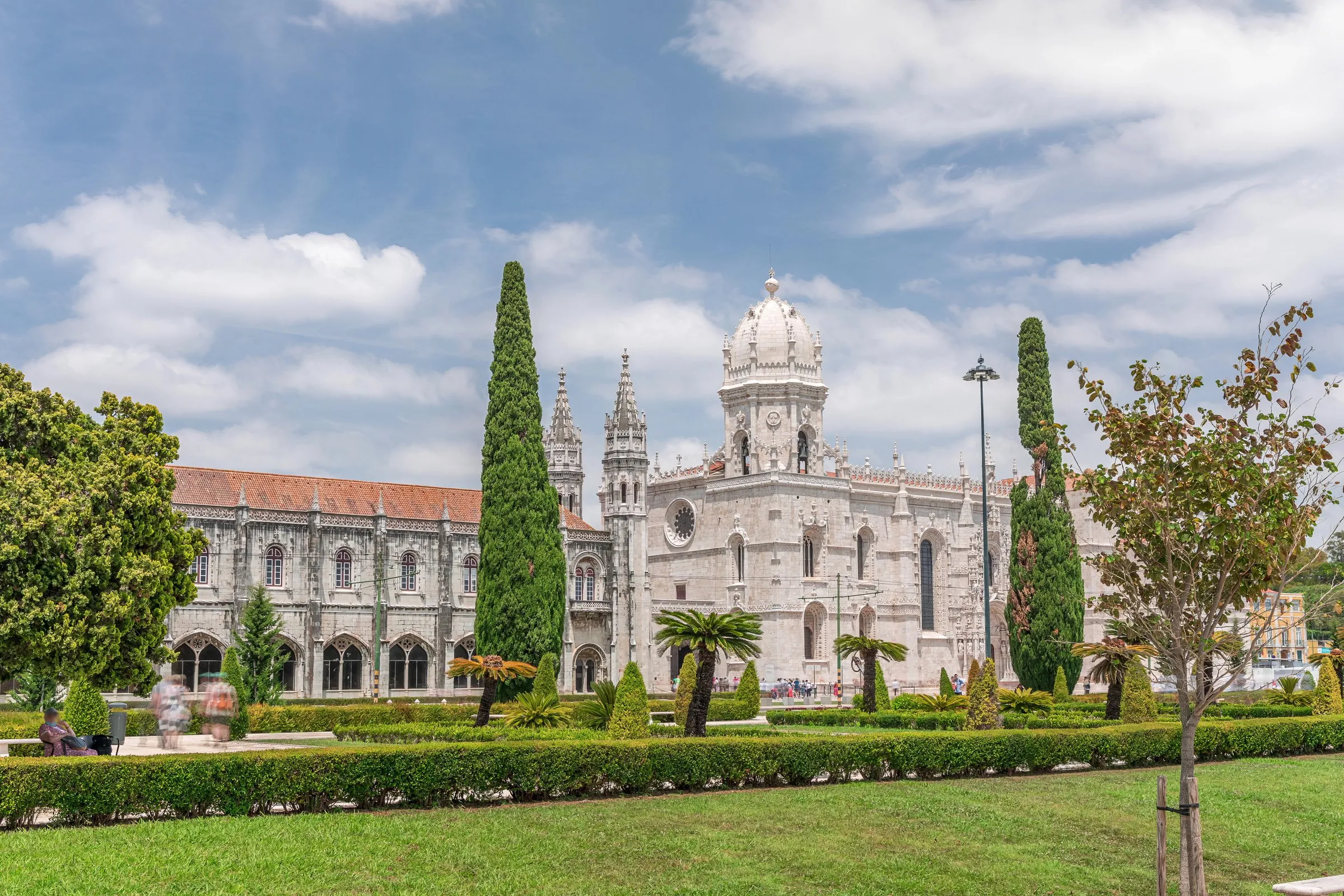
Diogo de Boytac was the first architect. From 1517 João de Castilho ran the works and carved the south portal; Nicolau Chanterene designed the west one. The monastery describes the building as mostly lioz limestone from quarries close by, with a High Chapel of Estremoz marble, ordered by Queen Catherine and finished in 1572.
The style has a name of its own. Francisco Adolfo de Varnhagen called it "Manueline" in 1842, after the king. Look in the stone for sea motifs: carved rope, armillary spheres, and the Order of Christ's cross.
Inside the church are the tombs of Manuel I, of Vasco da Gama and of Luís de Camões. The remains of da Gama and Camões were brought here in 1880, though a later document suggests the bones moved as da Gama's may have been someone else's. Fernando Pessoa is buried in the cloister. On 13 December 2007 the monastery hosted the signing of the Treaty of Lisbon.
The state made it a National Monument in 1907, and in 1983 UNESCO listed it as a World Heritage site together with the tower.
Torre de Belém
The Torre de Belém began as João II's idea of a fort on the north shore and was built late in the reign of Manuel I. Francisco de Arruda, an architect who had built defences before, set it on a basalt outcrop that was then a small island in the Tagus with water all round. It served as a fortified lighthouse watching over the way into the port, and partly to protect the monastery. The heritage authority records it as dedicated to Saint Vincent. Writing in 1566 or 1567, the chronicler Damião de Góis said it stood in the water to keep watch on the monastery and the harbour.
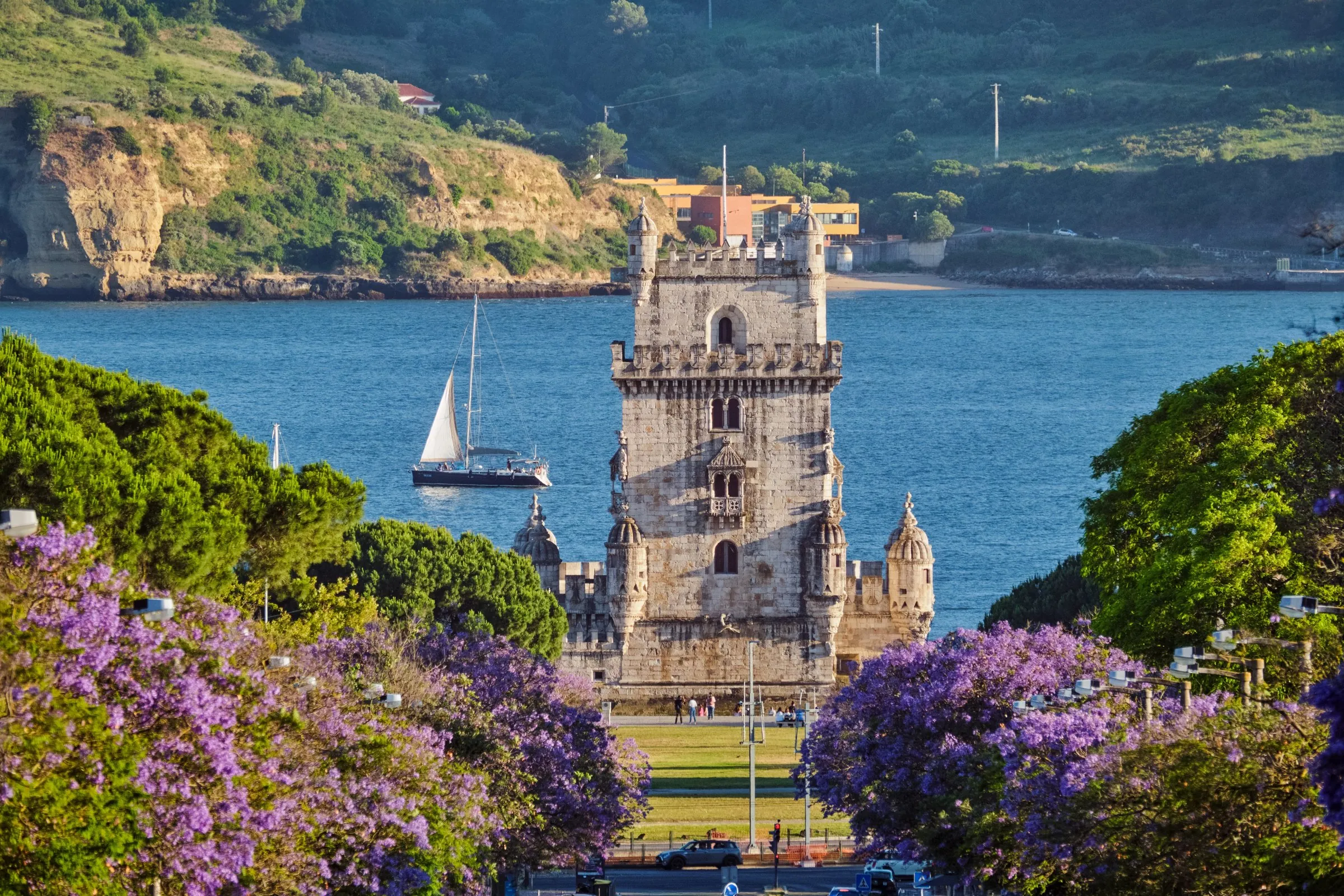
The decoration is late Gothic in the Manueline manner: royal coats of arms, ropes, knots, animals and a few Moorish touches. Find the carved rhinoceros. It is probably modelled on the rhinoceros that Manuel I shipped to Pope Leo X in 1515.
Padrão dos Descobrimentos
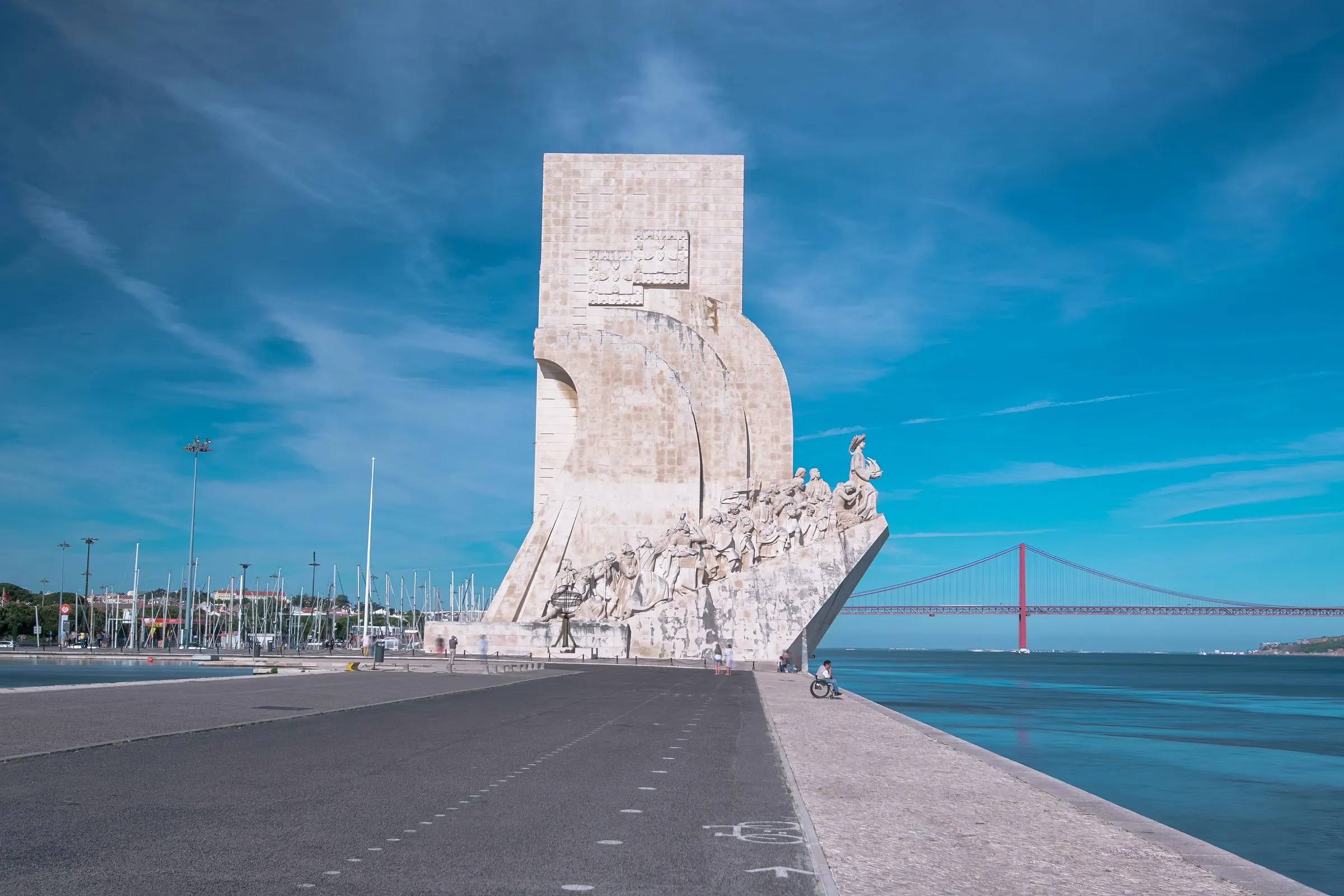
The newest of the three monuments was initially created temporarily for the Portuguese World Exhibition of 1940, by the architect Cottinelli Telmo and the sculptor Leopoldo de Almeida. That first version had been pulled down by 1943. The permanent monument went up in 1960, five hundred years after Henry the Navigator died.
It stands 56 m high on the waterfront. Henry leads at the prow, and among the figures behind him are Bartolomeu Dias, Vasco da Gama, Cabral and Magellan. A remodelling in 1985 added an auditorium, exhibition rooms and a viewing terrace on top. The monument's paved Compass Rose is said to have been a gift from South Africa.
Museu de Marinha
The navy museum fills part of the monastery's west wing. Its collection, which Luís I began in 1863, covers royal barges, models of ships and the instruments used to navigate them.
Planning the visit
Belém is among the most visited parts of Lisbon. The Mosteiro dos Jerónimos faces Praça do Império, gardens built around a big fountain during World War II; the Centro Cultural de Belém lies to their west. The Padrão dos Descobrimentos is on Av. Brasília.
At the time of writing, the hours were:
- Jerónimos cloister: Tuesday to Sunday, 9:30-17:30, last entry 17:00. Church: Tuesday to Saturday, 10:30-17:00; Sundays and religious holidays, 14:00-17:00. Tickets are sold until 16:30. Shut on Mondays, 1 January, Easter Sunday, 1 May, 13 June and 25 December.
- Padrão dos Descobrimentos: every day; October to February 10:00-18:00, final admission 17:30; March to September 10:00-19:00, final admission 18:30. Shut on 1 January, 1 May and 24, 25 and 31 December.
- Museu de Marinha: every day; 1 October to 30 April 10:00-17:00, final admission 16:30; 1 May to 30 September 10:00-18:00, final admission 17:30. Between 1 October and 31 May it opens only at 13:00 on Mondays. Shut on 1 January, Easter Sunday, 1 May and 25 December.
Plan around Monday: the monastery is shut all day, and from October to May the navy museum stays closed until 13:00.
