

Tram 28 and the Funiculars: A History of Getting Up Lisbon's Hills
Lisbon guide · Last checked Nov 24, 2026
Of the machines Lisbon built to climb its hills, two carry passengers today: tram 28 and the Graça funicular. The rest are closed. Below is how each came about, in opening order, and then what a visitor can ride and how.
Horses first: the americanos
Companhia Carris de Ferro de Lisboa, the company behind the trams to this day, dates from 18 September 1872. Carris's own history places its founding in Rio de Janeiro.
Its first cars were pulled by horses on rails. Service began on 17 November 1873, and the cars were called americanos because the system was built on the American model, as Carris puts it. They kept to the flatter parts of the city. Carris records a contract signed on 5 June 1897 to swap the animals for overhead electric wires.
Cable cars for the steep streets: Lavra, Glória, Bica
Horses could not manage the steepest streets, so the city turned to cable. The lifts are credited to Raoul Mesnier du Ponsard, an engineer born in Porto, whose family was of French descent. Three funiculars opened in eight years:
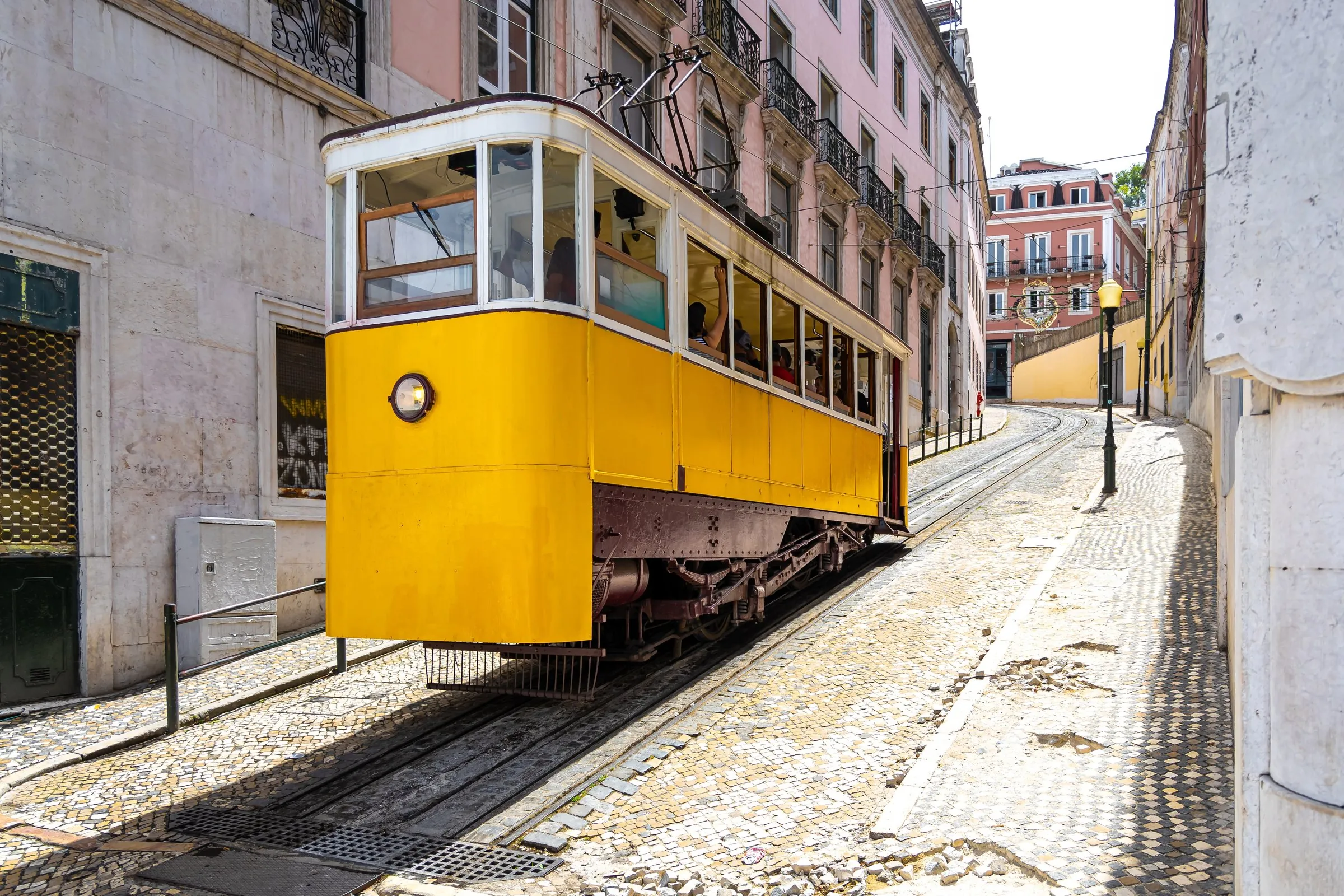
- Elevador do Lavra, 19 April 1884: the oldest in the city. Its 188 m of track climb from Largo da Anunciada up to Travessa do Forno do Torel.
- Elevador da Glória, 24 October 1885: from Praça dos Restauradores at the bottom to Rua de São Pedro de Alcântara in the Bairro Alto, the nightlife quarter.
- Elevador da Bica, 28 June 1892: the last of that era, between Rua de São Paulo and Largo do Calhariz. Time Out gives its climb as 48 meters.
Electric trams and the Santa Justa Lift
Electric trams first ran on 31 August 1901 and gradually took over from the horse cars.
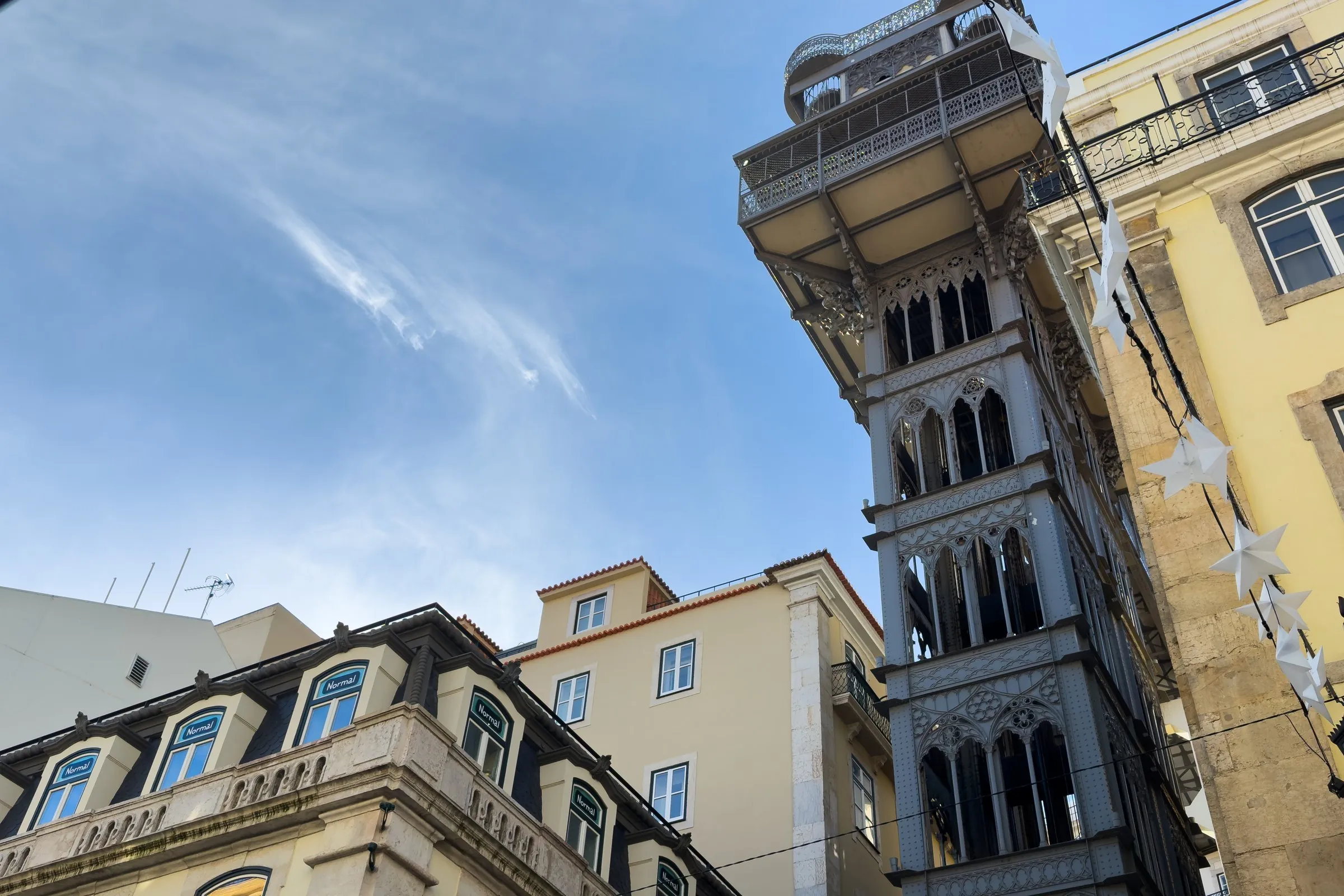
A year later, on 10 July 1902, the Elevador de Santa Justa opened. People also call it the Carmo Lift, and it is described as the high point of Mesnier du Ponsard's career. It is a wrought-iron tower 45 meters high that lifts passengers from Rua do Ouro in the Baixa to Largo do Carmo. At first it ran on steam; electric motors went in during November 1907.
Tram 28 and the Remodelados
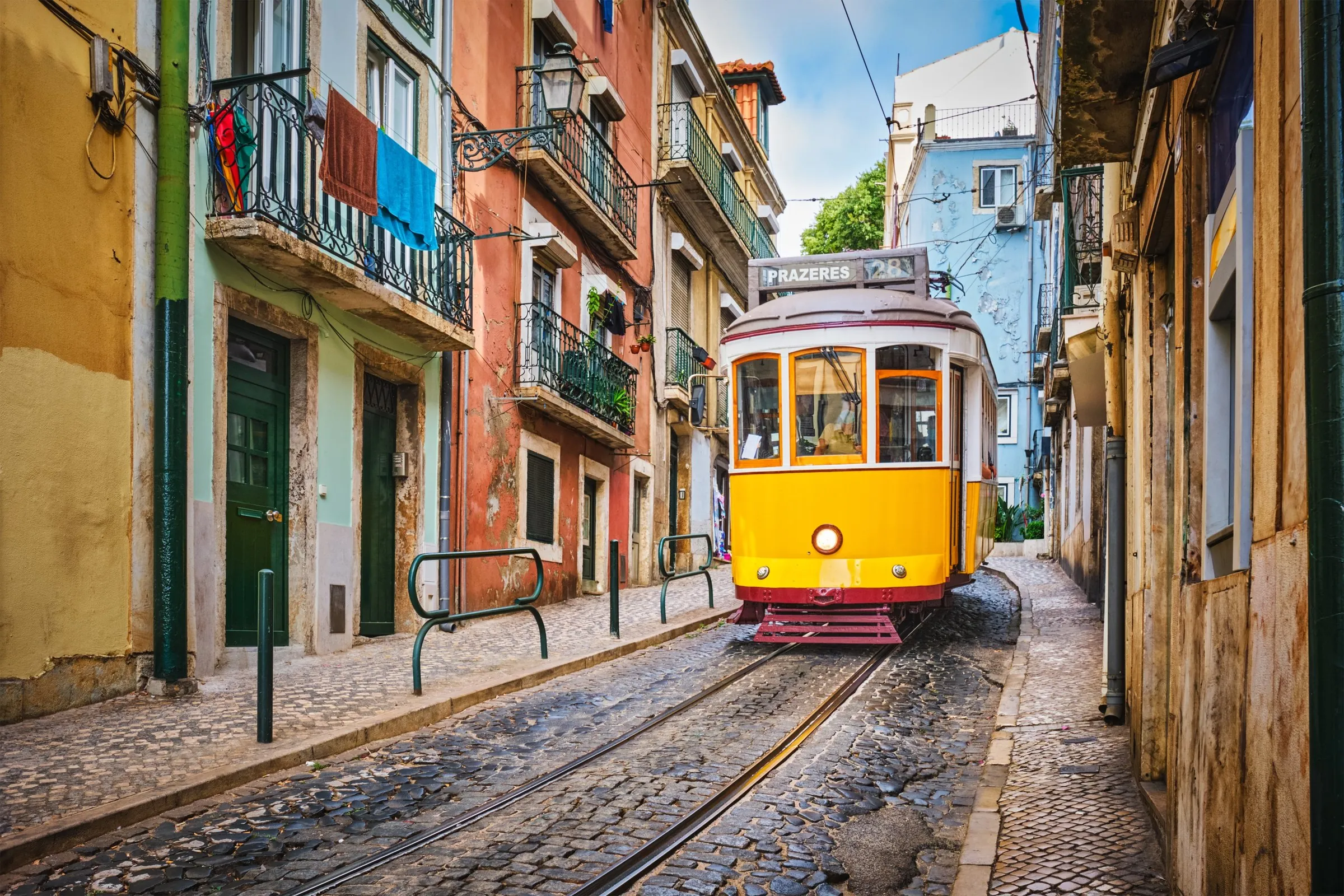
The network once covered 76 km over 27 lines. Today it is down to 31 km and six lines, numbered 12, 15, 18, 24, 25 and 28; the shrinking began once the metro was built and the buses spread. Line 15 runs modern trams. The others still use small four-wheel cars of an early twentieth-century design, a size that copes with tight corners and hard gradients.
Line 28, signed 28E on the cars, crosses the old city from Martim Moniz to Campo de Ourique (Prazeres). On the way it calls at Graça, Largo Portas do Sol, the Miradouro de Santa Luzia viewpoint, the Sé cathedral, Chiado, Praça Luís de Camões and Estrela, by the basilica.
The yellow cars on the route are mostly Remodelados: Carris finished rebuilding 45 of its traditional trams in 1996 and kept the old look.
National Monuments, the tram museum and the Graça line
All four of the old machines, the three funiculars and the Santa Justa Lift, became National Monuments in 2002. According to Carris, its museum, the Museu da Carris, opened on 12 January 1999; in 2017 the City Council took the company over.
The newest machine is the Graça funicular, inaugurated on 12 March 2024, roughly 15 years after building started. It has one track and two stops, takes up to 14 people per trip and makes the run in about a minute and a half. The bottom station is on Rua dos Lagares in Mouraria, the old Moorish quarter; the top is the Miradouro Sophia de Mello Breyner Andresen, facing the Graça church.
3 September 2025
On 3 September 2025 a Glória car ran away on the Calçada da Glória and derailed. Sixteen people died. Service on all three old funiculars and on the Santa Justa Lift was halted. According to Correio da Manhã, the GPIAAF investigation has not finished, and its final report is expected late in the first quarter of 2027.
Carris's pages today mark the Santa Justa Lift as temporarily shut and all three funiculars as out of service. All four can be seen from the street, but none can be ridden, so plan to walk those hills.
For the Glória, Carris wants "a new solution, not a reconstruction". An international tender is planned for the first quarter of 2027, with service meant to resume in 2029. The Graça funicular also stopped after the accident; it was shut for more than seven months and came back on 30 April 2026.
Riding tram 28 today
Board at Martim Moniz, at Campo de Ourique or at any marked stop between them. Expect heavy crowds and long queues at the Martim Moniz end, and keep your phone and wallet close: pickpockets work the packed cars. On the older cars you board by the front door.
To pay, you have several options: cash to the crew (some articulated trams take none), a bank card or contactless, MB Way, a preloaded Zapping card or a Navegante pass. A single ticket bought from the driver costs more than the same trip on a rechargeable card. Under-4s ride free, and Carris's youth scheme lets ages 4-23 travel free.
In winter, the 28E's weekday timetable on the Carris site starts at 05:40 and ends at 23:30. Carris announced that from 4 November 2025 the 28E would turn back at Largo Camões, with a minibus covering the stretch to Prazeres, during eight weeks of pavement repairs. The route page now shows the whole line, yet no Carris notice says the works are over, so look at carris.pt/28E on the day.
Graça's funicular and the tram museum
The Graça funicular takes no cash: pay by card, contactless or MB Way. It saves the steep walk from Mouraria up to Graça, a stop on tram 28.
In Alcântara, the Museu da Carris (Rua 1.º de Maio 101-103) keeps some of the earliest trams. It opens Monday to Saturday 10:00-13:00 and 14:00-18:00 (last admission 12:30 and 17:30) and stays shut on Sundays and public holidays. Its exhibition covers 125 years of electric traction in Lisbon, and the museum offers a virtual tour of route 28. Tram 15E from Praça do Comércio, heading for Algés, takes you to Alcântara, and the museum is unaffected by the closures on the hills.
