Squares, Streets & Bridges · Baixa
Praça do Comércio
- Where
- Praça do Comércio1100-148 Lisboa · Baixa
About
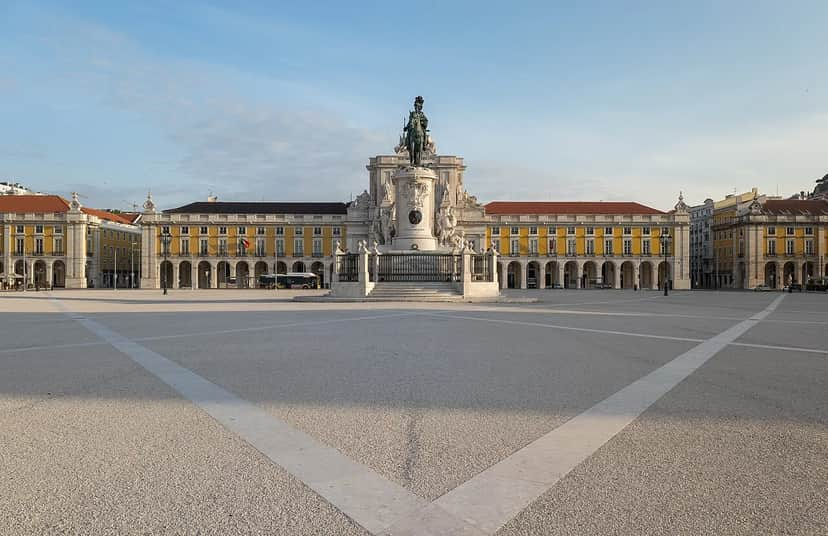
The square facing the harbor in Lisbon’s Baixa district, is officially known as Praça do Comércio (Portuguese for “Square of Trade”). Located at 1100-148 Lisboa, it is 175 meters on each side and covers approximately 30,600 square meters, making it one of the largest public squares in Europe. Locally, it is known as the Terreiro do Paço or “square of the palace” and commemorates the palatial building which was formerly located there.
The Ribeira Palace was constructed outside Lisbon’s city walls by King Manuel I. Later, a ship building yard (the Ribeira das Naus) and the Casa da Índia were built. On November 1, 1755, during the reign of King José I, an powerful earthquake and subsequent tsunami obliterated the palace and most of the city.
Jósé I's Prime Minister, The Marquis of Pombal, directed the rebuilding of many areas of Lisbon after the 1755 earthquake. With arcades, the plan finished with two large towers. The east tower, and Augusta Street Arch, which was designed by Santos de Carvalho, were completed much later, in the 19th century. The statues atop the Arch, completed in 1873, depict important Portuguese figures such as Vasco da Gama and the Marquis of Pombal.
In the 19th century, important Portuguese government ministries such as Agriculture and Maritime, and Internal Administration, and Finance, were located in the square. Before the Carnation Revolution, important ministries such as the War and Navy, and the Colonies ministries, were also located in the square. The square thus represented the entire Portuguese Government.
Currently, the metro station is located beneath the plaza. On one side, a ferry terminal is situated, and trams run on the other side of the plaza. Condé Nast Traveler mentions the arcades and the Cais das Colunas, and notes that the buildings of the plaza are done in a sunflower, yellow color. According to Visit Lisboa, another good viewpoint is the Arco da Rua Augusta. From there, you can also see the Calçada portuguesa and the Tejo river. The sculptor Machado de Castro, created the 1775 equestrian statue of King Jose I, with his horse Gentil, and crushing the snakes. The Pousada de Lisboa is situated next door and is the former Interior Ministry.