

Filters (0)
Rating▾
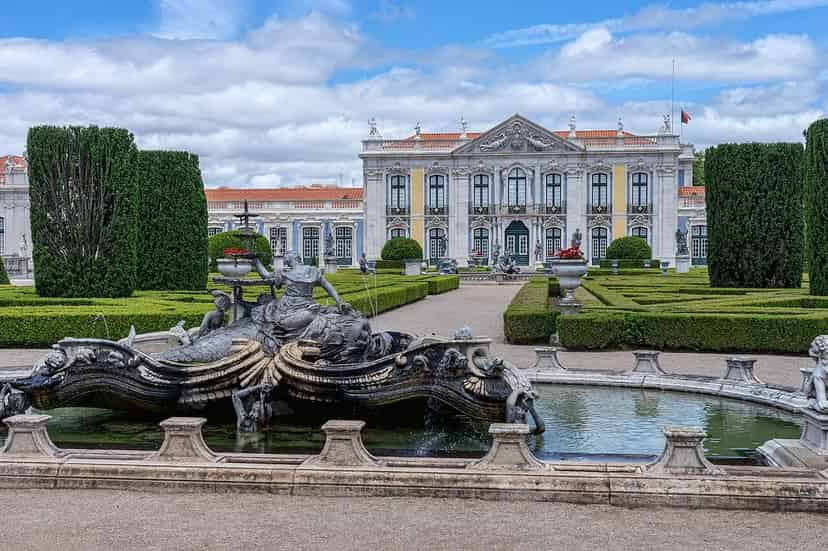
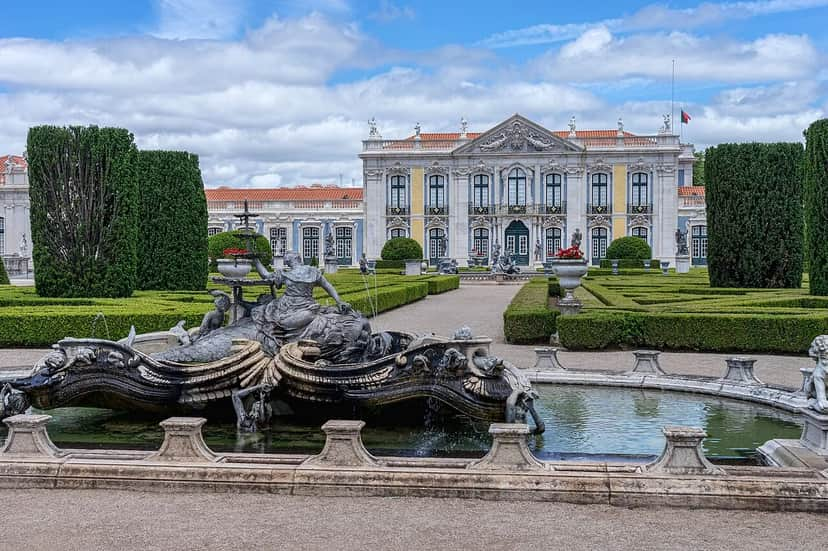 Queluz National Palace (Palácio Nacional de Queluz)Queluz National Palace (Palácio Nacional de Queluz), Largo do Palácio, 2745-191 Queluz, is located between Lisbon and Sintra, approximately 15 kilometers from the center of Lisbon. In 1747, construction of a new palace began for Prince Pedro (later King Pedro III) on the site of a former royal lodge. Over the years the palace was added onto, with the major renovations being done under Queen Maria I in the 1780's. Rococo and Neoclassical elements were added to the design over the years. The palace is formally known as the Palácio Nacional de Queluz, but is referred to as the "Portuguese Versailles". Queluz served as the summer palace of the Portuguese monarchy. After a fire destroyed Ajuda Palace in 1794, Queluz served as the main residence of the royal family until the court was forced to relocate to Brazil in 1807 due to the invading French army. Dom Quixote room is one of the more famous rooms of the palace. The palace has many rooms, including the Throne Room, the Hall of Ambassadors, the Music Room, and the royal apartments. The palace has a Clementi pianoforte in the Music Room. The room is designed by Mateus Vicente de Oliveira. The French style gardens, done in the 18th century, contain statues of mythological figures, and a canal. There are box hedges. The grounds are used for performances by the Portuguese School of Equestrian Art. The palace is opened daily from 9 am to 6 pm. From Rossio and Entrecampos, the Sintra train line takes about 30-40 minutes to reach the destination.Largo do Palácio, 2745-191 QueluzMuseums
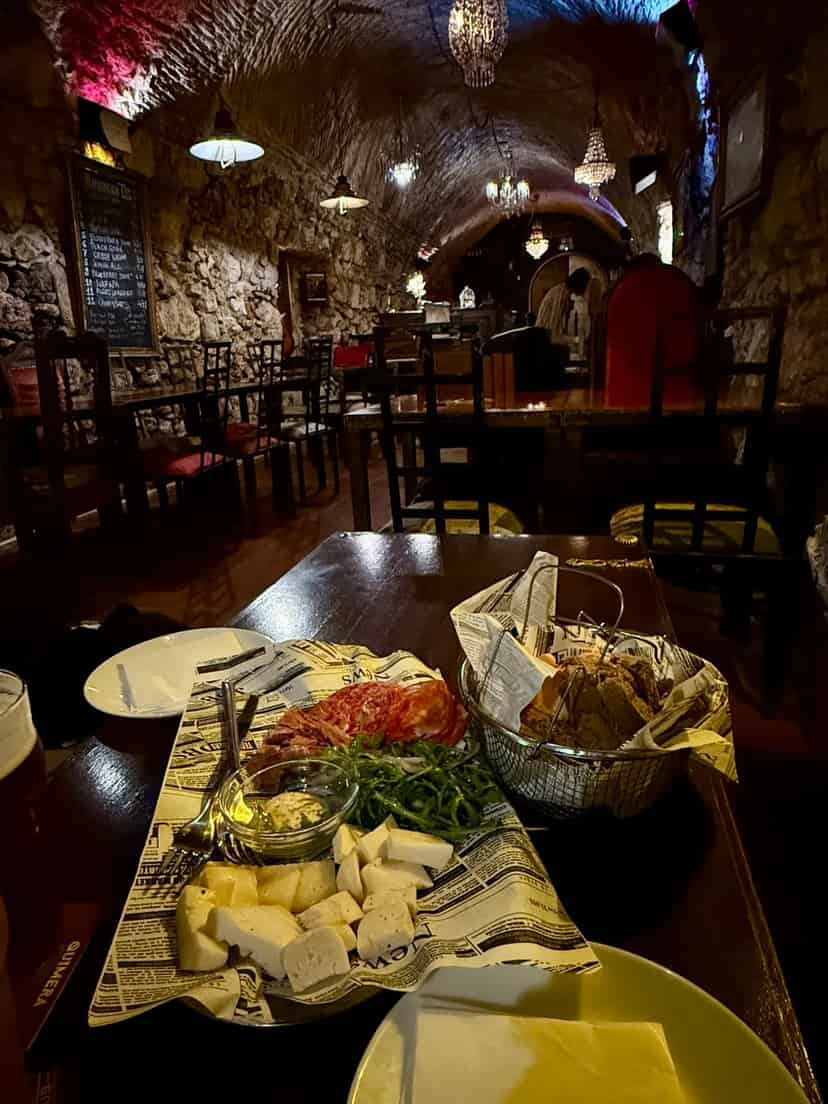
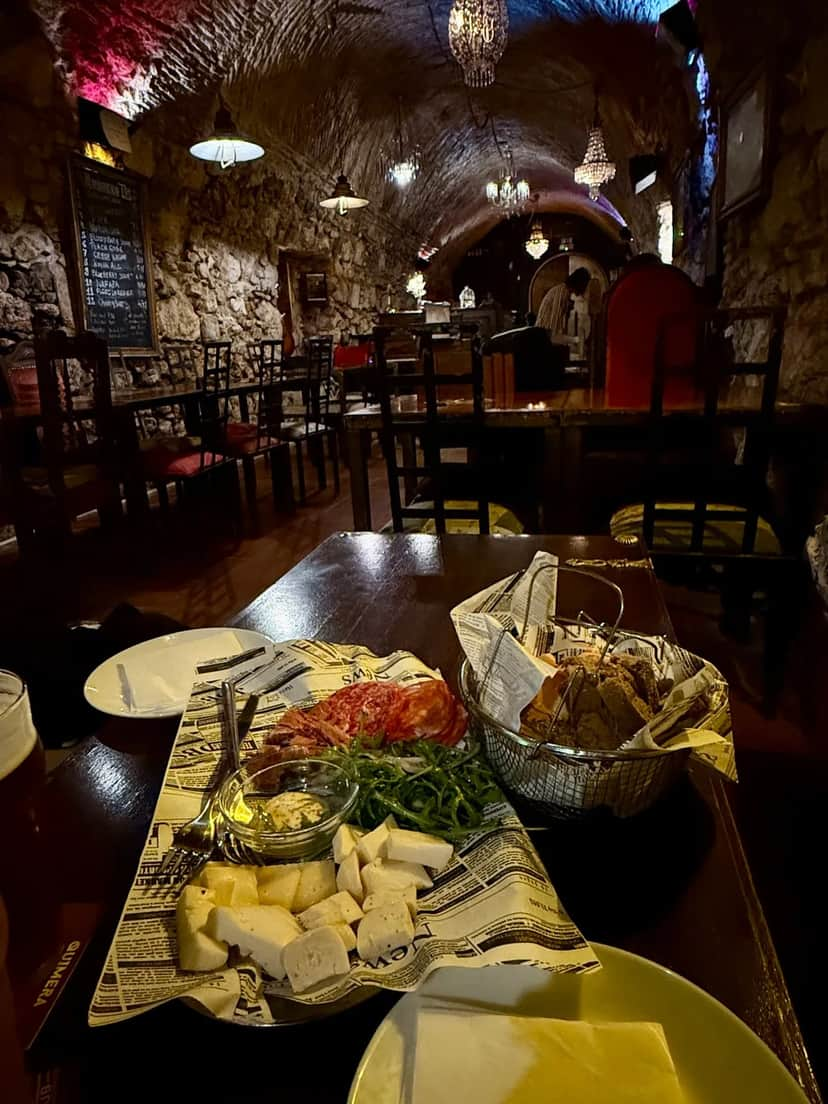 Quimera BrewpubQuimera Brewpub is at Rua Prior do Crato 6, 1350-261 Lisboa, in the Alcântara neighbourhood. It occupies an 18th-century tunnel with rugged stone walls and vaulted ceilings. The tunnel once served as a passageway for royal horses heading to the Palácio das Necessidades, the former royal palace that now houses the Portuguese Ministry of Foreign Affairs. Legend says Manuel II, Portugal's last king, used the same tunnel to escape during the Republican revolution of 1910. The pub opened in June 2016, created by the husband-and-wife team of Adam Heller and Raquel Nicoletti. Adam is a chef from Chicago who was formerly Head Chef of Insólito Restaurant. He first came to Lisbon with his parents, who had read about the city in The New York Times, and they rented an apartment next to Raquel's. Raquel is a Brazilian circus and theatre artist and classically trained musician who had lived in Lisbon for many years. The two met, fell in love and eventually married. Production is a priority here. Twelve taps pour a rotating selection that mixes Quimera's own craft beers with guest brews. The small brewery sits on a lower level of the same building, and Adam spends most days tending it. His Flemish Red Ale and Peach Gold, both barrel aged, won awards at the 2025 Lyon International Concours. Other drinks are available for different tastes. The menu takes its cue from New York delis and centres on gourmet sandwiches and burgers. The Pastrami Sandwich uses Portuguese beef that is cured, then stewed in beer, and finished with black pepper and mustard sauce. The Reuben Sandwich combines beer-braised beef, cheese, sauerkraut and Thousand Island dressing. The cured meat is braised in beer for 24 hours. Salmon Toast is topped with capers, arugula, red onion and cream cheese alongside smoked salmon, while the Kimchi Burger pairs local beef with house-made kimchi and sriracha sauce. Vegan and vegetarian items, starters and light fare are also listed. Sandwiches come on artisanal bread from Gleba Bakery or focaccias by Pausa & Crescente, with potato chips and coleslaw. The kitchen also ferments its own vegetables, including sauerkraut and kimchi. Live music is part of the programme, with jazz nights and open-mic sessions. The space can be booked for private parties and special events. Opening hours are 17:00 to 23:00 on Wednesday and Thursday, 17:00 to midnight on Friday and Saturday, and 17:00 to 22:00 on Sunday.AlcântaraNeighbourhood Bars & Pubs
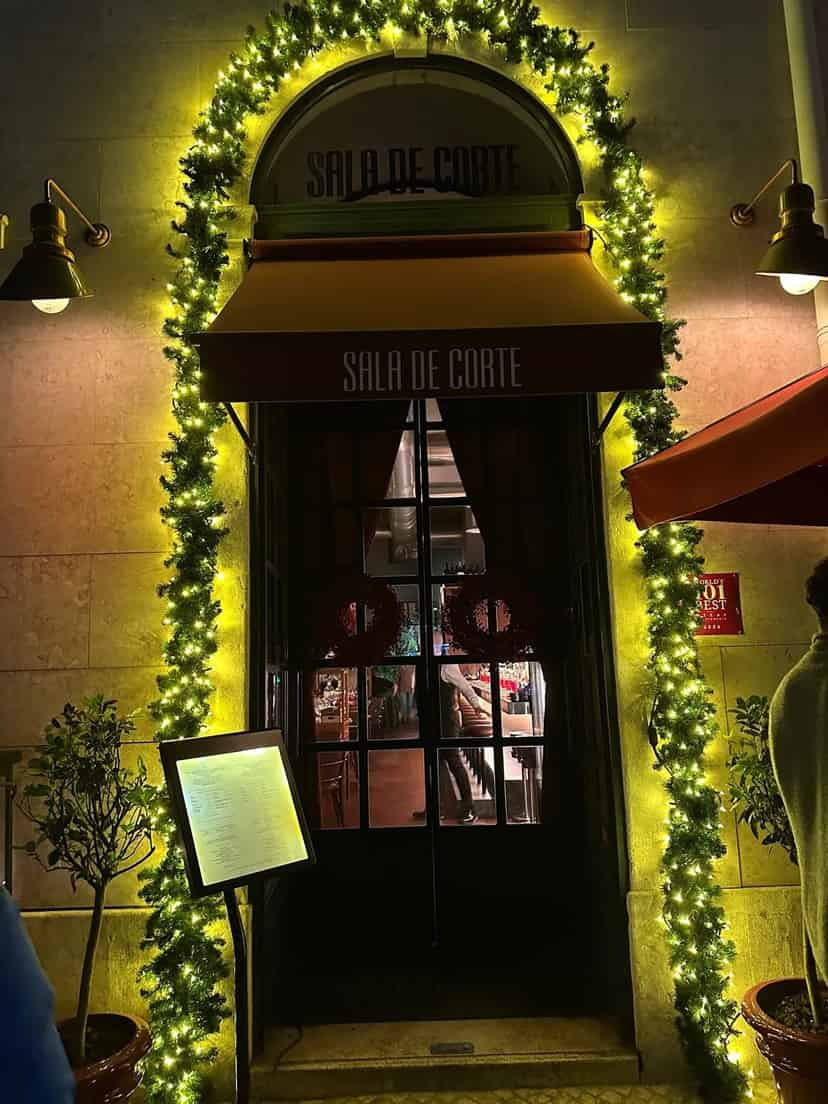
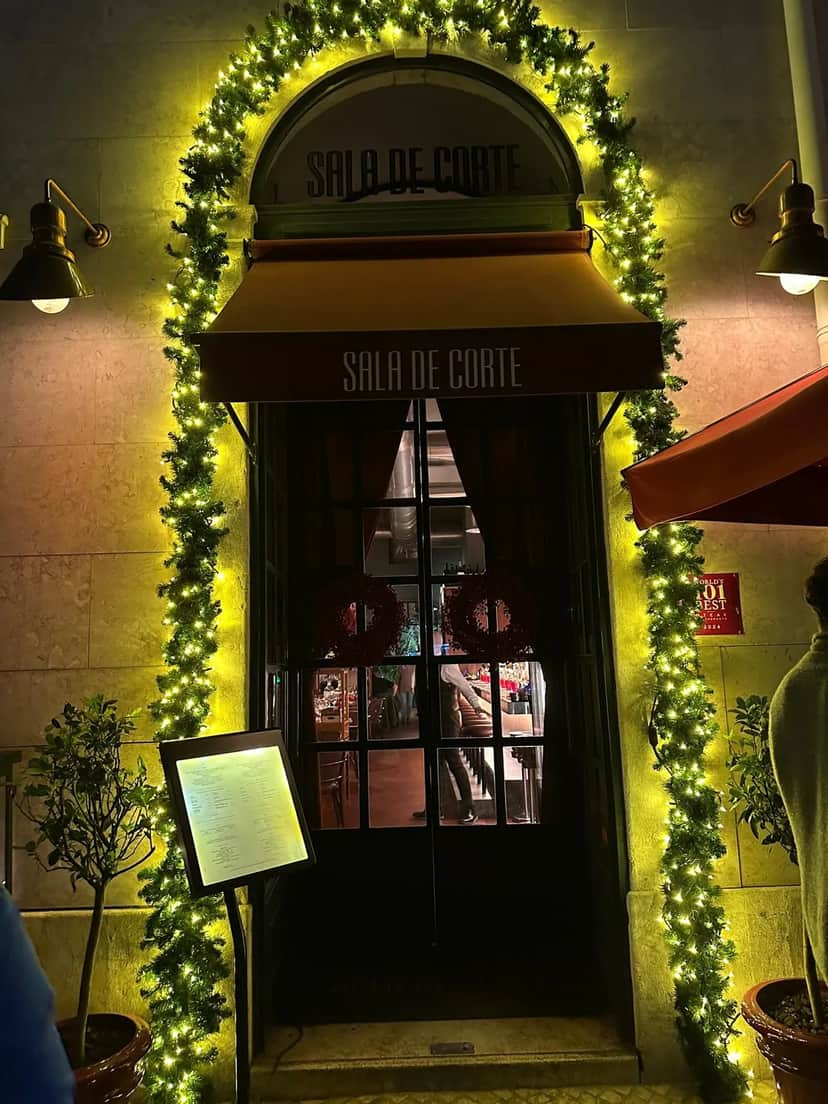 Sala de CorteSala de Corte is a steakhouse located in the Cais do Sodré neighborhood of Lisbon at Praça Dom Luís I 7, 1200-148. It opened its doors in 2015. They serve lunch and dinner daily from 12pm to 3pm and from 7pm to 12am. The identity of this steakhouse rests on the cuts. The beef is aged at the restaurant and then cooked on a Josper charcoal grill. The head chef at Sala de Corte is Antonio Ribeiro. The cuts on the menu include Vazia, Entrecôte, Lombo, Chateaubriand, Lomo Bajo, T-Bone and Kobe Rib Eye. The Chuleton de Vaca Vieja is a dry aged, bone-in Rib Eye that is also listed on the menu. It is also suggested that customers order the spinach esparregado and truffle mashed potatoes as side dishes. It is also said that the waiting staff assists customers with questions and recommendations about the cuts and meat ordering process, especially if a group is sharing. The Kobe Rib Eye is from Japan, and is certified by the Kobe Beef Marketing & Distribution Promotion Association. Displays at the restaurant include a bronze statuette given to stores endorsed to sell the certified beef. Only a small number of eateries outside Japan have this designation. In 2026, World's Best Steak Restaurants published its first list of the 50 best steak restaurants in Europe, and Sala de Corte was listed in 50th place. It is the only steakhouse in Portugal to receive this recognition. Other restaurants in the ranking include establishments in Milan, Paris, Madrid, Glasgow, and Barcelona. The recognition, according to Sala de Corte, is an indicator of the hard work of the staff. To ensure you get a table, you should make a reservation. One article suggests you may need to make a reservation weeks in advance.Cais do SodréRestaurants
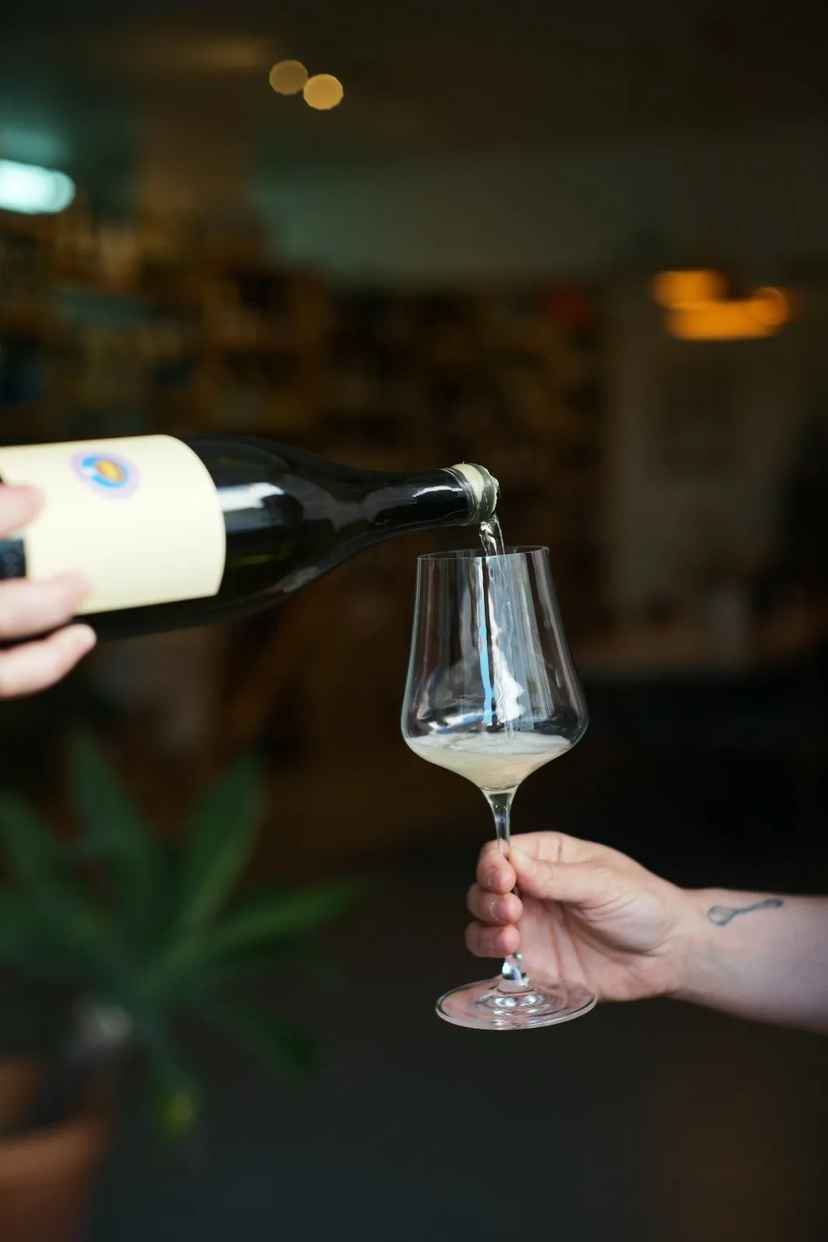
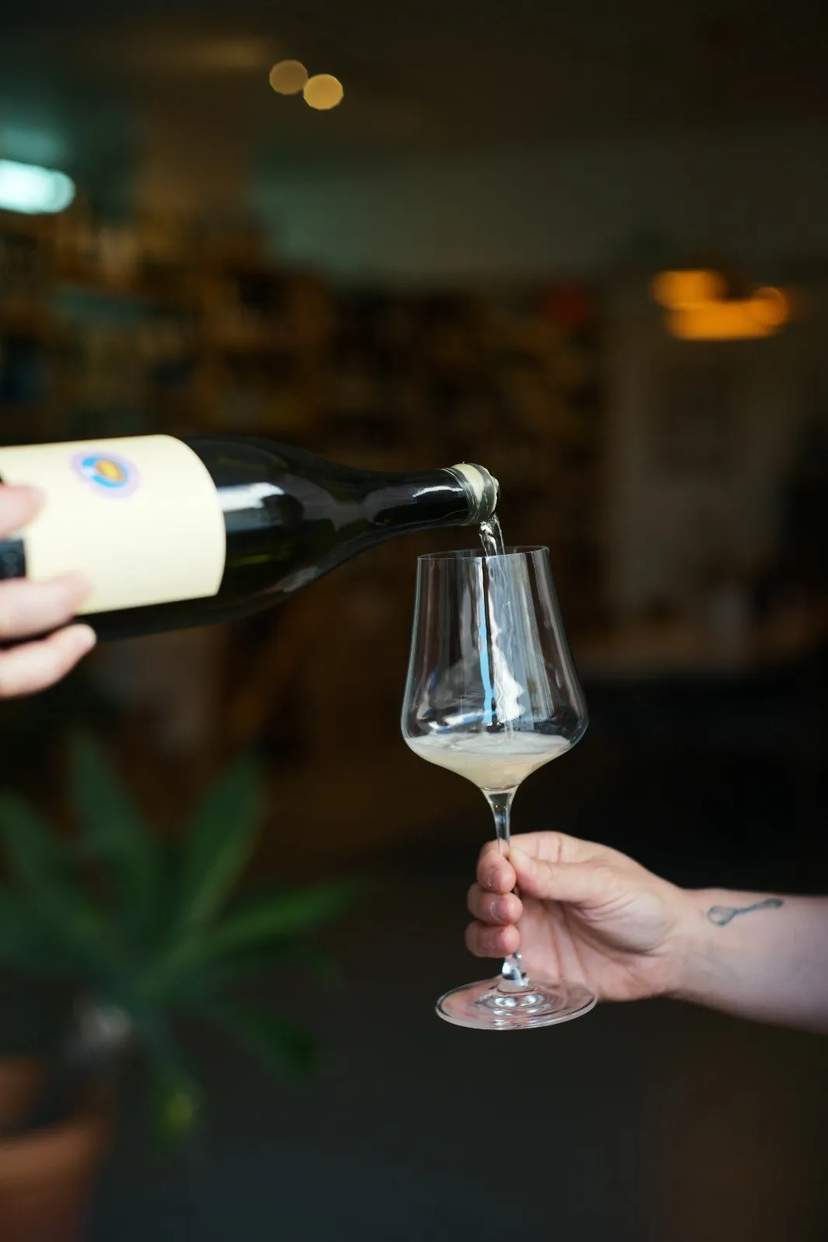 Senhor UvaSenhor Uva was a laid-back, unpretentious neighborhood bistro in Lisbon serving creative seasonal sharing plates alongside a terroir-driven selection of natural wines, born from the joint vision of Chef Stephanie Audet and Sommelier Marc Singh Davidson. It worked closely with local farmers for fresh, seasonal produce and paired an evolving wine list with attentive, easy-going service. After seven years it has closed, with the team now at the nearby PINOT bar de vinhos.LapaRestaurants
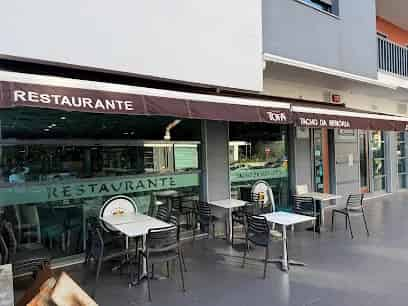
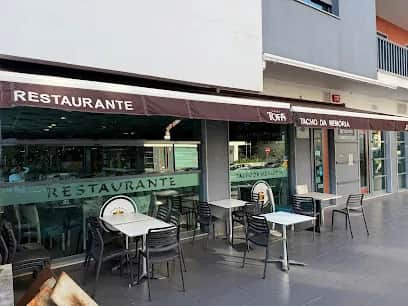 Tacho da MemóriaTacho da Memória is a Portuguese restaurant at Rua Francisco Relvas Marques 2, 2675-218 Odivelas, in the Odivelas neighbourhood. It is closed on Mondays. From Tuesday to Saturday it opens for lunch from 12:00 to 15:00 and again for dinner from 19:00 to 22:30. On Sundays it serves lunch only, from 12:00 to 15:00. A report in the NiT publication says the restaurant had been serving quality Portuguese food in Odivelas for 14 years. It describes the restaurant as one of the best-known in the city. Rui Dantas, who was 49 at the time, calls it a typical Portuguese restaurant. He runs the project with his wife, Manuela Dantas. She spent 18 years working at the Lapa Palace hotel in Lisbon, and he also has a background in hospitality, with experience in several hotel restaurants. Two years before the article, the couple opened another place in Odivelas called À Mesa, where the menu is devoted more to risottos. The article reports that in early June the restaurant gained a second location in Parque das Nações, in Lisbon. Rui Dantas said it was the right moment to expand and reach the capital. The couple had looked at other parts of the city, but Parque das Nações seemed the most suitable. The works took several months. The menu and the decoration there are very similar to those in Odivelas. The new space has two indoor rooms, one with 50 seats and one for 45 people, which suits groups better. A terrace adds another 50 chairs. The article lists dishes from the Parque das Nações menu, which it says matches Odivelas. Starters include tomato soup with a poached egg at 3.90€, seafood cream with prawn at 4.20€, and clams Bulhão Pato at 14€. Main courses include monkfish cheeks with turnip-top migas and garlic at 11.50€, cod with broa at 11.70€, octopus à lagareiro with fried onion at 13.90€, and prawn açorda at 11.20€. There is also beef loin with a cream and mushroom sauce at 14.90€. At lunchtime the Parque das Nações restaurant always offers a dish of the day, with one meat option and one fish option that are not on the regular menu but follow the same concept. Prices there vary with the ingredients used. The article gives an average spend of between 20€ and 30€ at that location. Rui Dantas names arroz à lagareiro as his favourite dish. To win over new guests, he invites them to try the restaurant's cooking and its way of working in the kitchen.OdivelasRestaurants
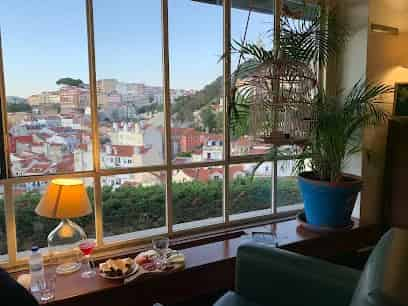
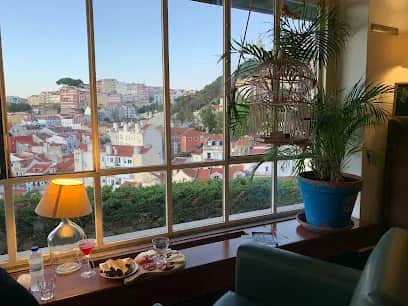 Teatro Taborda1100-022 LisboaMourariaTheatres, Cinemas & Music Venues
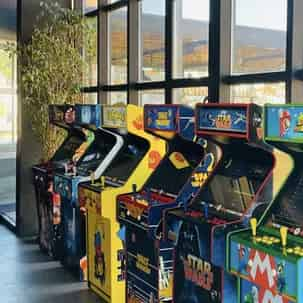
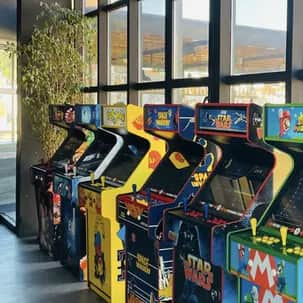 TopoTopo is a rooftop cocktail bar and restaurant in Lisbon, listed under bars and nightlife. It occupies the sixth floor of the Centro Comercial Martim Moniz, on Praça Martim Moniz, in the Mouraria neighbourhood. The full address is Centro Comercial Martim Moniz, 6 Andar, 1100-341 Lisboa, and one listing gives the unit as sala I. The terrace faces the Mouraria quarter and the Castle of São Jorge, and the sightlines are described as unobstructed. One summary places the opening in the mid-2010s. Reaching the bar means a low-key ascent through the shopping centre from the square below. The rooftop sits on top of the building and is framed by open air rather than glass. Tables are spread across a concrete deck, and the city noise arrives softened by the height. Another account suggests taking one of the wooden benches outside and lingering over a cocktail with Portuguese appetizers. From the terrace, Mouraria spreads downhill to the left, the castle anchors the skyline above, and terracotta rooflines fill the middle distance. In the afternoon the light moves across the castle walls. Topo is also a restaurant. AFAR's January/February 2016 issue quoted Epalanga saying that chef Miguel Simoes de Almeida prepares Portuguese dishes with a modern and global twist. Epalanga's advice was to try the alheira croquettes. That piece calls the building a small shopping centre. The venue works as a hybrid. By day it is a relaxed terrace, and later it turns into an energetic cocktail bar. The En Primeur Club says the terrace draws a mix of locals and informed visitors, who treat it as an after-work ritual rather than a tourist stop. The same source says guests who come before sunset claim the leading spots along the parapet. The crowd thickens as the light drops and the castle lights come on, and the evening builds over an hour or two. Its advice is to arrive before sunset. The same source says Martim Moniz is not Bairro Alto or Príncipe Real. It describes the square as sitting at the intersection of the city's oldest migrant communities and its most volatile real estate pressures. It adds that the bars and restaurants established there relate to the neighbourhood differently from venues in more polished districts. Topo opens at 12:30 every day. It closes at 01:00 from Monday to Wednesday and on Sunday, and at 02:00 from Thursday to Saturday. The En Primeur Club lists a price of $30–50 per person, recommends reservations and gives the dress code as casual.MourariaBars & Nightlife
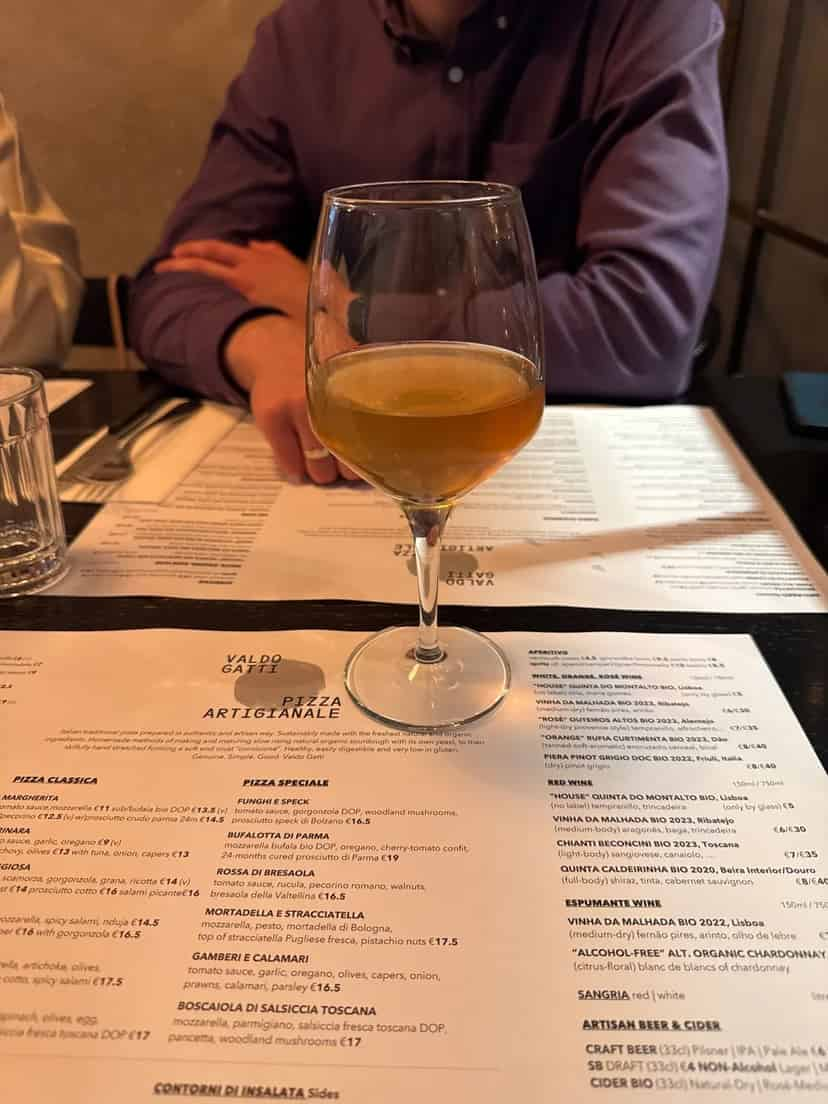
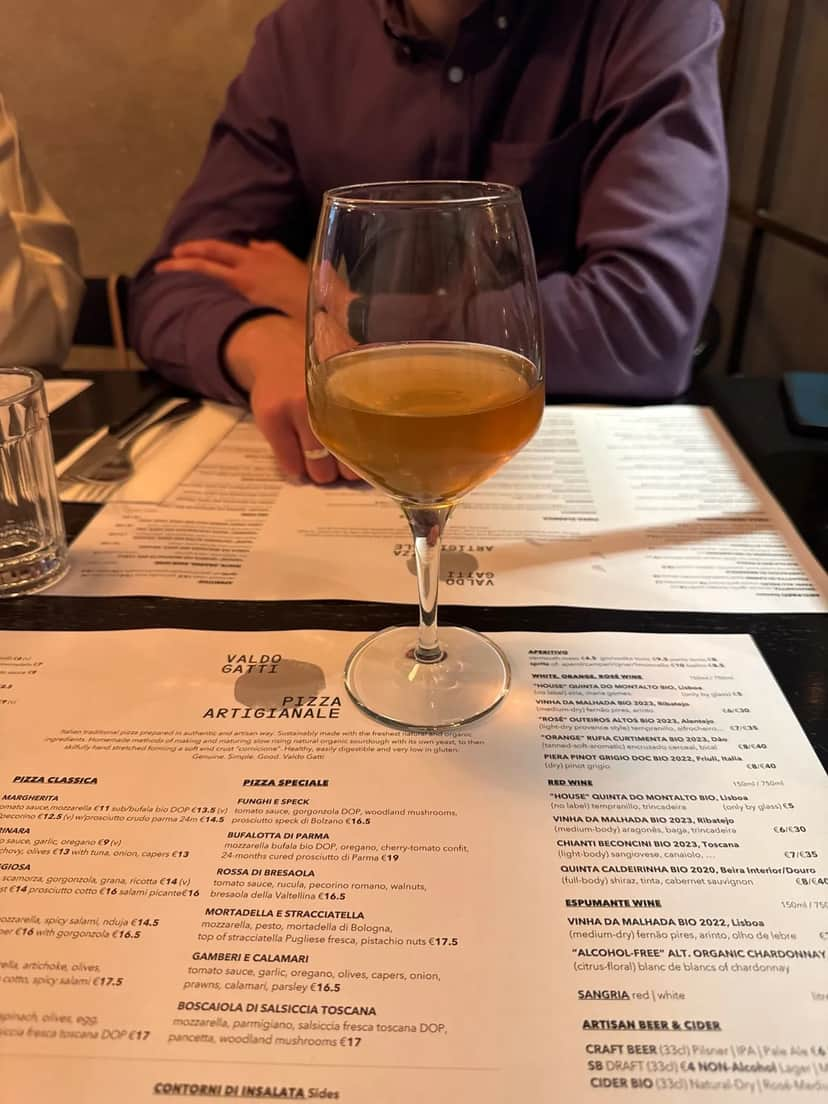 Valdo GattiValdo Gatti is a restaurant in the Bairro Alto neighbourhood of Lisbon, at Rua do Grémio Lusitano 13, 1200-211 Lisboa. It describes itself as authentically Italian, serving handcrafted pizza made with natural and organic ingredients. Wood-fired pizzas are the signature dish, and the kitchen also prepares gnocchi, a truffle mushroom risotto and house-made desserts. Menu entries include Fiorentina, Salsiccia e patata, Bufalotta and a vegan Pannacotta. The interior is described as cozy and rustic. The dough is the starting point of the cooking. It begins with organic semi-wholewheat flour that is entirely Italian in origin and made from grain that is not genetically modified; the menu names Farinha Petra Quaglia Bio. To this the kitchen adds its own homemade natural yeast, called lievito madre, together with water, hand-harvested natural salt and cold-pressed organic virgin olive oil. The dough then rises slowly in a controlled environment and temperature, for an average of 2 days. Pizzaiolos stretch it by hand to form a cornicione, which gives the crust a soft edge. Fresh, natural and organic toppings go on last. The restaurant says the result is a natural, artisan pizza that is low in gluten and easy to digest. The restaurant works only with farmers and producers in Italy and Portugal who share its sustainable values. Suppliers named on the menu include Dulfar Bio for olive oil, Salumificio Pedrazzoli, Quintas da Caldeirinha, Amoreira da Torre, Ponte Reale Bio for mozzarella and Bufala DOP Campana, and Tomarchio Bio Siciliana. Over 90% of its products are organic, fresh and natural. It avoids pesticides, herbicides, genetically modified foods, hormones and antibiotics as far as possible, and it speaks of a toxic-free environment. Vegetarian and vegan options are on offer. The restaurant opens Monday to Friday from 12:00 to 16:00 and again from 17:00 to 23:00, and on Saturday and Sunday from 12:00 to 23:00. Guests are served in order of arrival. When no table is free, they can leave a name and contact on a virtual waiting list and will be told when one opens. Tables that are still available can also be reserved online. For those who prefer to eat at home, delivery goes through the Glovo app, though the restaurant warns that the experience and the quality of the product differ once delivered. Parking in the narrow cobblestone streets of Bairro Alto is difficult, so a taxi, ride-share or public transit is suggested, such as the Elevador da Glória funicular or Bus 758.Bairro AltoRestaurants
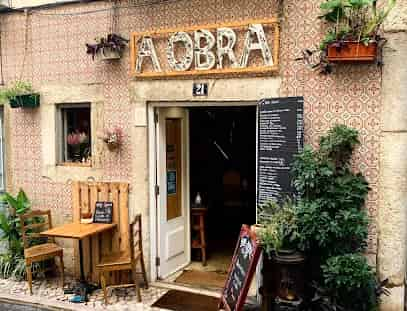
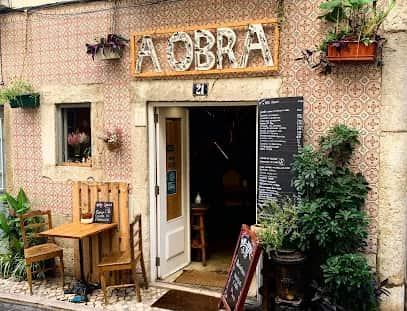 A ObraA Obra is a restaurant at Rua da Silva 21, 1200-446 Lisboa, in the São Bento neighbourhood of Lisbon. It opens every day of the week, from 12:00 until 24:00. The kitchen works in a contemporary style and serves Portuguese cooking that is described as honest and creative, using food from local producers. It also works as a wine bar. The cooking centres on seasonal, reimagined Portuguese comfort food. Rather than standard heavy tourist fare, the kitchen takes traditional national ingredients and old recipes and applies modern culinary techniques, so that individual flavours and textures come through. The menu rotates with the seasons and adapts to whatever local produce and fresh catches are available. The restaurant grew from a wish to celebrate authentic Portuguese flavours without being bound by rigid historical presentation. The wine list favours rare, small-production Portuguese wines, and small-batch regional bottles are part of the offer. The atmosphere is described as intimate, unpretentious and artistic. A Obra is dog friendly and has vegan options. One guide recommends the octopus rice and baked aubergine, noting that customers like them. The restaurant sits on Rua da Silva, a short street of about 200 metres between Santos and Santa Catarina. Locals know it as Rua Verde, or Green Street, and the name comes from plants rather than painted colour: balconies, shopfronts and façades overflow with greenery. Around 2018, a local resident and a nearby business owner began to rethink the street, sharing a love of plants and an eye for sustainability. That sparked a small neighbourhood movement, and the street grew into a symbol of eco-conscious community living. It now hosts occasional workshops, meet-ups and community events that celebrate green living and support local businesses. Reaching it is simple. The street is a ten-minute walk from Cais do Sodré station and close to the scenic route of tram 28, whose nearest stop is R. Poço Negros. Walking from one end of the street to the other takes under ten minutes, and it is best seen as a quirky detour while wandering the café-filled streets of the area. The few other spots there are independently run: Tania Gil Jewelry offers handcrafted jewellery, Buna Specialty Coffee is just around the corner, and Mambo serves Angolan, Senegalese and Cape Verdean dishes. One guide describes these places as quietly interesting and genuinely local.São BentoRestaurants
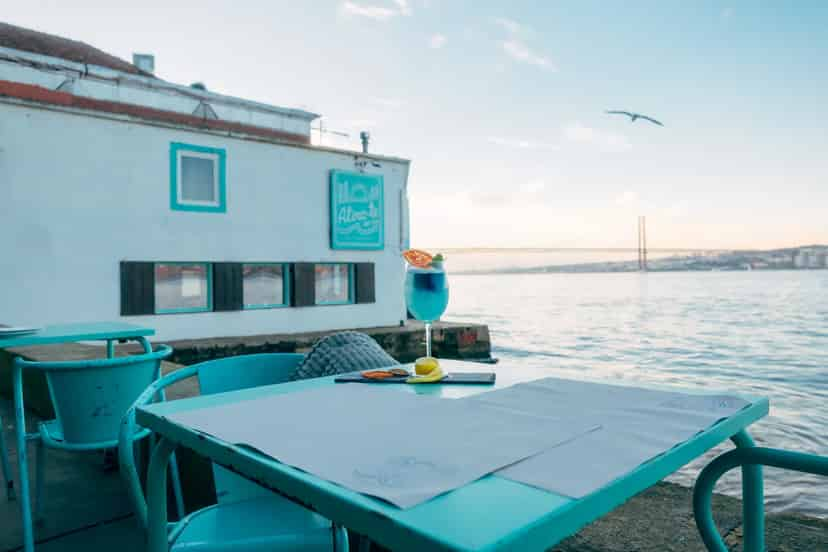
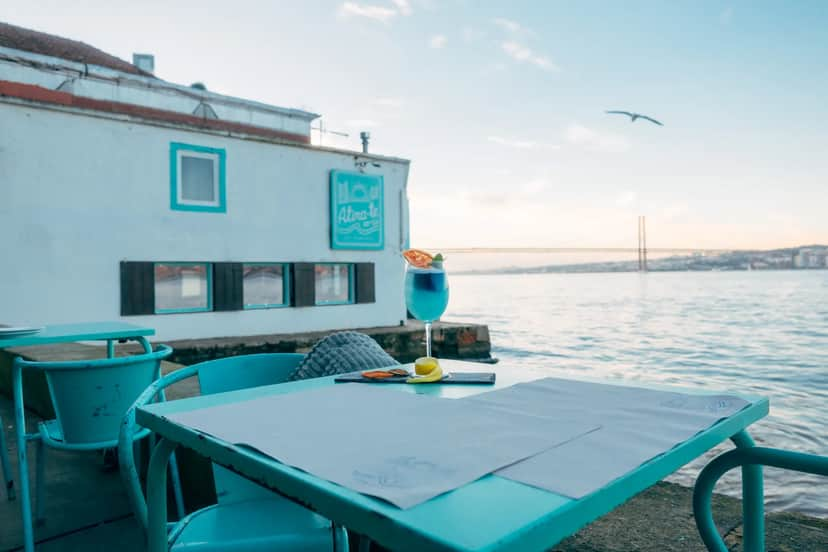 Atira-te ao rioAtira-te ao rio is a restaurant at Rua do Ginjal 69, 2800-284 Almada, on the Cais do Ginjal quay on the south bank of the Tagus, directly across the water from Lisbon. Its name translates as "throw yourself into the river", and the dining room does face the river, the sea and the Atlantic. The horizon is framed by the 25th of April Bridge, and the outlook takes in the old town of Lisbon. It opens every day, from 12:30 to 16:30 and again from 19:00 to 22:30. The kitchen follows the seasons, using ingredients at their peak and giving priority to Portuguese suppliers. Vegetables are organic, and sea fish arrives fresh every day. Daily suggestions are driven by the quality of those ingredients and the passion put into preparing them. The restaurant lists good food, good music, warm hospitality and simplicity as its characteristics. One visitor called the menu typically Portuguese, with well-presented, tasty dishes, and ordered an octopus salad and shrimps. Another, dining in December 2025, had teriyaki salmon with sweet potato purée and pak choi for 22,00€, garlic shrimps (Camarão à Guilho) for 16€, and a bottle of Oxalá Granítico wine for 23€. A visitor calls the staff really nice, and the chefs can be seen working in the open kitchen. Outside there is a terrace with heaters and blankets, and indoors a room with a burning stove. In winter, the large windows keep the view almost as good as it is outside. Sitting over the river can feel windy and chilly after sunset, so a light jacket or sweater is advised. One source says the restaurant is always fully booked and recommends making a reservation. To reach it from Lisbon, take the ferry from the Cais do Sodré terminal to Cacilhas, a cheap crossing of about 10 minutes, then walk roughly 10 minutes along the old dockside. Parking on the narrow quay is tricky, so leaving the car behind is suggested. The walk passes near the Escadaria da Boca do Vento, where an elevator rises to the top of Almada, and the Cristo Rei statue is a short distance away. A boat taxi service is also mentioned, running from any deck in Lisbon. The old warehouses along the route are gone; a redevelopment plan covers around 90,000 square metres, including around 300 homes, stores and services, a hotel with 160 rooms, social facilities and 500 parking spaces. Ponto Final is a nearby restaurant.AlmadaRestaurants
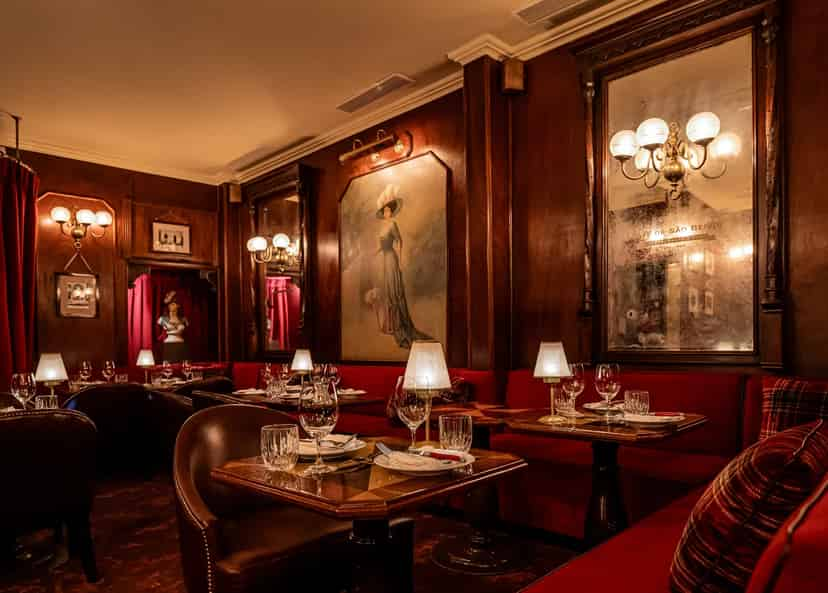
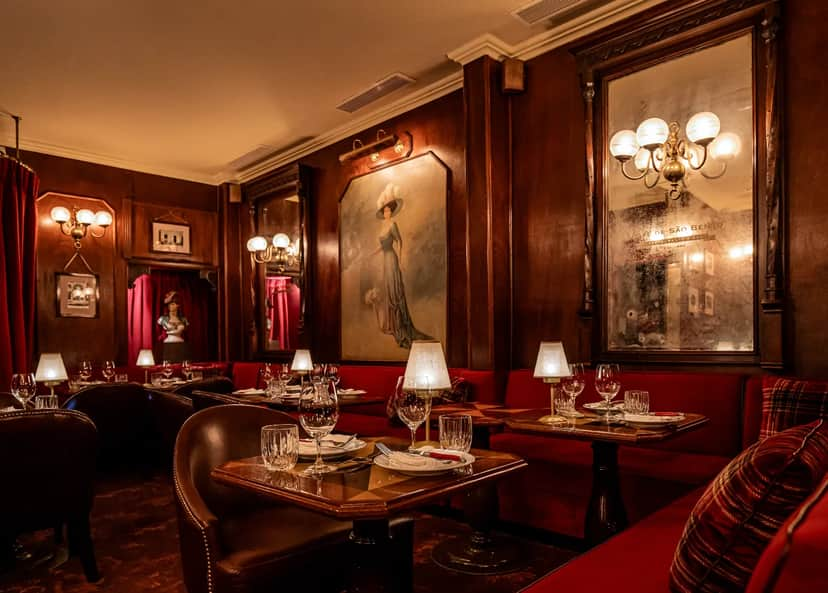 Café de São BentoCafé de São Bento can be found at Rua de São Bento 212, 1200-821 Lisboa, in the São Bento area. According to Google, this restaurant is situated near the Portuguese Parliament. They serve lunch from 12:00 to 15:00 and dinner from 19:00 to 1:00, every day of the week. Their website states that more than two hundred years ago, a man from Naples by the name of António Marrare, opened a café in Lisbon and created a steak recipe that became very famous. The founders of Café de São Bento explored to find this steak recipe. They refined the recipe and it has remained the same since. The website states that the steaks are the best in Lisbon and the restaurant has been open for more than 40 years. The signature dish, Bife à Café de São Bento, is related to bife à Marrare. The cut is either loin (filet) or vazia (contra filet). It is served in a creamy sauce. The best way to enjoy it is with fries to mop up the sauce. According to Google, a fried egg should be on top. There are other steaks on the menu. The bife à Portuguesa is steak with a garlic and bay leaf and is another traditional steak. Lastly, there is the Bife Grelhado, which is a simple grilled steak. The website mentions there are traditional as well as modern dishes, as well as a separate food and drinks menus. The site calls the Rua de São Bento room a tribute to Lisbon’s historic cafés. It specifies that guests should ring a bell, and that the space is well-suited to lengthy meals. The Google review alludes to the original space being small, so it suggests advance table reservations for weekend evenings. TheFork is mentioned as a possible reservation resource. The review also recommends dressier attire. The restaurant has additional branches. One is in Lisbon’s time out market in the Mercado da Ribeira. It uses the original house recipe. Another is located in the Lisbon Baixa district, overlooking the Rua das Portas de Santo Antao. The district is known for the city’s historic theaters and performances. A fourth branch is located in the historic center of Cascais, Portugal, in the Rua Alexandre Herculano.São BentoRestaurants
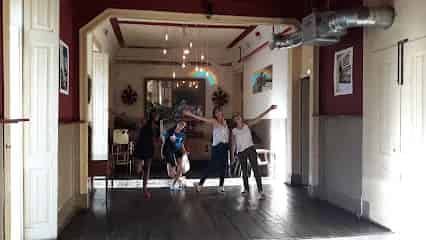
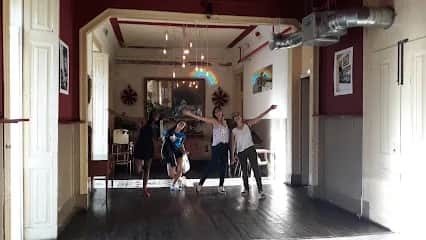 Casa IndependenteLocated at Largo do Intendente 45, 1100-285 Lisboa, Casa Independente is a cultural centre and bar in the Intendente district of Lisbon. Housed in a historical building from the 19th Century, it offers a programme of musical performances, exhibitions and parties. The venue also has a terrace. It's listed hours are Tuesday through Thursday from 2 PM to midnight, Friday from 2 PM to 2 AM and Saturday from noon to 2 AM. The hours for other days are not listed. The cultural center opened its doors in 2012 during a movement to redevelop the area that had previously been known for prostitution and the drug trades. It has been stated that Casa Independente was pivotal in contributing to the cultural transformation of Lisbon. It has also been stated that Casa Independente has been the bohemian heart of the neighborhood and the most relevant nighttime and musical establishment in the area. Time Out Lisboa reported on September 29, 2025 that the building was sold and the lease was not renewed. Craveiro Lopes and Valdez were notified of the sale in October 2023. The duo wished to relocate the project by March 2026. More recently, the project owner reached an agreement to extend the project for an additional year. Due to this agreement, the project will close its doors in December 2026. According to the project owner, multiple solutions to extend the project's operation past 2026 were not successful. The project owner added that, during the current political term, the project's efforts to use a municipal building, under the protection of the current council, was unsuccessful. The project owner believes the building's owner, like many building owners in Lisbon, opted to promote projects that are more profitable, like hotels and condos, rather than supporting cultural projects. As the project is set to close its doors, the owner intends to implement programs that will establish the center as a project of resistance and celebration. As noted by On the Grid, the neighborhood of Intendente has a diverse and multicultural population. The area has been improving in recent years and features a mix of 19th century buildings.IntendenteCafés & Coffee Shops
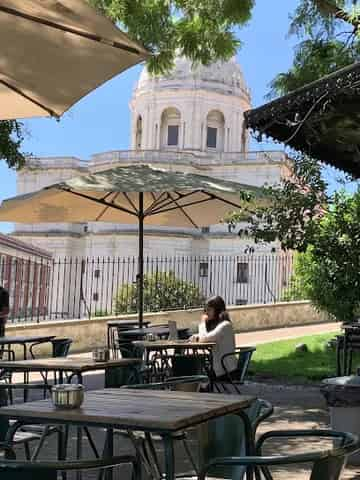
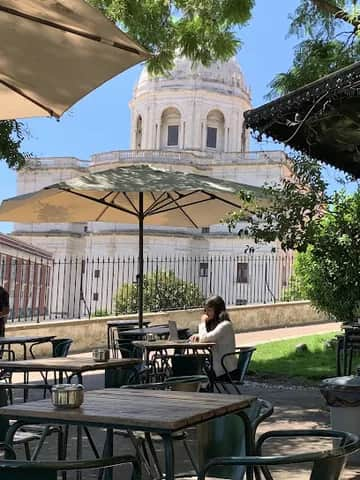 Clara ClaraClara Clara is a café and coffee shop in Lisbon's Graça neighbourhood, run as an open-air kiosk with an esplanada. It sits inside Jardim Botto Machado, a leafy garden on the Campo de Santa Clara, and the postal address is Campo de Santa Clara, 1100-474 Lisboa. The place is described as a beloved fixture of the neighbourhood. The setting is a large part of what the sources emphasise. The garden lies directly opposite the National Pantheon, called the Panteão Nacional in Portuguese, and the kiosk is described as overlooking that monument. The spot also offers sweeping glimpses of the Tagus River. Another description places the café in the very heart of the Feira da Ladra flea market, on the same historic square, the Campo de Santa Clara, where the garden stands. The offer is casual and affordable. Clara Clara serves light bites, fresh drinks and comforting daytime treats, all in an outdoor setting among the leaves of the garden. Opening hours are the same every day: the kiosk is open Monday to Sunday, public holidays included, from 10:00 until 21:00. Clara Clara is described as a quiosque, the Portuguese word for kiosk, and this kind of venue has a long story in the city. An article on Portugal.com notes that you rarely go more than a few blocks in Lisbon without coming across another of the hexagonal quiosques. The first one opened in 1869 in Rossio Square. At the start they served wine and beer, and later they added traditional snacks such as fried fish, which drew a mix of people from dock workers to the Lisbon elite. Their designs show features of the Art Nouveau movement, while the domes on top, called muqarnas, reflect the influence of the Moorish invasion of Portugal in 711. These gathering places offered community and a place for everyone until the 1930s. When Salazar came to power, his regime, known as the Estado Novo, aimed to promote corporatism and discouraged socialising in public. Kiosks, as centres of social life, were neglected and eventually abandoned. The article's account of their revival begins in 2009 with Catarina Portas, a local. To find it, look for the Campo de Santa Clara in the Graça neighbourhood, postcode 1100-474 Lisboa, and the garden across from the National Pantheon. Because the kiosk opens at 10:00 and closes at 21:00 every day of the week, a visit is possible from morning through the evening, on public holidays too.GraçaCafés & Coffee Shops
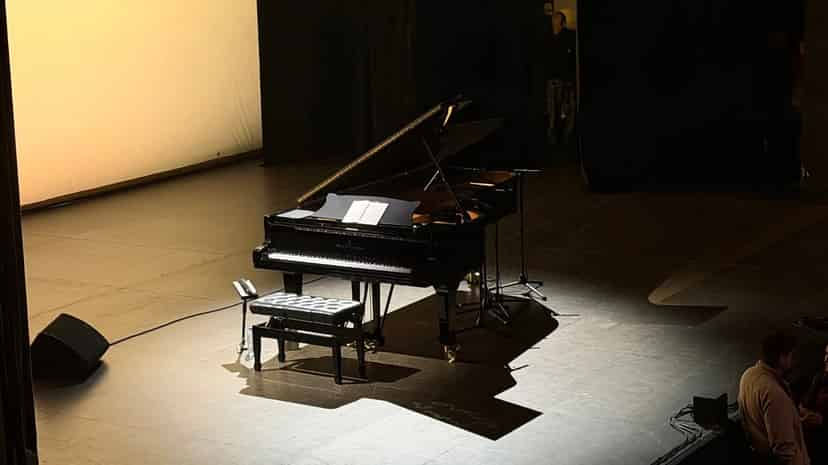
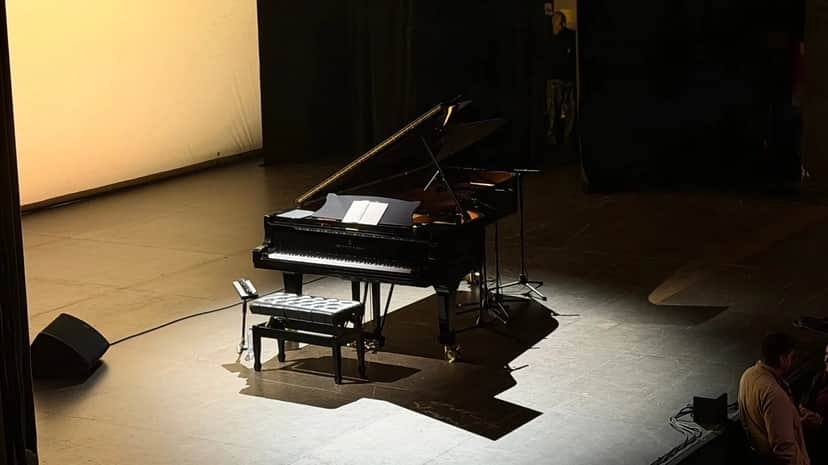 Coliseu dos RecreiosThe Coliseu dos Recreios is an auditorium and concert hall located at Rua das Portas de Santo Antão 96 in the Bairro Alto district of Lisbon. It is on a busy street full of foot traffic. Capacity varies depending on the event set-up. The hall opened on August 14, 1890 with the operetta Boccaccio by the Croatian composer Suppé. The hall was designed in the form of a nonagon. The roof of the Coliseu dos Recreios is an iron dome constructed in Germany. The dome measures 48.68 meters. It was raised into place at a rate of 2 meters per hour. Also in 1890, circus performances started, and have been an important part of cultural activities at the Coliseu ever since. The first registered performance was on the 18th of October of that year. An Equestrian and Acrobatic Company combined several performances including Awata the Japanese juggler, Mlle. Jany the equestrian high-school performer, Virginia Aragón, the Christian family acrobats, Kitchee who used dry bamboo. In addition, Hagen-beck displayed trained elephants, a performer by the name Fernandez used the horizontal bar, and there were several clowns. A Christmas circus is held at the Coliseu, and the 2026 edition will be held from the 6th of December to the 27th of December. From 1923, Ricardo Covões expanded its cultural program. Types of performances at the Coliseu were revue shows, skating, and boxing, as well as operas, plays, and ballets. Masked Balls were also hosted at the Coliseu. He implemented an affordable pricing policy, so that the public could have easier access to culture. The 26th of February of 1994 was the reopening of the Coliseu under the “Lisboa 94” program. From 2025, the Coliseu also has the Coliseu Club, which is a smaller stage for shows and concerts. Starting from October of 2026, there will be a great diversity of performances at the Coliseu. The show Gilsons, will be performed on the 17th. Followed by “Coisas Naturais”, performed by Marina Sena, on the 25th. Rossini’s O Barbeiro de Sevilha will be performed on the 8th of November. Tickets can be purchased at coliseulisboa.com.Bairro AltoTheatres, Cinemas & Music Venues
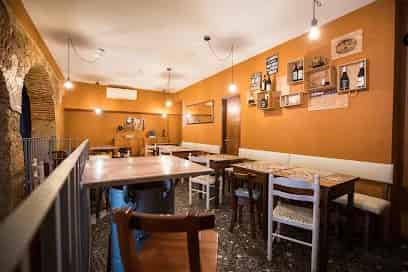
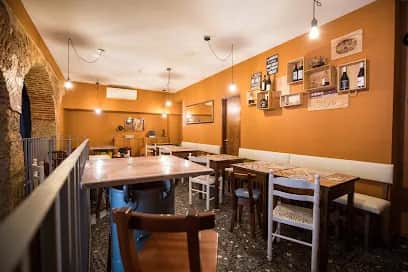 Da Prata 52Da Prata 52 is a restaurant at Rua da Prata 52, 1100-150 Lisboa, in the Baixa neighbourhood of Lisbon, Portugal. Descriptions place it in the heart of the city's historic downtown. One of them spells the name daPrata52 and says the venue is a wine bar as well as a restaurant. Descriptions call it a contemporary restaurant, and the first specifies Portuguese cuisine. They also present it as popular and highly rated. According to the second description, the menu takes contemporary approaches to traditional Portuguese and Mediterranean flavours. It puts particular emphasis on fresh seafood and rich meats, and it also includes vegetarian and vegan alternatives. The same text promises a list of highlights, but the available material names none, so no individual dishes are mentioned here. Opening hours follow a slightly uneven weekly pattern. On Monday and Tuesday the listing gives 10:00 to 23:30. Wednesday opens later, at 17:00, and closes at 23:30, as on the other days. From Thursday to Saturday the venue is listed as open from 10:00 until 23:30 again. The listing gives no hours for Sunday. A property investor's page about Rua da Prata 10-22, a separate building on the same street, says it has often been the backdrop for tourist snapshots. The page describes that building as an eyecatcher, with beautiful decorations and medium-high architecture, made to withstand the times and the elements. It has six floors, with the upper levels reserved for offices. It forms an entire block together with Rua do Comércio, which belongs to the same company's portfolio. The same page ties the whole area to the period after 1755, when the Great Earthquake laid the neighbourhood to waste. It calls the Pombaline Cage Technique the first example of earthquake-resistant construction. Today, many of these buildings are occupied by banks, insurance companies and public institutions. The page adds that many schools and universities are nearby, that parking is easy, and that public transport is excellent, whether by metro or by boat. It argues that an office here helps keep life and work in balance. Put together, the record places Da Prata 52 at number 52 of Rua da Prata, in Baixa. It serves contemporary Portuguese and Mediterranean-influenced food, with seafood, meat and plant-based options, in an area whose buildings date from after 1755.BaixaRestaurants
 ElevenEleven is a restaurant in the Avenidas Novas neighbourhood of Lisbon, at Rua Marquês de Fronteira, 1070-001 Lisboa. It stands next to the Amália Rodrigues Garden, at the top of Parque Eduardo VII, on one of the highest points in the city. A Google overview describes it as a modern fine-dining destination that combines Mediterranean gastronomy with striking architectural design and panoramic views. The restaurant's own website places it on the highest hilltop in the city and mentions a magnificent view over the Old City. The kitchen is led by chef Joachim Koerper, who describes his cooking as Mediterranean and says he works exclusively with seasonal products. The restaurant presents its concept as sophisticated Mediterranean cuisine that uses only the freshest products available, and it calls the cooking creative. Koerper fell in love with the cuisine and ingredients of Southern Europe long ago. The concept is closely linked to his skills and to his wish to adapt his creativity to the place where his restaurants are located. That means recreating traditional recipes and finding new ways to use ingredients from local markets. His career began 50 years ago in Germany, his home country. Over the following five decades he lived and cooked in several countries, where he trained and gained experience as a chef. He describes the menu as a voyage through that life route, with creations built around the places that meant the most to him, and he hopes diners will find his essence in them. The ambiance is described as cosmopolitan and comfortable. Drapes, candles, soft lights and music transform the space to create an atmosphere that is vibrant during the day and intimate at night. The restaurant advises reserving a table in advance, and a booking option appears on the website, which is available in English and Portuguese. Eleven also hosts events for groups, and its website presents it as a place for celebrating special moments, both personal and professional, including weddings. It calls the venue a stunningly beautiful place, citing its location and its view. For weddings, hosts can welcome guests at the hilltop venue and treat them to Koerper's creations. A private room with a terrace overlooking Lisbon is available. The space is described as full of character and originality. Lunch is served from 12:30 to 15:00 and dinner from 19:30 to 23:00, Monday to Saturday.Avenidas NovasRestaurants
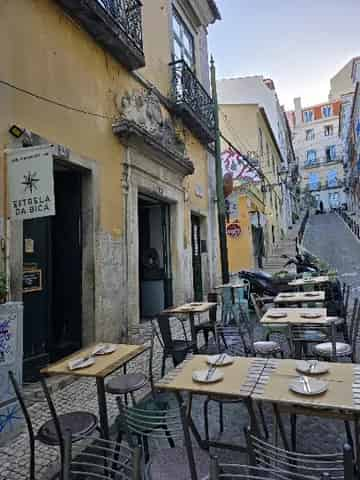
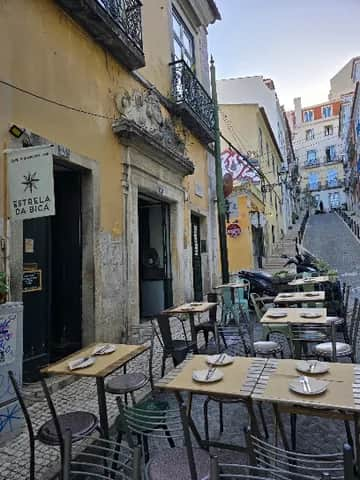 Estrela da BicaEstrela da Bica is a restaurant and bar at Travessa do Cabral 33, 1200-073 Lisboa, listed under the Bairro Alto neighbourhood. It is run by women and works as a neighbourhood restaurant, set in a steep, narrow lane in the historic Bica district of Lisbon. That quarter has traditionally been home to fishing and working-class families. The restaurant stands right beside the Bica Funicular, known as Ascensor da Bica, and close to the former home of the fado singer Fernando Farinha. Inside, the look is artistic and laid-back. The furnishings are vintage and were salvaged from a school: rustic wooden tables, maps on the walls, and chalkboards where the menu is written. Another visitor account mentions stone walls and trams rattling past right outside. Time Out says the lower end of Bica has become trendy and that the place draws an arty crowd. The cooking sits between a traditional Portuguese tavern and a modern, globally inspired tapas bar. Dishes are contemporary small plates meant for sharing, with both vegetarian and meat options. Time Out noted that the food differs from the average Lisbon tavern, citing beetroot burgers and salmon with a chia crust. A Trip.com post points to homemade pasta, including tagliatelle with truffle, and to desserts such as chocolate mousse and lemon tart. To drink, the venue offers natural wines and craft cocktails, and sparkling water is also on hand. When it opened, it was considered a pioneer among the early modern, creative culinary spots in Bica. It arrived as contemporary middle-class and artistic interest began bringing new life to the area, before the district became a major tourist hub. Doors open at 19:00. On Monday the restaurant closes at 23:30, from Tuesday to Saturday it stays open until midnight, and it is closed on Sundays. The dining room is small, and walk-ins during peak dinner hours often face a long wait, so booking ahead through the venue's Instagram or by phone is advised; the number is (+351) 21 347 3310. The Trip.com post suggests visiting on a weeknight to avoid queues and to get a window seat. For getting there, Time Out lists Metro Baixa-Chiado or Cais do Sodré, and Tram 28; the walk from Bairro Alto or from Cais do Sodré, known as Pink Street, is about five minutes. The lane is a steep, cobbled hill, so high heels are best left at home. In a 2016 listing, Time Out gave main courses as costing €8.70 to €13.Bairro AltoRestaurants
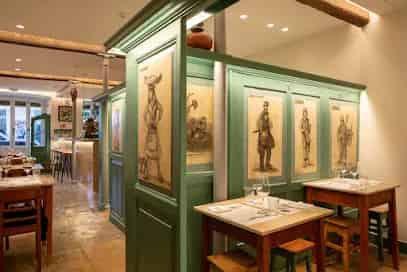
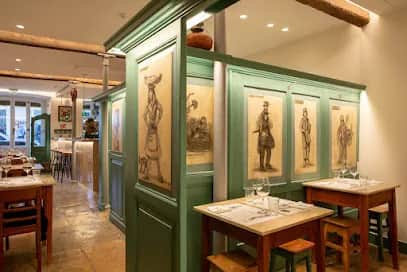 Faz FrioFaz Frio is a restaurant at Rua Dom Pedro V 96, 1250-094 Lisboa, in the Príncipe Real neighbourhood of Lisbon. It is described as a traditional Portuguese restaurant and former tavern that joins a bohemian heritage with upscale comfort dining. Its owner cannot say with certainty how old the place is, but he knows it has been around for about a century, and council records suggest it goes back to before 1863. It stands at the top of one of Lisbon's seven hills. Longevity runs through the staff as well. The oldest serving partner, a former Navy cook, has worked there since the 1970s. That partner, Mário Gouveia, brought with him a special recipe for seafood paella, which gave the restaurant its good name and is still served every day. The paella is the house specialty, and the kitchen also prepares other standard traditional Portuguese dishes, including Alentejo bread soup, steaks and bacalhau, which is salt cod. The bacalhau is cooked to a different recipe on each day of the week. Faz Frio is also one of the last eating places in the city where a table can be booked in a private cubicle, as at Estrela da Sé. Several eateries once offered this option, and it is easy to imagine how useful it was to political gatherings or to couples. Wooden partitions close the cubicles off from the interior and from the outside. Drawings on these partitions stand out in the decoration. They show trades and professions, many of which have since disappeared, in which vendors offered wares and services in the streets. The fava-rica (bean soup) seller, the knife grinder and the water carrier all appear among them. The interior combines stone slab floors, iron columns and blue and green tiles. Together with the lighting and a warm welcome extended to all guests, these shape the character of the place. It could be on the outskirts of the city, or it takes visitors back to another time, when people had time to just be. That contrasts with the rapid, cosmopolitan pace of Príncipe Real, yet the restaurant fits in and even complements its surroundings. According to the listed opening hours, the restaurant is open from 12:00 to 24:00 on Monday to Wednesday and on Sunday, and from 12:00 to 01:00 from Thursday to Saturday. For an outing in the area, one guide suggests visiting Casa Achilles, then going up the hill to Casa dos Enxovais, having an aperitif at Pavilhão Chinês, and then crossing the street for dinner at Faz Frio.Príncipe RealRestaurants
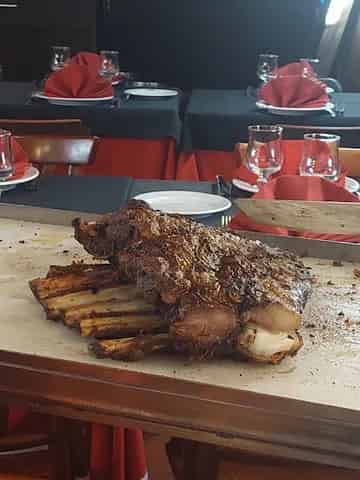
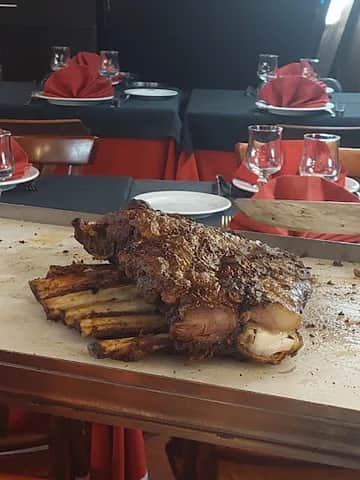 Fogo de ChãoFogo de Chão is a restaurant with more than 30 years of history in Portugal, inheriting the gaucho tradition of Rio Grande do Sul, serving the traditional cuts of meat grilled over charcoal in the original gaucho style. In addition to churrasco, it offers starters, hot and cold buffets, desserts and bar service. It has 12 distinct spaces, from the north to the south of the country and also in London, located in the main points of the cities, serving both leisure gatherings and business meetings.SaldanhaRestaurants
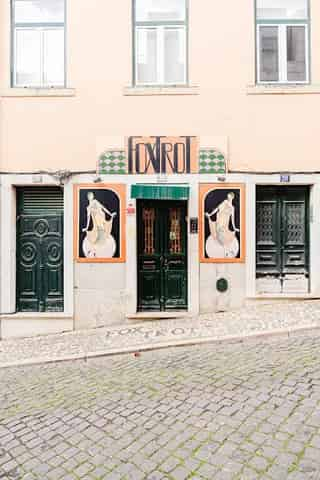
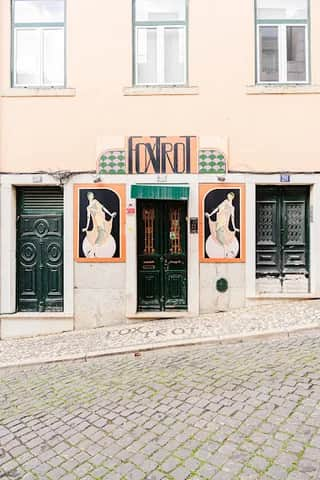 FoxtrotFoxtrot is a bar located at Travessa de Santa Teresa 28, 1200-405 Lisboa, in the São Bento neighbourhood. Other sources state that the address is in the Príncipe Real neighborhood and describe it as a tranquil, side street. The streets there are narrow and bordered by old buildings. According to Lojas Com História, 47 years ago, the bar’s opening came after the Carnation Revolution (25th of April). Another source reports that the bar has been open for over 38 years, and notes that, like the others, it is one of the older bars in the city. The source states that it is a point of reference in the Lisbon nightlife scene for both the Portuguese and foreign clients. Decorating the bar was Luís Pinto Coelho. There is discrepancy among the sources for the style of the bar. Lojas Com História states that it is in the Art Nouveau style, and the other source states that it is in the Art Deco style. The other source states that it is like an English pub. It has four, dimly-lit rooms. It has a garden, which is used during the summer. The other text states that it is a good place to get a drink at the end of the work day. According to an article, Foxtrot places at #339. The article states Foxtrot is a bar that represents craft cocktails and offers a different side to the city’s drinking scene, which is dominated by wine, ginjinha and aguardente. The article states Foxtrot is more tight-knit and less theatrical compared to Red Frog. A page on The Vendry also provided a Condé Nast Traveler article, dated November 12, 2018, about the bars in Lisbon. It is closed on Sunday. According to En Primeur Club, the cost per person is between $20 to $30, and patrons are encouraged to make a reservation. The dress code is smart casual.São BentoBars & Nightlife
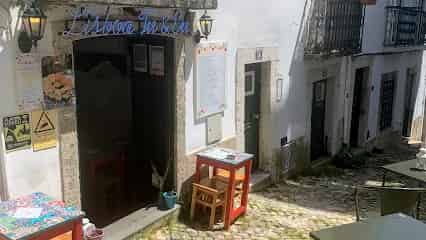
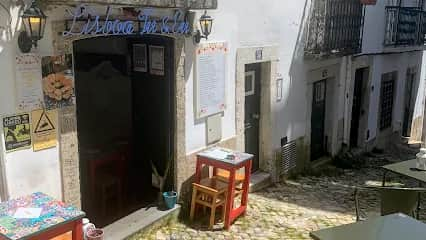 Lisboa Tu e EuLisboa Tu e Eu is a restaurant in the Alfama neighbourhood of Lisbon, at Rua Adiça 58, 1100-538 Lisboa. It is tucked into the historic, labyrinthine alleyways of the district, among steep cobblestone lanes, and it operates as a neighbourhood tasca, the Portuguese word for a traditional tavern. The place is tiny, and it is often described as a hole-in-the-wall. It sits away from the heavily commercial tourist strips and is a favourite with diners. The kitchen does not serve formal, multi-course seated meals. It concentrates instead on authentic Portuguese small plates and petiscos, made with fresh ingredients. The food is described as classic, unpretentious, home-cooked Portuguese seafood and comfort cooking, designed to be shared. The atmosphere is cozy, lively and intimate. Eating here is said to feel less like visiting a commercial restaurant and more like stepping into a local family's home. Space is so limited that diners end up practically rubbing shoulders, and a resident cat may be seen lounging nearby. The listed opening hours cover every day of the week, Monday to Sunday, from 09:30 to 23:00. The original location on Rua Adiça does not take bookings, and because of its microscopic size, groups are capped at a maximum of five people. Lines form quickly at peak lunch and dinner times, so the advice is to arrive early or be ready to wait on the stairs outside. The group limit is tied to the small size of the room, while the lines are tied to the venue's popularity as a favourite away from the tourist strips. Payment is typically cash only at this original address. Visitors are advised to bring around €40-€60 in small bills, as cards are typically not accepted. The tight layout and the uneven cobblestones of Alfama mean the venue is not wheelchair accessible. On Tripadvisor the restaurant holds a rating of around 4.5 out of 5 across thousands of reviews. Diners praise its heartwarming service, its flavour-to-price ratio and its vibrant soul. The main caveats they mention are the long waits, with lines stretching out at busy times, and the strict no-reservation policy. Because of its popularity and small size, a nearby sibling location, Lisboa Tu & Eu 2, has opened at Escadinhas das Portas do Mar 4. It is a separate address from the original, which remains the one purists seek out.AlfamaRestaurants
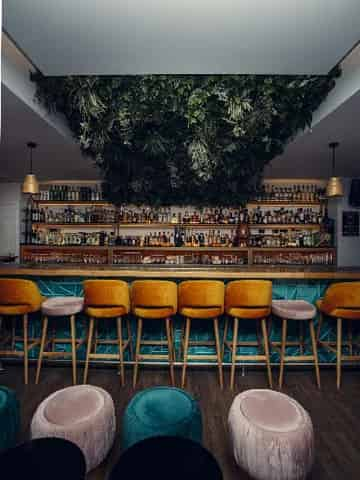
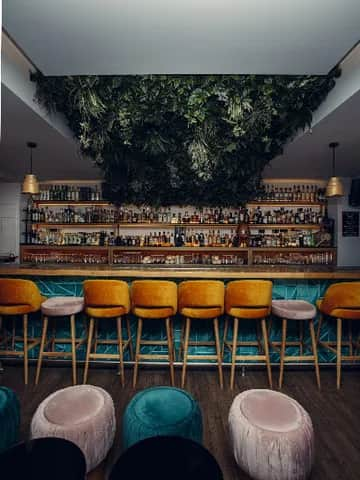 Monkey MashMonkey Mash is a cocktail bar in Lisbon's Príncipe Real neighbourhood, at Praça da Alegria, 66B, 1250 Lisboa. It opened in March 2019 as the second venue of Paulo Gomes, who had launched Red Frog Speakeasy in May 2015. Gomes created the bar together with Emanuel Minez, his partner at Red Frog, and he has since added a third bar, 18.68 cocktail boutique. The bar is vibrant and tropical in theme, with a retro-modern feel. It faces the square and presents an open, energetic face at street level. Red Frog was conceived as an intimate, dark space inspired by 1920s Prohibition-era speakeasies, while Monkey Mash was conceived as its bright, loud and fun-loving sibling. Ahead of its launch it was described as a project built around sustainable drinks that use local ingredients and fewer resources. The drinks lean on sugarcane and agave spirits, meaning rum, cachaça and tequila, and pair them with unexpected ingredients that are either zero-waste or locally sourced. Minez has explained how he tries to give guests a good experience: welcome people, give them good attention, look after their satisfaction, and then surprise them with the drinks, through the choice of ingredients and the way cocktails are presented. The bartenders are described as knowledgeable and friendly. Guests can name the flavours they like, such as sweet, smoky, acidic or tropical, and let the staff steer them off-menu or toward seasonal creations. Monkey Mash opens from Tuesday to Saturday, from 18:00 until 01:00, and stays closed on Sundays and Mondays. It is more relaxed and welcoming to walk-ins than Red Frog, yet it fills up on weekend nights, so booking through the official Monkey Mash website is recommended. The bar has a link to its sibling that is worth knowing about. Red Frog is hidden behind a locked door of Monkey Mash, and guests press the bell to be let in. Red Frog opened in 2015 as a secret speakeasy modelled on the hidden bars of New York's Prohibition era, and it is widely credited with putting Lisbon on the cocktail map. Minez recalls that when Red Frog opened, Portugal was in a deep crisis and people told them the timing was wrong, but they still wanted to focus on cocktails. He has never had an investor, and says he puts the money he earns back into his ventures. For a contrasting evening, the two bars can be combined in one night, pairing the street-level energy of Monkey Mash with the hidden, subterranean Red Frog next door.Príncipe RealBars & Nightlife
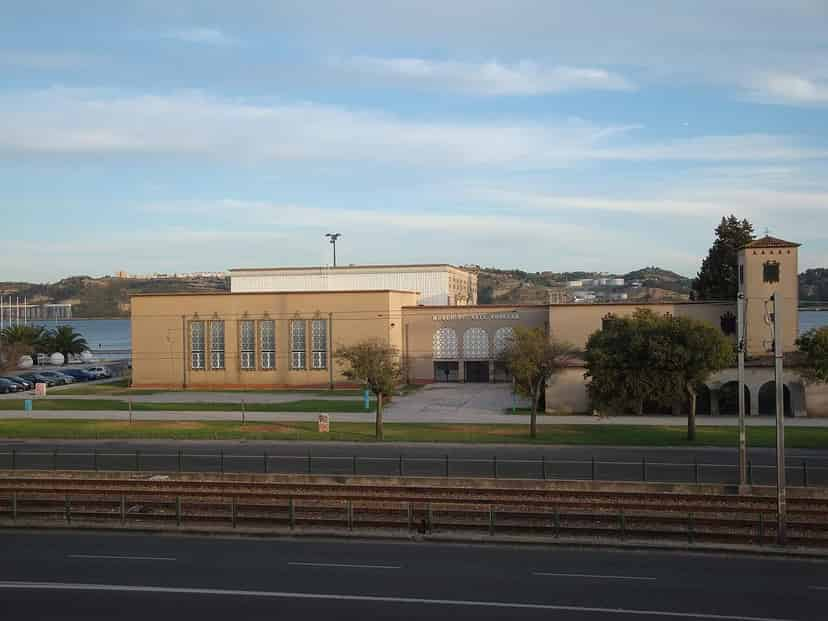
 Museu de Arte PopularAvenida Brasília 202, 1400-038 LisboaBelémMuseums
Powered by Foursquare ·Photo and data credits ▾
Photos: Jean-Christophe BENOIST (CC BY-SA 4.0), via Wikimedia Commons · senhoruva.com · DataForSEO · topo-lisboa.pt · atirateaorio.com · cafesaobento.com · restauranteleven.com · Lijealso (CC BY 3.0), via Wikimedia Commons · Data: © OpenStreetMap contributors · Wikipedia (CC BY-SA 4.0)
