

Places in Lisbon
Loading...
‹
⌕
Areas
⌖Campo de Ourique218⌖Graça151⌖Belém238⌖Alcântara202⌖Estrela40⌖Baixa308⌖Chiado232⌖Príncipe Real452⌖Mouraria161⌖Alfama180⌖Cais do Sodré161⌖Santos111⌖Lapa63⌖São Bento175⌖Saldanha506⌖Anjos166⌖Bairro Alto316⌖Arroios226⌖Avenidas Novas251⌖Alvalade292⌖Parque das Nações175⌖Intendente77⌖AlmadaNearby town533⌖LouresNearby town212⌖OeirasNearby town215⌖AmadoraNearby town177⌖MontijoNearby town125⌖SeixalNearby town82⌖OdivelasNearby town130⌖BarreiroNearby town71⌖SintraNearby town6Places in Lisbon
Loading...
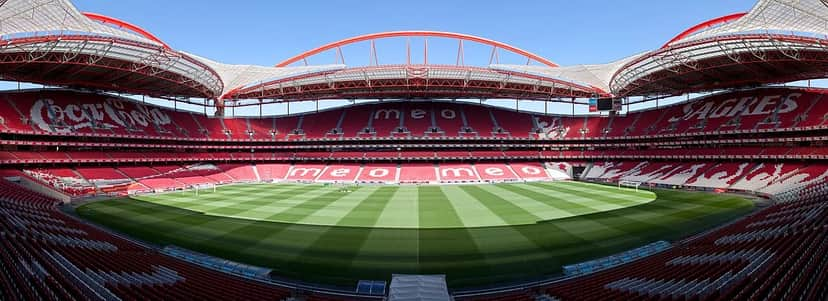 Estádio da LuzOpens in a new tabLisbon · Stadiums & ArenasEstádio da Luz, known officially as Estádio do Sport Lisboa e Benfica, is in northern Lisbon at Avenida Lusíada s/n, 1500-065 Lisboa. It is the home ground of S.L. Benfica. Benfica owns the stadium. It replaced the previous Estádio da Luz. The older stadium had been built on the same site in the 1950s. The design of the newer stadium was based on the concept of openness and the use of natural light. The stadium is named after the Luz parish, and more specifically, after the church of Nossa Senhora da Luz. Locally, the stadium is also referred to as a Luz. The roof of the stands is open to allow natural light to the playing surface. The stadium has a seating capacity of 68,100. In the years since it opened, the stadium has been the venue for several important European football matches and the final of the European Championship. Portugal has also presented plans for the stadium to be one of the venues for the 2030 FIFA World Cup. The Metro Blue Line stops at the stadium. The Colégio Militar/Luz and Alto dos Moinhos stations are convenient for accessing the Luz stadium. The trip on the Metro Blue Line from Marquês de Pombal takes approximately 15 minutes. The Colombo Centro mall has an underground parking garage. Other parking is available along Avenida Lusiada. A trip by metro from Humberto Delgado Airport takes approximately 30 minutes via the Red and Blue lines. The stadium is open for tours from 10 am to 6 pm. The stadium tour includes the away locker room and the press conference room. The Benfica Museum is named after Cosme Damião.
 Estádio da PortelaOpens in a new tabLoures · Restaurants
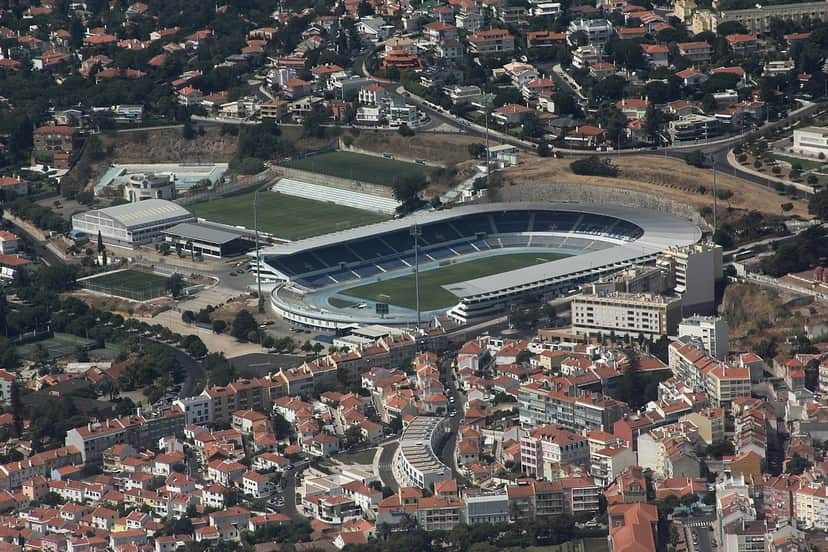 Estádio do ResteloOpens in a new tabBelém · Stadiums & ArenasEstádio do Restelo stands on Avenida do Restelo, postcode 1449-015 Lisboa, in the Belém district in the west of Lisbon, behind the Jerónimos Monastery. It was built in an old stone quarry and opened on 23 September 1956, to a design by the architect Carvalho de Melo. The multi-purpose ground has a grass surface, a pitch of 105 x 68 m and a seated capacity of 19,856. It once held around 44,000 people and was later expanded to about 60,000, before conversion to an all-seater cut capacity. The record attendance of 60,000 came on 12 October 1975, when Belenenses beat S.L. Benfica 4–2. C.F. Os Belenenses owns the stadium and is its tenant. Clube de Futebol Os Belenenses was founded in 1919. Since 2018 the club has split into B-SAD, the professional side, and C.F. Os Belenenses, the historic and now amateur club that keeps the titles and history. Under the terms of the split B-SAD could no longer use the Restelo, so it rents the Estádio Nacional for home fixtures, while C.F. Os Belenenses stays put. The team is nicknamed Os Pastéis, after the nearby Pastéis de Belém cafe, and Os Azuis do Restelo. The opening match saw Belenenses beat Sporting CP 2–1. The first international match was against Stade de Reims, won 2–0 by Belenenses, and the first Portuguese First Division game here finished Belenenses 5–1 Vitória de Setúbal. Portugal's national team beat Bulgaria 3–1 on 16 December 1962 in the UEFA Euro 1964 preliminary round and drew 1–1 with the United States in a friendly on 7 October 1980. The stadium also hosted the 2014 UEFA Women's Champions League Final. With standing room, concert capacity rises to around 44,000 to 60,000. AC/DC played on 6 July 1996, Pearl Jam opened their Binaural Tour on 23 May 2000, and Queen + Paul Rodgers performed on 2 July 2005, the first Queen show in Portugal. Pope John Paul II also celebrated a mass here for more than 100,000 people. Tram 15 runs from Praça da Figueira or Praça do Comércio and takes about 25 minutes to reach the Belém stop. Trains from Cais do Sodré toward Cascais take 8 minutes. Matchday tickets are sold at the stadium windows from two hours before kick-off and cost €15.00 or €20.00, sometimes more against Portugal's Big 3.
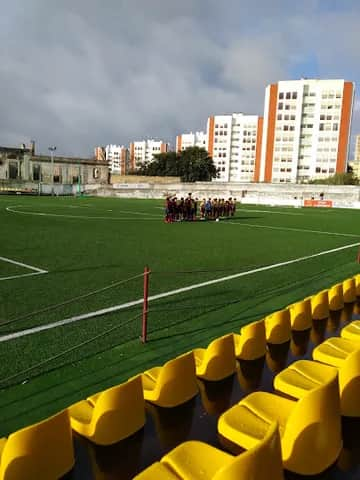 Estádio Engenheiro Carlos SalemaOpens in a new tabLisbon · Stadiums & ArenasClube Oriental de Lisboa's mission is the promotion of football and sports practice within the community in which it operates, as well as the training of young athletes.
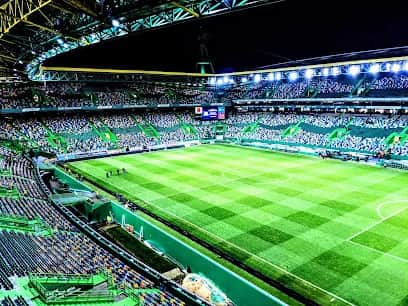 Estádio José AlvaladeOpens in a new tabLisbon · Stadiums & ArenasEstádio José Alvalade is the home ground of Sporting Clube de Portugal, known as Sporting CP, which is described as one of the country's "Big Three" football clubs. The stadium stands in Lisbon at Rua Professor Fernando da Fonseca, 1501-806, and carries the name of José Alvalade, the club's founder. Tomás Taveira designed it, and its exterior facade is colourful and multi-toned. It holds a UEFA Elite rating, Category 4. Built for the 2004 European Championship, it officially opened in August 2003, when Manchester United came as guests for the inaugural match. UEFA has also used it as a neutral venue for European tournament finals. The club gives the capacity as 50,076 spectators, though the figure is sometimes lower for Champions League matches. The stadium can also be visited on days without a match. A museum shows historic memorabilia and club trophies, and details of tours and museum tickets are on the Sporting CP website. One travel listing gives opening hours of 11:00 AM to 5:00 PM, suggests allowing one to two hours for a visit, and lists the phone number +351217516000. The stadium is part of a modern commercial hub, with cafes, restaurants and shops just outside the gates. Campo Grande Metro station, on the Yellow and Green lines, is next to the complex. Buses also run to the stadium, and taxis and Uber are widely used, though public transport is the easiest option on matchdays. Arriving 60 to 90 minutes before kickoff leaves time to clear security and find a seat. Small bags are allowed and checks at entry are basic, but large backpacks may be restricted. Food and drink from outside may not be brought in, apart from children's food and medical prescriptions. Two rooms called Guarda Objectos, beside Gate 2 and Gate 3, store prohibited items free of charge until 30 minutes after the final whistle. Sporting's Organised Fan Groups sit in Stand A, South Goal End. Visiting fans have an area in A9 that can be extended to sectors A7, A11, B7, B11 and B13, protected by barriers, stewards and police. Another guide says there is no official away fan zone, and supporters gather in nearby bars or central Lisbon. Entry is prohibited for children under 3, those under 12 need an adult, and over-12s need a valid ticket. Fans with restricted mobility use the second floor of the South and North Goal Ends, which have adapted elevators and bathrooms.
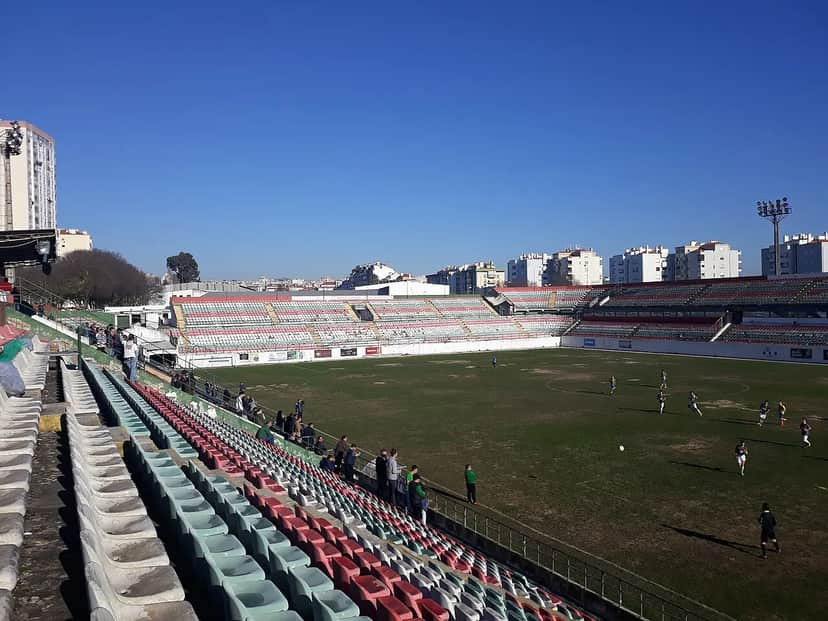 Estádio José GomesOpens in a new tabAmadora · Stadiums & ArenasEstádio José Gomes is a football stadium in Amadora, a Portuguese municipality situated northwest of Lisbon. The stadium is located in the Reboleira neighborhood. With this location, many people refer to the stadium as Estádio da Reboleira. The home of C.F. Estrela da Amadora has a capacity of 9,288 spectators. The natural grass pitch measures 105 by 68 meters. 9,288 spectators can sit. There is neither a running track nor under soil heating. The most people to attend a match was 7,331. This was on 18 May 2024 when the home team, Estrela, defeated Gil Vicente with a score of 1 to 0. On July 11, 2020, Club Football Estrela da Amadora SAD was officially established. This was the result of the merger of Clube Desportivo Estrela and Club Sintra Football. They assumed the spot of Sintra’s team in the third division (Campeonato de Portugal). Prior to this, from 1932 until its dissolution in 2011 due to financial issues and bankruptcy, Amadora was represented by the Clube de Futebol Estrela da Amadora. In 2022-2023, Estrela da Amadora won promotion to the Primeira Liga by defeating C.S Marítimo on penalty kicks in the promotion playoffs. Tricolores and Estrela are a few of the nicknames this team goes by. Fans say the home atmosphere is intense and raw. Supporters fill the stands in green, red and white and are known as Tricolores. It's best to take public transit to this stadium due to restricted parking and narrow streets. The entrance is near the train station Reboleira on the Linha de Sintra from Lisbon. Tickets for matches against the Big Three (Benfica, Sporting or Porto) should be purchased in advance from the club or from InfoTickets. It is advised that supporters arrive 45 to 60 minutes prior to the match for security and to located to their seat. Food and drink should be purchased prior to the match as well. Supporters are allowed to dress casually. Buying a match day scarf prior to entering the stadium is also an option.
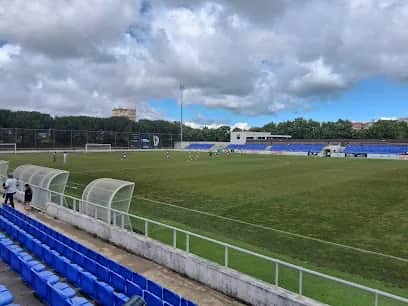 Estádio Municipal José Martins VieiraOpens in a new tabAlmada · Stadiums & Arenas
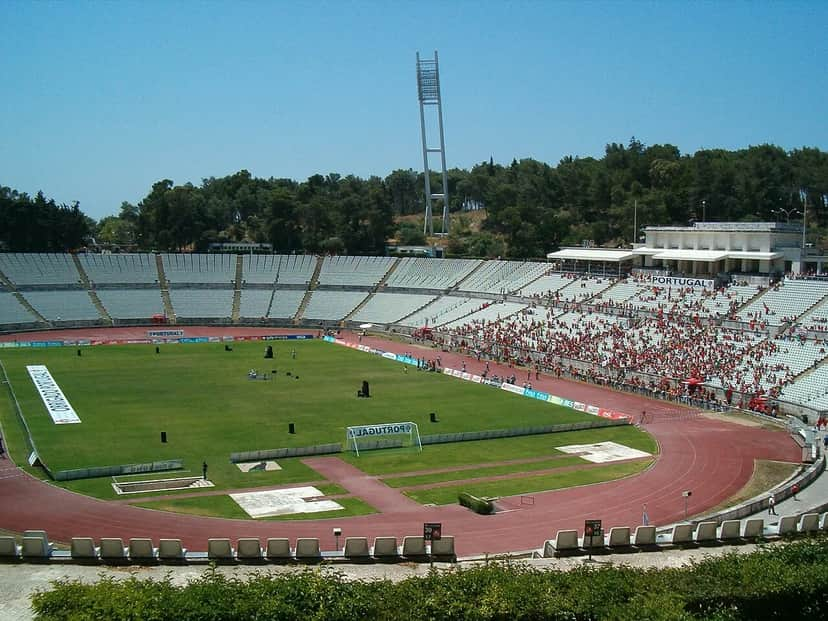 Estádio NacionalOpens in a new tabOeiras · Stadiums & ArenasThe Estádio Nacional stands at Praça da Maratona, 2790-381 Linda-a-Pastora, in the municipality of Oeiras, roughly 12 kilometres from the centre of Lisbon. It lies in Algés, Linda-a-Velha e Cruz Quebrada-Dafundo, inside the Centro Desportivo Nacional do Jamor, the Jamor National Sports Centre. That complex also holds public green spaces, woods and secondary sports facilities. The stadium goes by several other names: Estádio do Jamor, Estádio Nacional do Jamor and Estádio de Honra, meaning Stadium of Honour. It is owned by the Portuguese Football Federation. The venue is an open-air, multi-purpose bowl with a natural grass pitch measuring 105 by 68 metres and a running track. Its capacity is 37,593 spectators. The bowl shape is part of the reason it is occasionally used for concerts as well as sport. Described as the spiritual home of Portuguese football, the stadium was renovated in September 2012. The decision to build a national stadium in the Jamor valley was taken in 1933, and works began in 1939. The original design is credited to Francisco Caldeira Cabral and Konrad Weisner together with Jacobetty Rosa, and Miguel Jacobetty Rosa is listed as the architect. The stadium was inaugurated on 10 June 1944, Portugal Day, by the Council president António Oliveira Salazar. In 1961, construction began on a hippodrome, alongside a first phase of work on a shooting range. A Jamor Sports Complex Development Plan followed in July 1982. The DGEMN ordered it, and the architects Vasco Croft (coordinator), Nuno Bártolo and Joaquim Cadima wrote it. The stadium has hosted the Taça de Portugal final since 1946 and the women's cup final since 2010, almost without interruption. The Portugal national football team has played there on more than 50 occasions, mostly between 1945 and 1987, with five further matches since, the latest in 2026. The national rugby union team plays selected matches there too, and Lusitanos XV have been tenants since 2021. Clubs have also used it when they lacked a ground of their own. Benfica played there in 2002-03, B-SAD from 2018 to 2022, Casa Pia in 2022–23. Internationally, it staged the 1953 Latin Cup, won by the French side Stade de Reims. On 4 September 1955 it hosted the first ever UEFA club game, a 3-3 tie between Sporting CP and Partizan. The 1967 European Cup Final, Celtic against Inter Milan, was also played here, and the winners earned the nickname "Lisbon Lions".
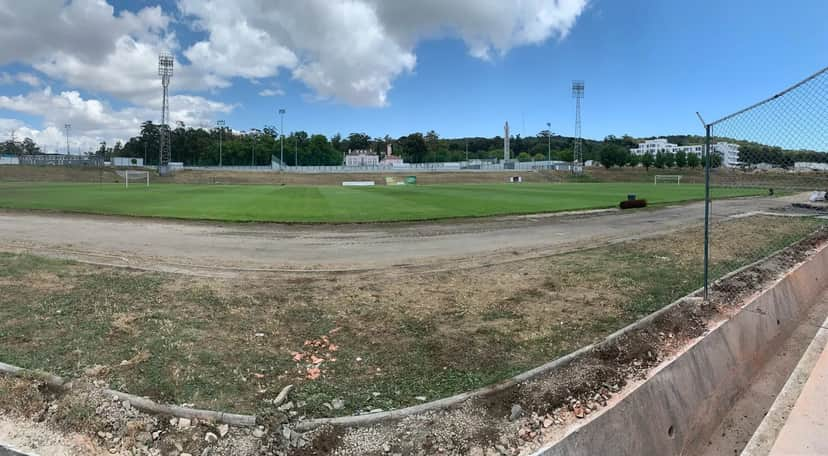 Estádio Pina ManiqueOpens in a new tabLisbon · Sports & FitnessEstádio Pina Manique is a Portuguese football stadium in the city of Lisbon, owned by Casa Pia AC. The stadium is not currently licensed to host professional matches and is awaiting the start of planned works. It has a capacity of approximately 2,574 spectators.
 Estádio Universitário de LisboaOpens in a new tabAlvalade · Sports & FitnessThe Estádio Universitário de Lisboa, or University Stadium of Lisbon, is a sports complex set in a green area of 40 hectares in the Alvalade neighbourhood, at Avenida Professor Gama Pinto, 1600-063, Lisboa. The grounds lie in the centre of the city, beside Monsanto (Ajuda), at Lisbon's Cidade Universitária. It was inaugurated on May 27th 1956 and became a service only in 1989. Since 2013, when Universidade de Lisboa merged with the Technical University of Lisbon, it has been an autonomous service within the new Universidade de Lisboa. Its facilities are spread over the Cidade Universitária Campus and the Ajuda Campus. Besides the stadium itself and its training fields, the complex has swimming pools, tennis courts and multisport complexes. The service promotes sport, health and leisure, and it is open to the general community, with special pricing for the academic community. Activities are grouped under water sports, combat sports, a golf academy, fitness programmes, a school of athletics, health and wellness, team sports, and tennis and padel. A card called ULisboa OnTop brings these together in one, aimed at people who want more freedom and variety in their sporting activities. Those who prefer to exercise independently can use a fitness trail open to the public, as well as several areas for standard or free-style physical activity. Walking, marching or running here is also a way to discover architectural and cultural heritage, found in several buildings and in sculptural work. Catering within the premises ranges from a Macrobiotic Cafeteria to a Burger Restaurant. Families are catered for too. Several sports modalities are offered for children, and a project named Crescer no Estádio (Growing-up at the Stadium) was developed with children, teenagers and families in mind. It provides Summer Camps, Sports Holidays, Sports Days, School Activities and Activities for Parents & Children. Health services sit alongside the sport. There is a Medical Centre offering medical specialties, as well as a Cardiovascular Rehabilitation Centre and physiotherapy and wellness. The stadium also has a cultural side: an article dated 06 July 2026 reports that Hipotético Jazz returns to the University of Lisbon gardens, in partnership with the Hot Clube de Portugal and as part of the Música na Universidade de Lisboa programme, bringing outdoor jazz to the late afternoons. Notices posted in June 2026 cover an update on activities at the 25-meter pool and closures of Athletics Track No. 2 in July. Enquiries can be sent to geral@estadio.ulisboa.pt.
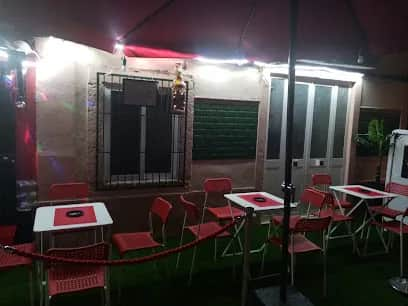 Estado LíquidoOpens in a new tabSeixal · Bars & Nightlife
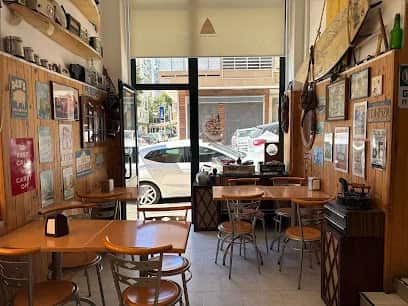 EstaminéOpens in a new tabAlvalade · Cafés & Coffee Shops
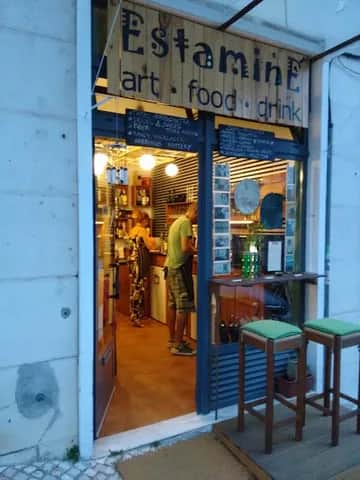 Estaminé Art Food DrinkOpens in a new tabGraça · Restaurants
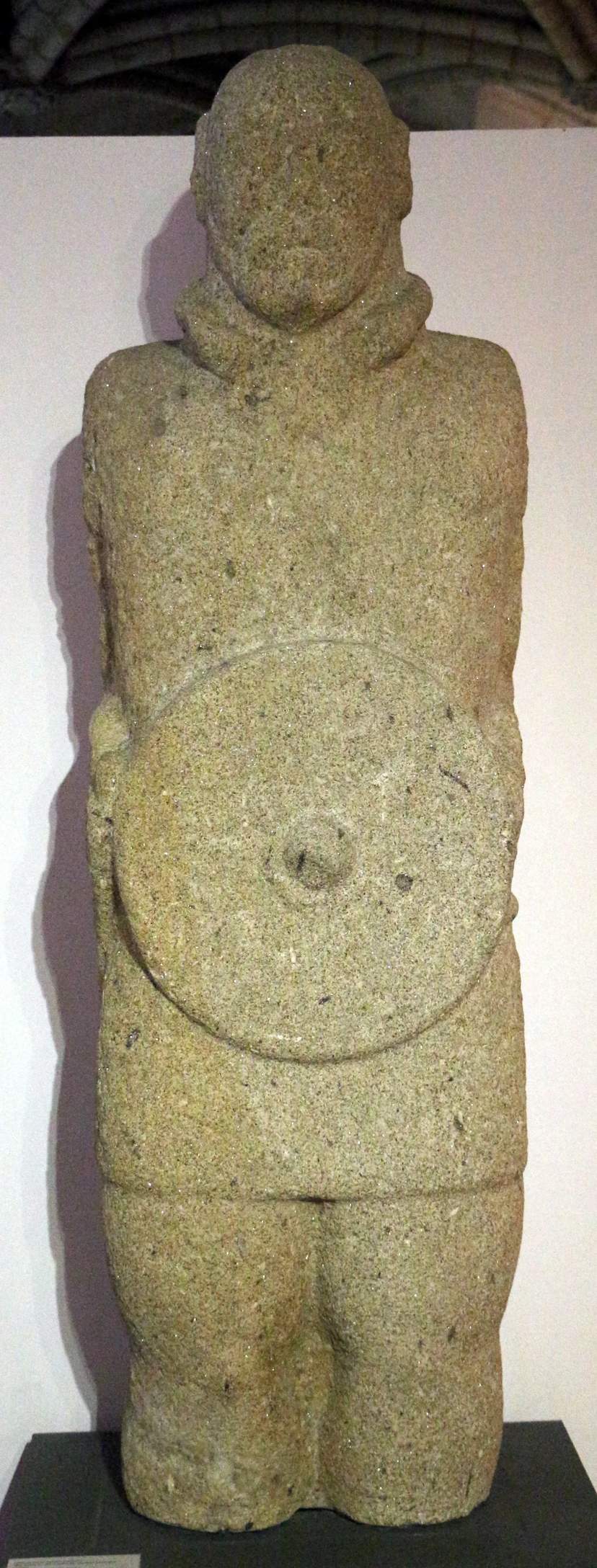 Estátuas lusitanas de MontalegreOpens in a new tabBelém · Monuments & Historic BuildingsThe Lusitanian statues of Montalegre are two granite statues, 2 and 2.5 metres tall, dating from the 1st century BC and classified as a National Monument since 1910.
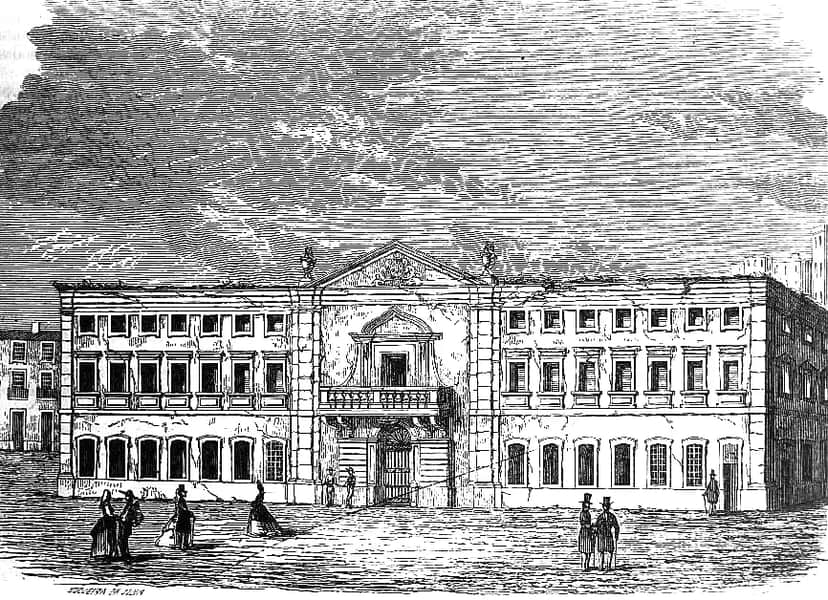 Estaus PalaceOpens in a new tabMouraria · Monuments & Historic BuildingsThe Estaus Palace, called Paço dos Estaus or Palácio dos Estaus in Portuguese, no longer stands as a building. It occupied the north side of Rossio Square in Lisbon, at Praça Dom Pedro IV, 1100-201 Lisboa, in the Mouraria neighbourhood. Around 1450 it was built to lodge foreign dignitaries and noblemen visiting the city. Rossio is the everyday name for the square, whose official name is Praça Dom Pedro IV; the word means a large public square. In 1536, under King John III, the Inquisition was installed in Portugal, and the palace eventually became the seat of the institution. It held a prison and a tribunal. People accused of heresy, witchcraft and, in particular, of secretly practising the Jewish faith, known as New Christians, faced trial, persecution, torture and execution there. Rossio and the nearby St. Domingos square were frequently used for public executions, and heretics were burned at the stake in front of the palace. The first official auto-da-fé took place in 1540. Among the thousands accused by the Inquisition, those held in the Estaus prison included the historian Damião de Góis, the poet Manuel Maria Barbosa du Bocage and the dramatist António José da Silva, nicknamed "the Jew", who was executed in 1737. The 1755 Lisbon earthquake heavily damaged the Inquisition Palace, and it was rebuilt to designs by Carlos Mardel. Fire destroyed that rebuilt building in 1836. The Inquisition itself was not abolished in Portugal until 1821. In 1842 the Teatro Nacional D. Maria II replaced the palace, thanks to the efforts of the writer Almeida Garrett. The Italian architect Fortunato Lodi designed it in the Neoclassical style, and it stands today on the site of the old palace. Above the pediment stands a statue of Gil Vicente, a Renaissance playwright, and ironically the Inquisition had censured some of his plays in the late 16th century. A fire destroyed the theatre's interior in 1964, and it reopened to the public in 1978. In the middle of the square today stands a 23-metre column topped by a statue of Dom Pedro IV, installed in 1870. Rossio metro station, on the Green Line, opens onto the square, which lies roughly 5 to 10 minutes on foot from Praça do Comércio via Rua Augusta. Rossio railway station, built in 1887 in the Neo-Manueline style, sends trains to Sintra.
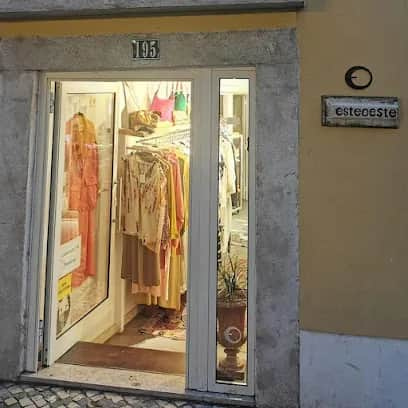 EsteOesteOpens in a new tabSão Bento · Fashion & Apparel
 Este-OesteOpens in a new tabBelém · RestaurantsEsteOeste in Belém, Centro Cultural de Belém, brings together a unique fusion of Italian and Japanese cuisine, offering a diverse experience.
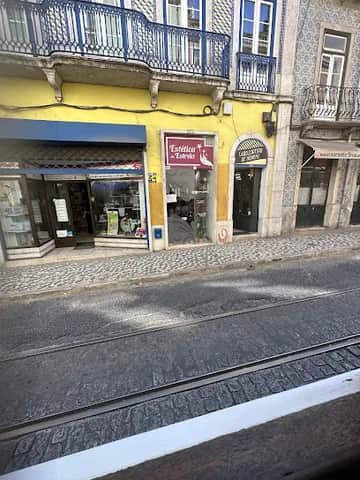 Estética da EstrelaOpens in a new tabLapa · Hair & Beauty Salons
 Estética "Todos giros Vegan"Opens in a new tabLisbon · Hair & Beauty Salons
 Esteticista Graça AlvesOpens in a new tabLisbon · Hair & Beauty Salons
 Estilo GlamourOpens in a new tabLisbon · Hair & Beauty Salons
 Estofos AlexandreOpens in a new tabAvenidas Novas · Shops & Markets
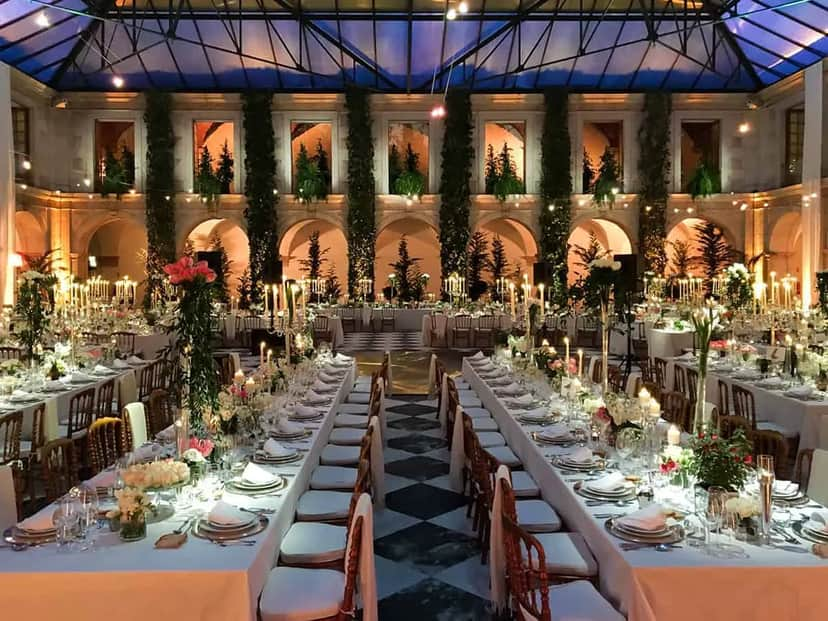 Estorias na Casa da ComidaOpens in a new tabPríncipe Real · RestaurantsCasa da Comida. Event organisation/catering company and restaurant. The ideal space for your corporate or family event. Parties, weddings and more.
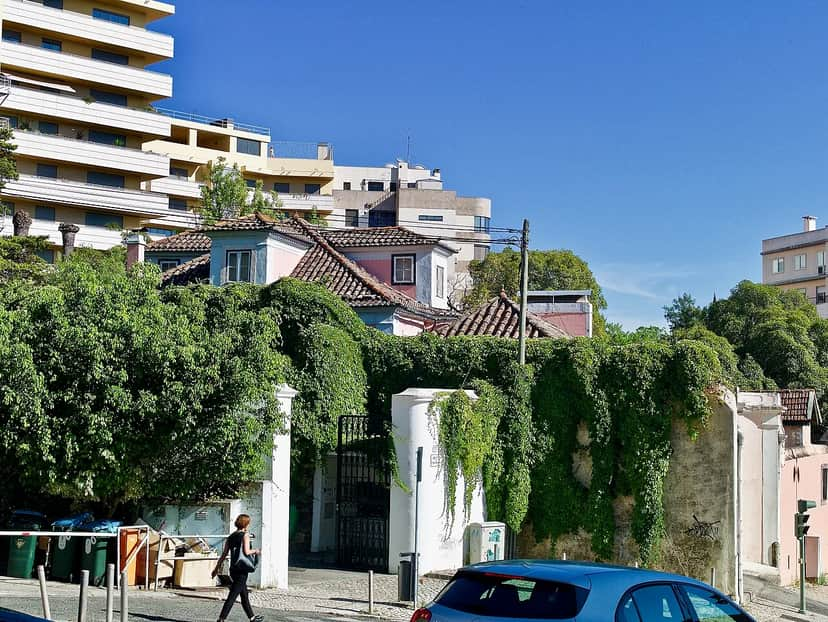 Estrada das LaranjeirasOpens in a new tabLisbon · Squares, Streets & BridgesEstrada das Laranjeiras is a street in Lisbon running from Avenida dos Combatentes to Estrada da Luz, its name deriving from the Quinta das Laranjeiras.
Powered by Foursquare ·Photo and data credits ▾
Photos: Massimo Catarinella (CC BY 3.0), via Wikimedia Commons · DataForSEO · Wiki-observer (CC BY-SA 3.0), via Wikimedia Commons · JP Ribeiro (CC BY-SA 4.0), via Wikimedia Commons · Koshelyev (CC BY-SA 3.0), via Wikimedia Commons · estadio.ulisboa.pt · Sailko (CC BY 3.0), via Wikimedia Commons · esteoeste.pt · casadacomida.pt · Pedro Ribeiro Simões from Lisboa, Portugal (CC BY 2.0), via Wikimedia Commons · Data: © OpenStreetMap contributors · Wikipedia (CC BY-SA 4.0) · Wikidata (CC0)
