Art & Exhibitions
Exposition : "La tournée"
- When
- Wed 30 Jun 2027 · 17:00
- Where
- Poste du Louvre
- Price
- No price info
About
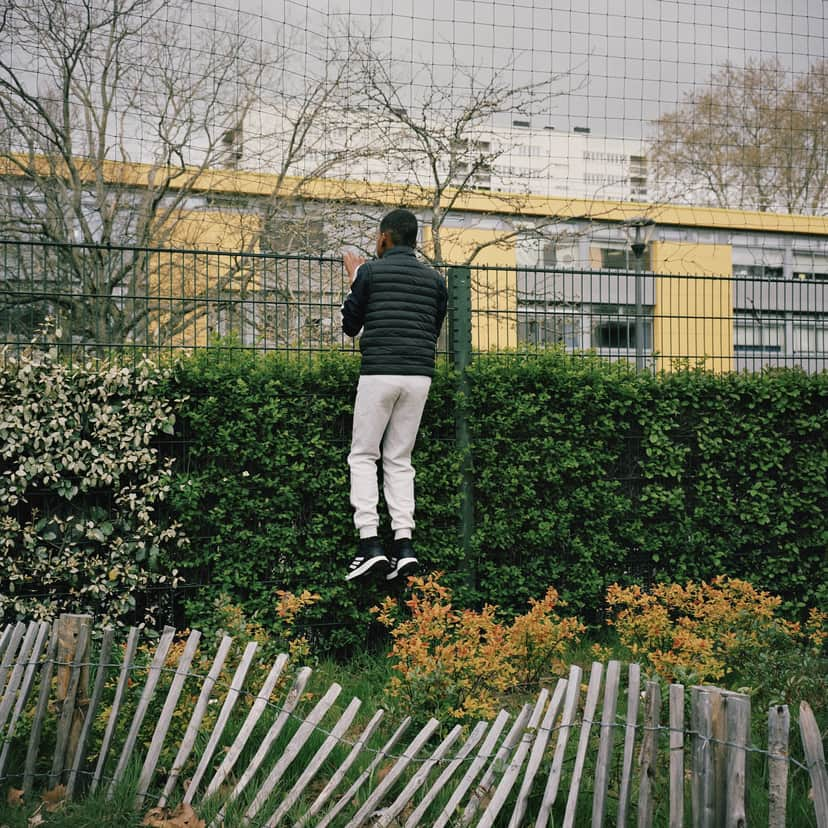
"La tournée" / Yohanne Lamoulère and Clément Charbonnier Bouet. There was a time when the Île-de-France needed labour—in factories, in administrations, and also to deliver the mail. People had to be attracted, so thousands of homes were built with tons of breeze blocks, concrete and bricks, absorbing arrivals from every region of France. They came from the centre, the east, and also from further afield—the overseas departments and territories and then the whole world. Postal workers' housing estates, arranged in a circle around Paris so as to fill its letterboxes every morning. Today postcards no longer enjoy the same success, and these buildings, these residences, nestled among those of other—still social—landlords, welcome residents sometimes still linked to the post office, sometimes less, sometimes not at all. Yet all these districts seem connected by a thread, a necklace of small pearls circling the great megalopolis. In these estates people live, work, play and eat like anywhere else. To do the rounds of them—the dream of a postman, the dream of Jour de fête—is the goal we set ourselves. Step by step, a genuine Camino de Santiago—we would need to find our scallop shell, our coat of arms—on foot, by bike, by car, by train, we will take as long as it takes but we will do it, ticking off every town, every building, every station of the Tokaido. With two heads, four eyes, four ears, as many nostrils, an anachronistic Rolleiflex and a Fuji slipped under the synthetic jacket, we have for some weeks been walking through former postal estates, each time giving thanks for the welcome we receive and all the doors opened to us. We too try to make our way around—a building in Massy, a square, a car park, a butcher's with mint on one ear, a district of Saint-Denis, pressed in concrete against a basilica full of saints, full of Denis, all around a tripod in Bagnolet, with Justine and Pricillia, and later in Bagneux, in clouds of pure white hair. Looking closely one finds the invisible links, the desires that answer one another. Without anyone imagining that each seeks just as much their own piece of the postman Cheval's palace from one end of this loop to the other (if a loop can be said to have an end). In Sartrouville people read, in Massy they trade fabrics, in Bagnolet they draw and tell stories, in Saint-Denis they paint, and everyone wants it, everyone cultivates it, whatever the setting. We will try, often failing, to catch something of all this. To seek what is beautiful, alive, shining, without ranking, just sniffing, and to catch the nuances as closely as possible. And the truest of the true we will have heard it—the violin at the foot of the buildings, the deafening noise of a gate recorded by Melkior, wise man with a K and a microphone; we will have seen the strange masks under a porch, listened to the lady and the boy worrying about seeing each other again as soon as possible, surprised the child Varenne floating, levitating on a hedge. So behind the entry codes, behind the gates, in the snacks, behind the grey and yellow and pink colours, under balconies by the thousand, on all sorts of surfaces, all sorts of mixtures of sand and water that set and freeze into concrete and make walls, there beneath our eyes, beneath our feet, we will make this tour.
Source: Original page · Licence Ouverte 2.0 · Text translated or changed