

Carte blanche to Wajdi Mouawad and Charlotte Farcet
Updated Nov 2026
About
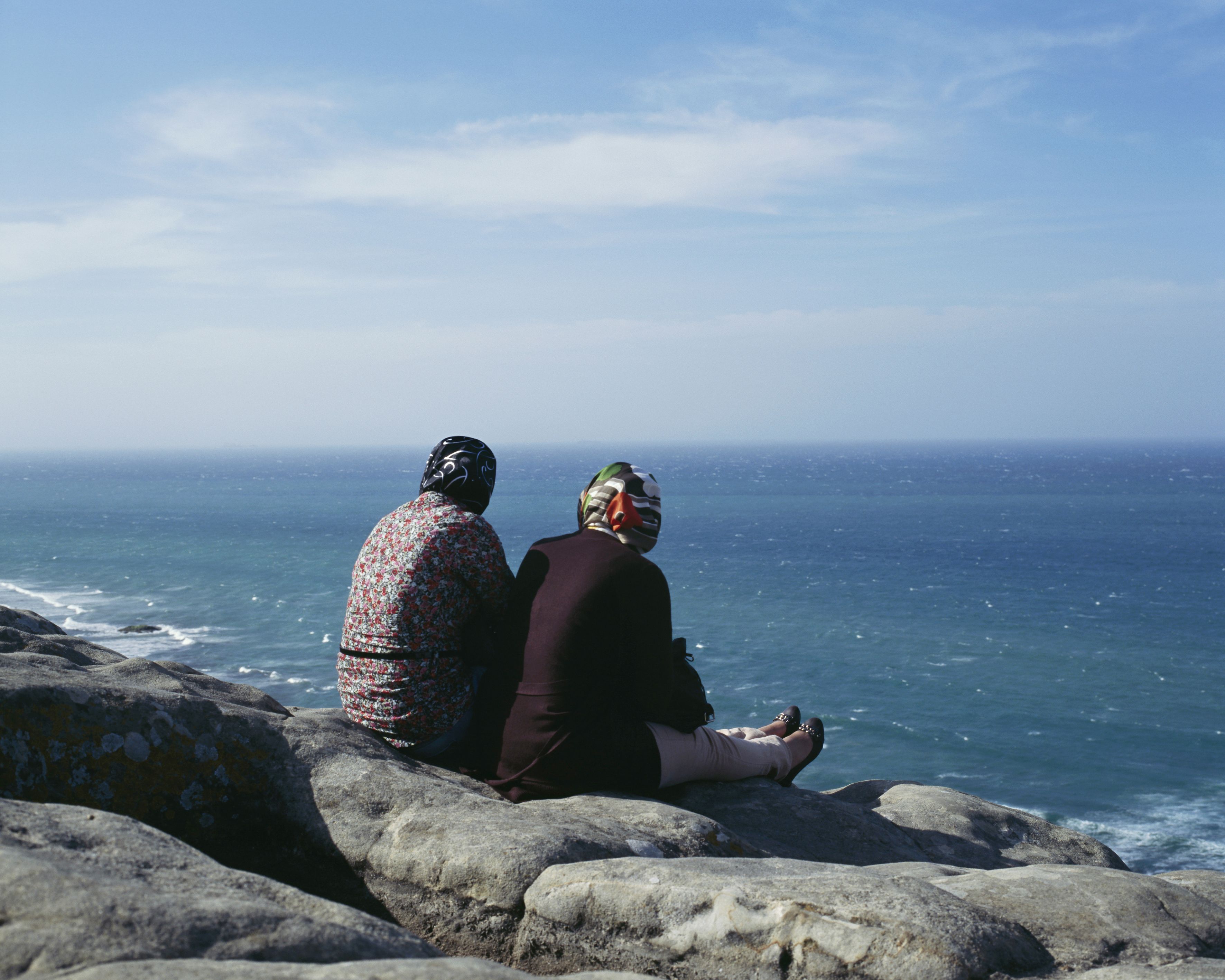
On the occasion of the Bicentenary of Photography, the National Museum of the History of Immigration (Musée national de l'histoire de l'immigration) wished to look at its photographic holdings by inviting an outside perspective to do so. Two perspectives in fact, each carrying stories of their own—two stories that are one, that is the story of thousands—to traverse these holdings and bring back the reflections of a shared history. For this exhibition is built around the question of sharing, of what we have in common, of what these exiled lives have in common. Shared, beyond appearances, disagreements, shores and borders. Every life is singular and irreducible. Yet between them there exists a place of recognition—intimate, intuitive—through the experience of vulnerability, of the 'shattering.' The exile is one who has been shattered. The ground on which he stood was stolen from beneath his feet, and with it a host of sensations, customs and habits trembled, were carried away and replaced by others. Sand by snow, for example. But also sounds, tastes, smells; voices, rhythms, words. Clothing, practices, places. The skin, smell, hearing, taste—spaces of contact between inside and outside—are the sites of this upheaval. Exile is a rupture of that circulation so natural, so self-evident. It is this sensory experience that interests us. And to tell it, to make this sharing appear, the exhibition draws on stories that it will bring into dialogue. Two stories first, brought by Wajdi Mouawad and Charlotte Farcet. Those of two women, Jacqueline and Dolly, who never met—mother of the first, grandmother of the second. Two women born on a beach, like Europa and Dido, one near Tyre in Lebanon, the other of Carthage in Tunisia; two women of sunlit beauty and salt-bodied frame, torn from that beach and from the obviousness of their lives by the blasts of a conflict that continues to this day. Two women whom history opposes and separates, and whom circumstances born of chance would reunite years later when two children would feel a keen happiness eating Jacqueline's cake from Dolly's plates. The story of these two women will be the central thread of the exhibition. But how does one 'exhibit' what has vanished into exile? How does one tell when what was lived was only half-told or never passed on? How does one redraw the contours and complete the lines? How does one find the source of what was shared when that source is in a distant land? And how does one bear witness to what was lived by those whom death has taken away? The exhibition will therefore strive, more than toward precision or exhaustiveness of the narratives, to capture sensations, scraps, fragments, instants, places, objects that defined these two lives. And these stories will dialogue with the countless, singular and irreducible stories of other lives, presented as mirrors. The exhibition will be the space of an imaginary encounter, diffracted and multiplied in a play of echoes and reflections, a space of evocation and juxtaposition, composing an intimate path through this exile and posing, beneath the surface, the question of a paradoxical happiness born of ruins. A space conceived and imagined to allow the visitor to walk among these lives and weave threads between them. To raise one's head from a display case and perceive, far off on a wall, a face. A space that will seek parallels, gaps, vanishing points, perspectives. A space made of a central path of tables in the image of a banquet, to tell of Dolly and Jacqueline—so happy to welcome their family to their table—and on either side, on the walls, echoes of other lives gathered from the museum's photographic collections. Through the materials that will be chosen and in its progression, the exhibition will also tell, without saying it, that other story already being prepared and built: the meeting and birth of a new family. It will spin and work with images: the tree, the roots, the rhizomes, the threads, the weave, the fabrics; the table, the banquet; order and disorder, inside and outside; the crash. And throughout this journey photography will be a raw material: not only that of the artists presented as mirrors, but also those family photographs carried from the country of origin, preserved so preciously, which bear witness to a past and from which our imaginations compose or recompose a story. Not forgetting the absent photographs.
Getting there
Source: Original page · Licence Ouverte 2.0 · Text translated or changed
