Skip to content
Hours
Tu-Su 10:00-18:00; Jan 01,May 01,Dec 25 off
Where
Largo do Chafariz de Dentro 11100-139 Lisboa · Alfama
Rating
4.2 · Foursquare

About

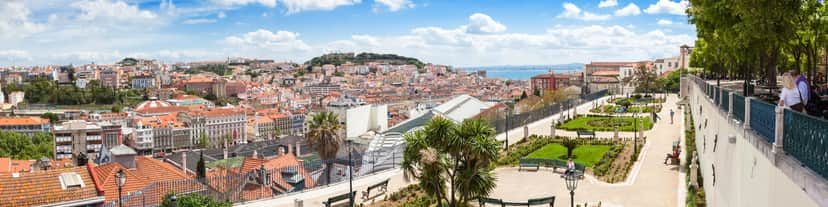
The Museu do Fado is a municipal museum in Alfama, Lisbon, at Largo do Chafariz de Dentro 1, 1100-139 Lisboa. It is devoted to fado, the urban song tradition that UNESCO recognised as Intangible Cultural Heritage of Humanity on 27 November 2011. The museum opened on 25 September 1998 and is run by EGEAC, the Lisbon municipal company that rebranded as Lisboa Cultura in 2024.

The building opened in 1868 as the Estação Elevatória de Águas de Alfama, a coal-fired steam pumping station designed by engineers Joaquim Pires de Sousa Gomes and Paiva Couceiro to push water uphill into Lisbon's distribution network. Between 1974 and 1990 it served as a work centre for the Portuguese Communist Party. The restoration and extension were designed by architects João and José Daniel Santa-Rita.

Inside, the permanent exhibition is interactive and follows fado from its nineteenth-century origins in Lisbon to the present. It covers the Portuguese guitar, fado houses, and fado on stage, radio, film and television, along with hundreds of performers, and listening stations are placed throughout. Instruments, costumes, scores and trophies are displayed among paintings such as José Malhoa's O Fado, from 1910, which shows a guitarist and his listener in a humble Lisbon room and is on loan from the Museu de Lisboa. The museum also stages temporary exhibitions, including Variations to Carlos Paredes, listed for 7 Jun 2025 to 31 Oct, about the Portuguese guitar player Carlos Paredes (1925-2004).

Other parts of the museum include a digital sound archive with recordings of fado going back to the early 20th century, a documentation centre, an auditorium, a gift shop and a school of Portuguese guitar. A workshop area, the Oficina da Guitarra, is in Largo das Alcaçarias, 200 metres from the museum. The educational service offers guided visits and singing visits, and audio guides are available in Portuguese, English, French and Spanish, including a children's version.

The museum is open Tuesday to Sunday from 10:00 to 18:00, with last admission at 17:30, and closed on Mondays and on 1 January, 1 May, 24 December, 25 December and 31 December. Adult admission is €5, with EUR 2.50 for ages 13-25 and EUR 4 for seniors 65+. Children up to 12, Lisboa Card holders, and Lisbon residents on Sundays and holidays until 14:00 enter free. The museum is wheelchair accessible, and two manual wheelchairs are available on free loan. Santa Apolónia station, served by the Metro Blue line and CP trains, is a five-minute walk away.
Share

Was this listing right?
Is this your place?
© OpenStreetMap contributors · Powered by Foursquare · Photos may be subject to copyright. Terms

Similar places.

  1. Museu Calouste Gulbenkian, Lisbon
    Museu Calouste Gulbenkian
    Avenidas Novas
    Museums
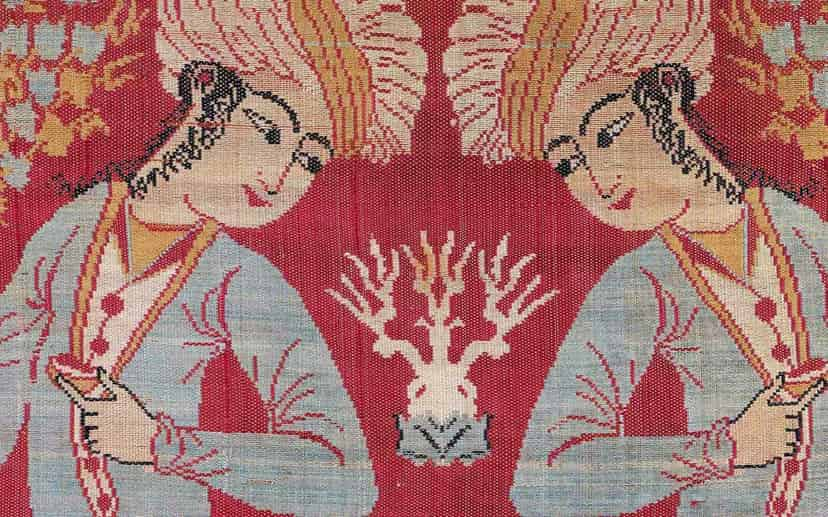
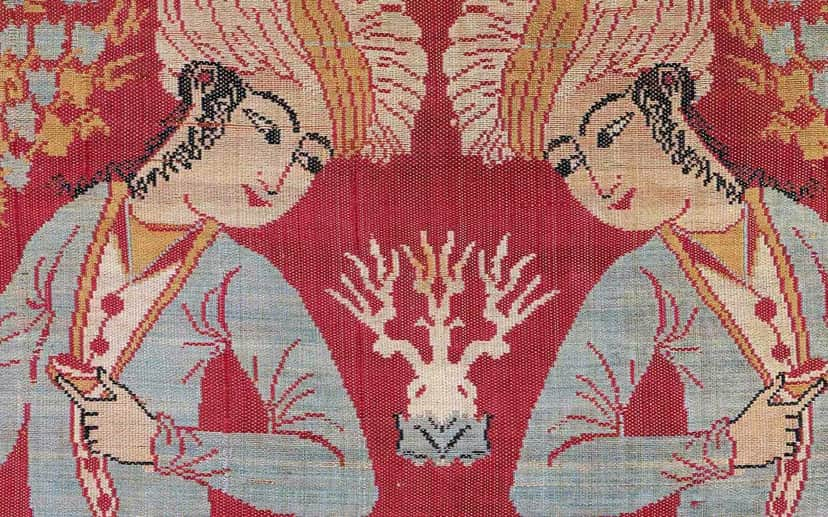
    The Museu Calouste Gulbenkian stands at Avenida de Berna 45A, 1067-001 Lisboa, in the Avenidas Novas neighbourhood. It opens from Wednesday to Monday, between 10:00 and 18:00. Sources describe it as a calm cultural refuge set in the heart of Lisbon, away from the busy tourist areas of Belém and the Baixa, and many regard it as among Europe's finest private art museums. The institution occupies a garden campus of 7.5 hectares and rests on two cultural pillars. The first is the Founder's Collection, shown in the main museum building. It draws on the personal collection assembled by Gulbenkian, and roughly 1,000 to 2,000 pieces are on display at any one time. Rather than sorting works by medium, the galleries follow chronology and geography, so a visit moves through thousands of years of human creativity. Gulbenkian's collection is described as eclectic and meticulously curated, and the display is arranged so that a visitor can walk through it without a break between eras. The material falls into several areas. Egyptian, Greco-Roman and Mesopotamian art brings together mummy masks, ancient coins, Roman medallions and ancient glassware. Islamic art includes Persian carpets, Iznik ceramics and mosque lamps dating from the 12th to the 18th centuries. European art runs from the Renaissance through the Impressionists, with works by Rembrandt, Rubens, Manet, Degas and Renoir. A dedicated room presents jewellery, glass art and tiaras by René Lalique, an Art Nouveau master. The Persian carpets are called exquisite, the Roman medallions stunning, and the Lalique room jaw-dropping. The second pillar is the Modern Art Centre, known as CAM, which sits in a separate building on the same grounds. It concentrates on twentieth-century and contemporary Portuguese art and is described as holding the largest collection of that kind. Alongside it, the centre hosts major international temporary exhibitions and rotating installations of sound, video and design. It stands apart from the main museum building yet shares its garden setting. Descriptions of the museum stress its human scale. It is called intimately scaled, brilliantly lit and peaceful, in contrast to cavernous national museums that can induce museum fatigue. The same sources say the 5,000 years of art can be viewed in a fluid journey without that fatigue. In short, the museum combines a lush garden campus with two collections under separate roofs, one of historic range and one of recent Portuguese art.
  2. Museu Arqueológico do Carmo, Lisbon
    Museu Arqueológico do Carmo
    Chiado
    Museums
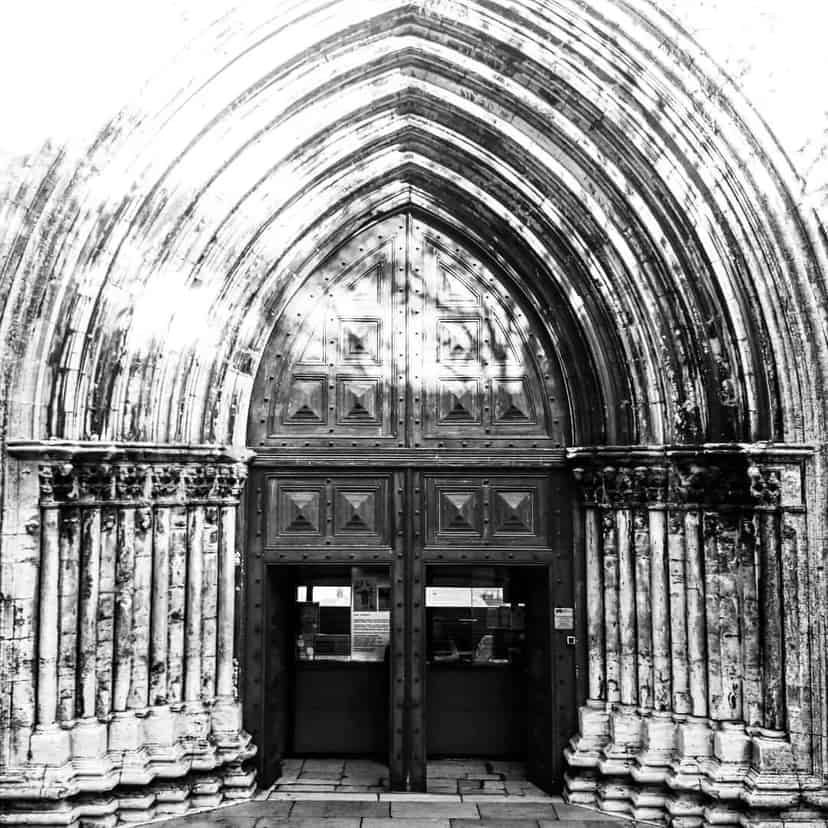
    The museological collection of the Association of Portuguese Archaeologists, which gave rise to the Carmo Archaeological Museum (MAC), has been housed since 1864 in the so-called Carmo Ruins, classified as a National Monument, corresponding to the anti
  3. Queluz National Palace (Palácio Nacional de Queluz), Lisbon
    Queluz National Palace (Palácio Nacional de Queluz)
    Lisbon
    Museums
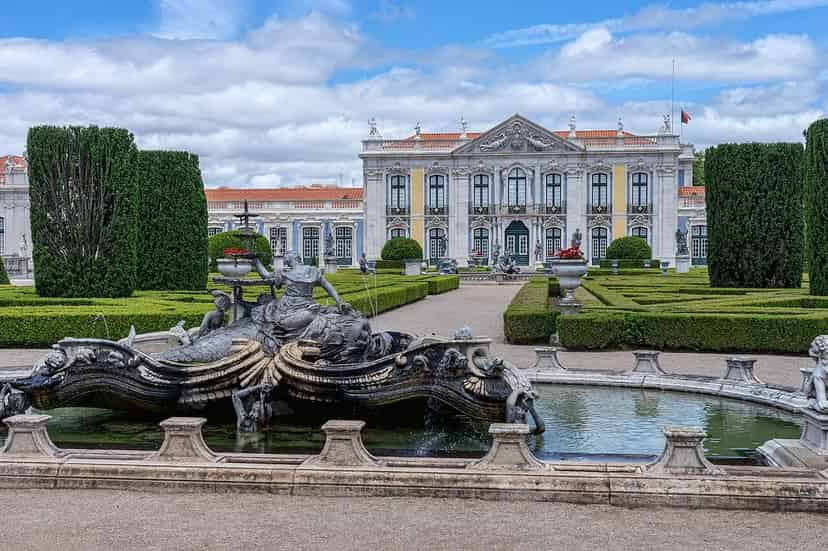
    Queluz National Palace (Palácio Nacional de Queluz), Largo do Palácio, 2745-191 Queluz, is located between Lisbon and Sintra, approximately 15 kilometers from the center of Lisbon. In 1747, construction of a new palace began for Prince Pedro (later King Pedro III) on the site of a former royal lodge. Over the years the palace was added onto, with the major renovations being done under Queen Maria I in the 1780's. Rococo and Neoclassical elements were added to the design over the years. The palace is formally known as the Palácio Nacional de Queluz, but is referred to as the "Portuguese Versailles". Queluz served as the summer palace of the Portuguese monarchy. After a fire destroyed Ajuda Palace in 1794, Queluz served as the main residence of the royal family until the court was forced to relocate to Brazil in 1807 due to the invading French army. Dom Quixote room is one of the more famous rooms of the palace. The palace has many rooms, including the Throne Room, the Hall of Ambassadors, the Music Room, and the royal apartments. The palace has a Clementi pianoforte in the Music Room. The room is designed by Mateus Vicente de Oliveira. The French style gardens, done in the 18th century, contain statues of mythological figures, and a canal. There are box hedges. The grounds are used for performances by the Portuguese School of Equestrian Art. The palace is opened daily from 9 am to 6 pm. From Rossio and Entrecampos, the Sintra train line takes about 30-40 minutes to reach the destination.
  4. Museu de Arte Popular, Lisbon
    Museu de Arte Popular
    Belém
    Museums
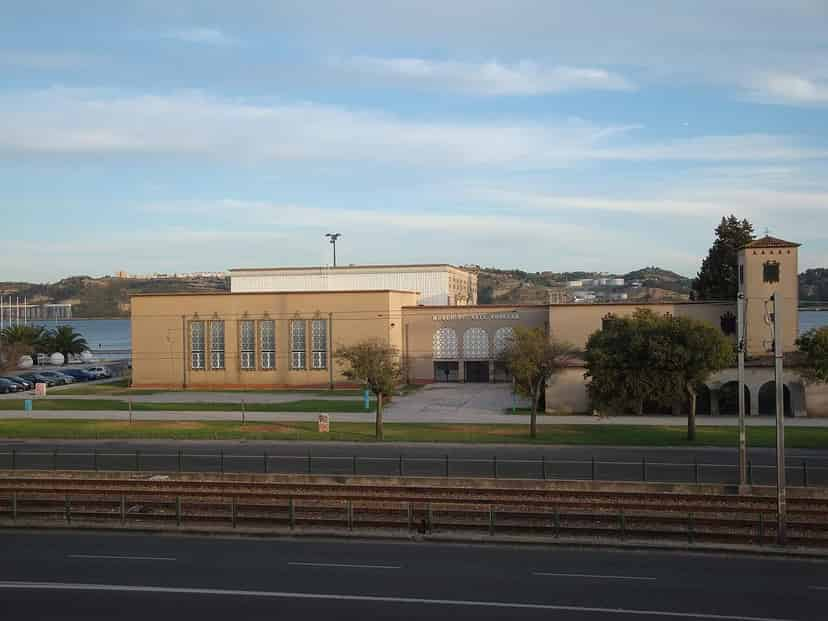
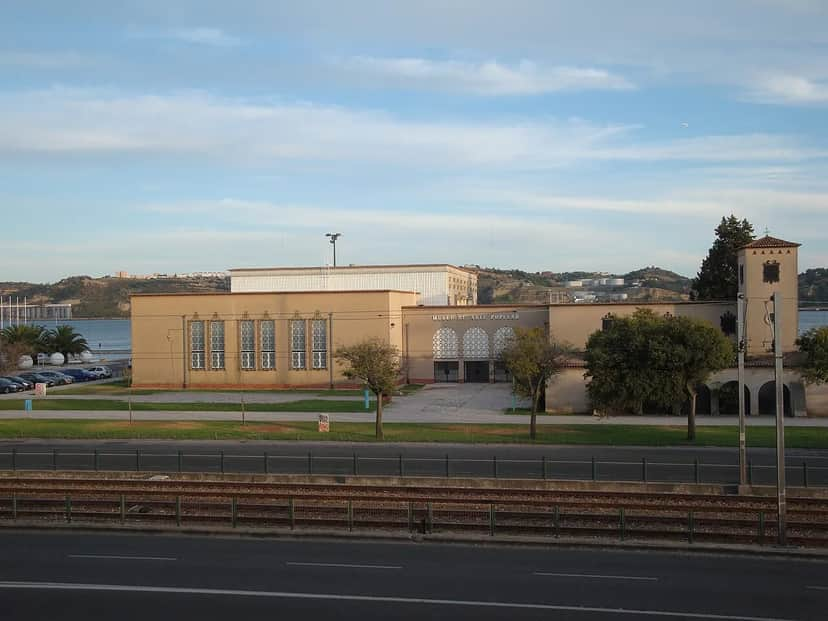
    The Museu de Arte Popular sits on the Tagus waterfront in Belém, between the Padrão dos Descobrimentos and the Torre de Belém. The building began life as the Popular Life pavilion of the 1940 Portuguese World Exhibition, designed by Veloso Reis Camelo and João Simões, and opened as a museum on 15 July 1948. Its rooms were laid out by region of Portugal, from Entre-Douro-e-Minho and Trás-os-Montes to the Alentejo and the Algarve, with farm tools, ceramics, basketry, costumes, musical instruments and jewellery. The interiors are a period piece in their own right, with wall decorations by artists such as Carlos Botelho and Estrela Faria, and reliefs of rural life by Henrique Moreira and Júlio de Sousa. The museum was closed for years and nearly turned into something else, until a public campaign kept it as a museum of Portuguese folk art. Its exhibition rooms reopened in December 2016, and the building is classified as a Monument of Public Interest.
  5. National Museum of the Azulejo (Museu Nacional do Azulejo), Lisbon
    National Museum of the Azulejo (Museu Nacional do Azulejo)
    Lisbon
    Museums
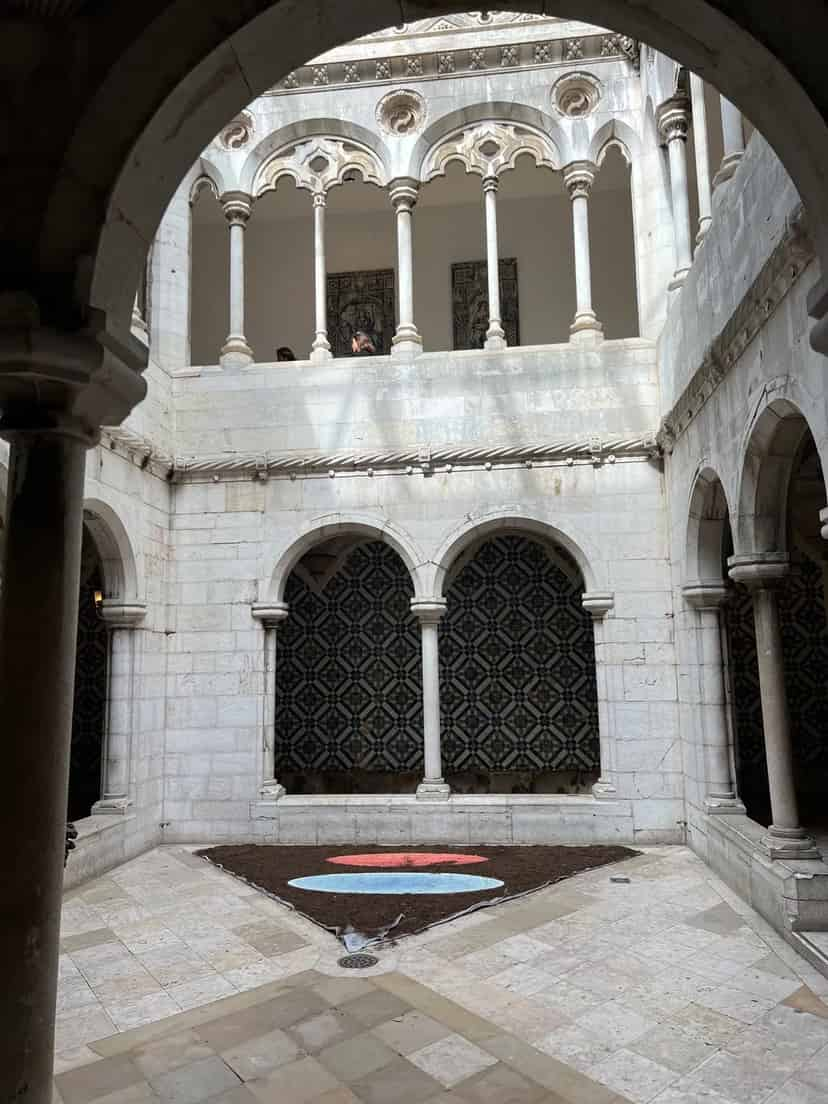
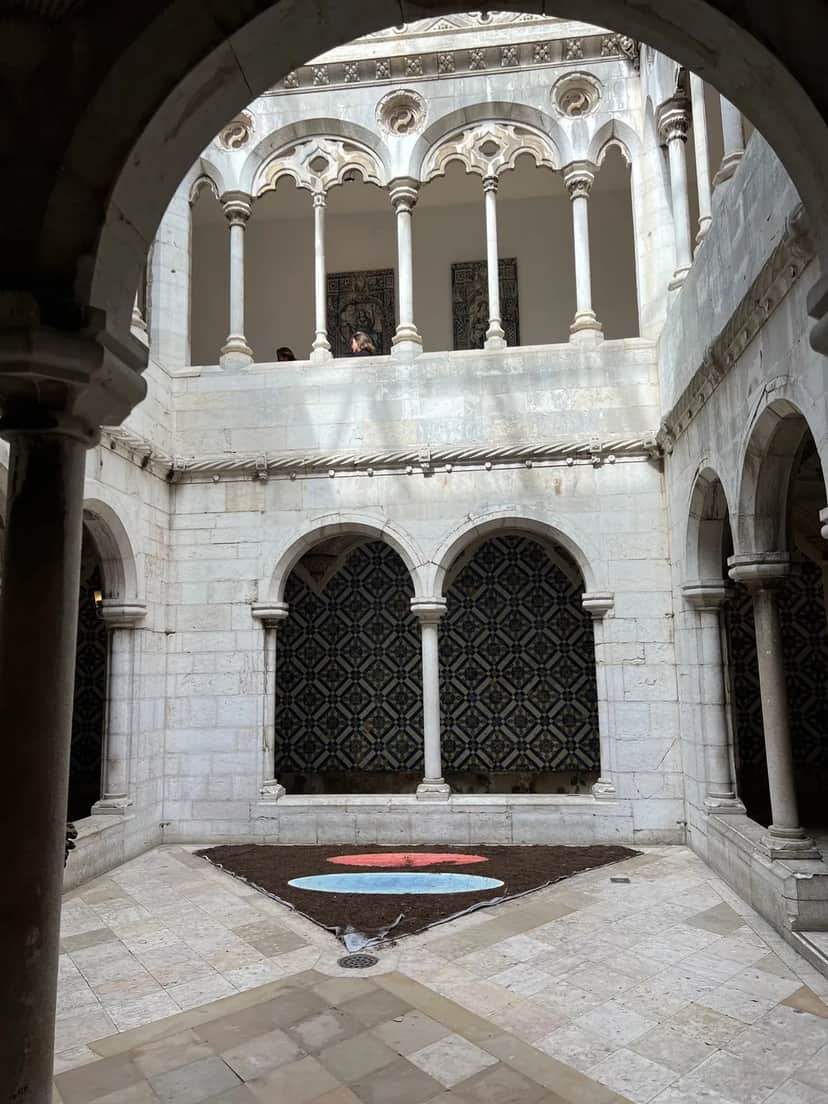
    Monastery founded in 1509 by Queen D. Leonor, underwent several building campaigns, particularly after the 1755 earthquake, so the building reflects a summary of styles: Mudéjar (ceiling of D. Leonor's chapel); Manueline (ground floor of the small cloister and
  6. Palácio Nacional da Ajuda, Lisbon
    Palácio Nacional da Ajuda
    Lisbon
    Museums
    Palácio Nacional da Ajuda, in Lisbon, offers a visit to the authentic interiors of the home of the kings of Portugal, with spaces such as the Mesa Real and O Quotidiano. It also includes the Museu do Tesouro Real, collections, an educational service, the Biblioteca da Ajuda, and a shop, and promotes guided tours such as "Quintas-feiras no Palácio" with volunteers.
Powered by Foursquare ·Photo and data credits
Photos: gulbenkian.pt · Jean-Christophe BENOIST (CC BY-SA 4.0), via Wikimedia Commons · Lijealso (CC BY 3.0), via Wikimedia Commons · palacioajuda.gov.pt
We use cookies
Necessary cookies keep you signed in. Analytics, recordings and personalised ads only if you agree. Change it any time.