Art & Exhibitions
Exhibition "Els rostres de l'odi", by Jordi Borràs
- When
- Fri 6 – Sat 28 Nov
- Where
- Oliva Artés. Museu d'Història de Barcelona
- Price
- No price info
About
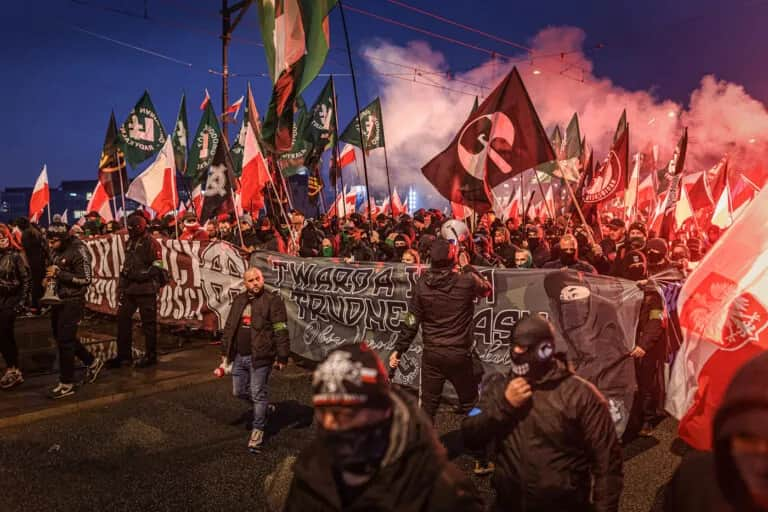
"Els rostres de l'odi" is a photographic exhibition based on the book "Tots els colors del negre. L'extrema dreta a l'Europa del segle XXI", also written by photojournalist Jordi Borràs. Both projects are parallel and stem from the same idea: to explain how "the international of hate" is expressed and articulated. An ideological magma that has taken shape in the thousand and one faces of a far right that, in large part, has been able to reinvent itself and convince an electorate that has brought it to the fore in parliaments across Europe.
This is why these photographs show everything from the French or German populist radical right, through to Polish or Hungarian ultraconservatives. That is, a new far right that has been able to shed the stigma of the interwar fascisms and that, beneath a supposedly democratic veneer, hides intolerant discourses that are largely shared with the most unabashed neo-fascist splinter groups. These are organizations that stir the streets with violence and coexist with the new parliamentary radical right. Ultimately, both worlds feed off each other: some set the political agenda, while others try to implement hate speech in the institutions. A phenomenon that is well known in Catalonia and that has also marked the political agenda there in recent years.
Precisely, the desire to document these movements in Catalonia led the author of these photographs to set out on a long journey across Europe. A journey that has not yet ended, and that began precisely 15 years ago in the town of Arenys de Munt, when a group of Falangists tried to wreck the first independence consultation, on a now-distant 13 September 2009. Since then, Catalan photojournalist Jordi Borràs has kept searching for answers. Why is the far right growing? Who makes up these movements? What do they have in common with the fascisms of the last century? And how do we fight all this? These photographs explore the presence, growth, and normalization of the different faces of the far right across a continent with very different social and national realities, but with one thing in common: the realization that there is nothing more international than hate.